
Railway Braking Distance Metrics for Heavy Train Operations

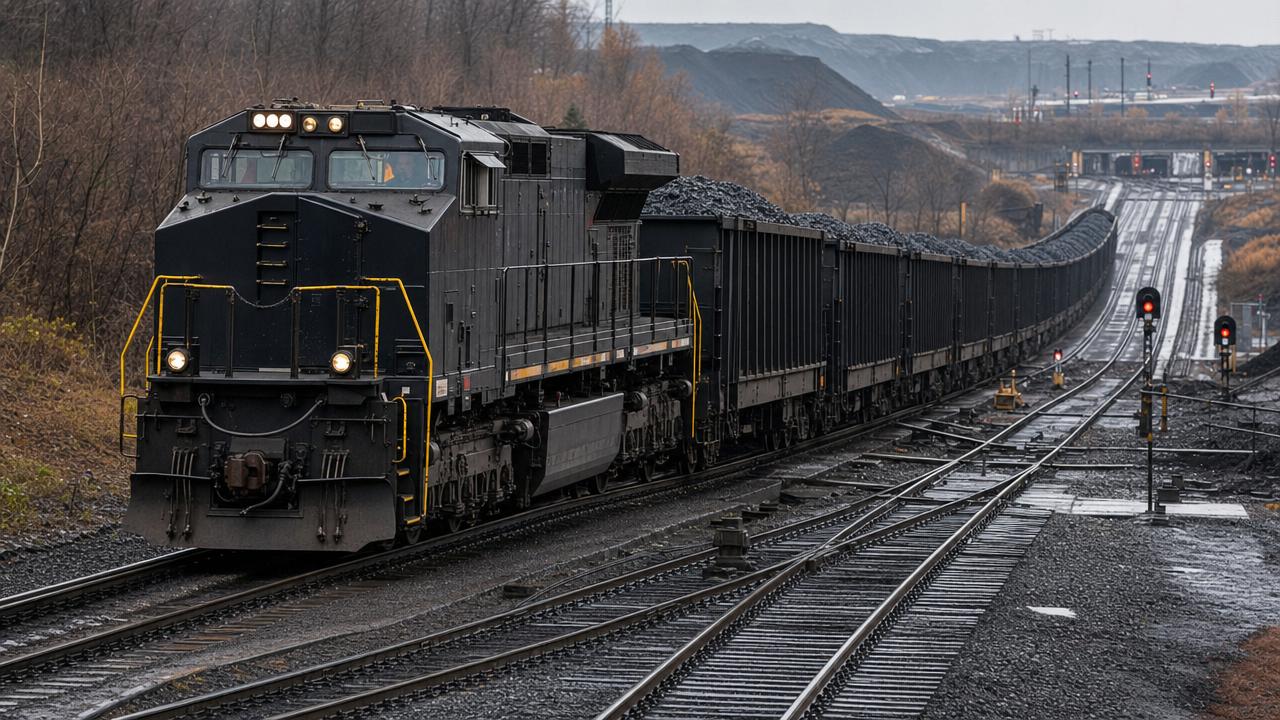
For operators managing heavy freight trains, understanding railway braking distance metrics is essential to safe, efficient daily operations. From train weight and gradient to weather, adhesion, and signaling response, braking performance directly affects stopping accuracy and corridor safety. This guide introduces the core metrics and practical factors that help frontline users evaluate braking behavior in demanding heavy-haul environments.
In heavy-haul freight service, braking is not a single number on a chart. It is a dynamic operational result shaped by train mass, consist distribution, brake system condition, route profile, and driver handling. For frontline users working on long corridors, terminals, mountain grades, and mixed-traffic sections, practical knowledge of railway braking distance metrics helps reduce overspeed risk, improve signal compliance, and support more predictable stopping performance.
Within the wider rail engineering and operations environment served by G-RFE, these metrics also connect equipment, infrastructure, and safety systems. Locomotives, wagons, braking ratios, GSM-R communication, ETCS or conventional signaling, and track condition all interact. Operators do not need to become design engineers, but they do need a clear working framework for reading braking data, identifying risk factors, and applying safe margins in daily service.
Core Railway Braking Distance Metrics Operators Need to Understand
The most useful railway braking distance metrics are not limited to total stopping distance. In heavy train operations, users should track at least 5 practical indicators: initial speed, braking build-up time, deceleration rate, effective stopping distance, and safety margin to signal or movement authority limit.
What braking distance actually includes
A train does not stop the instant the brake command is made. Real stopping distance usually contains 3 stages. First is operator reaction or system response. Second is brake propagation and cylinder build-up. Third is the actual deceleration phase until the train reaches 0 km/h.
For a long freight train of 1.5 km to 2.5 km, brake propagation through the consist can consume several seconds before full force develops. At 80 km/h, even a 5-second delay adds more than 110 meters before full braking effort is established.
Key field terms
- Service braking distance: stopping distance under planned, non-emergency brake application.
- Emergency braking distance: stopping distance under maximum available emergency brake force.
- Braking percentage or brake ratio: an operational indicator comparing braking capability to train mass.
- Deceleration rate: often expressed in m/s², showing how quickly speed is reduced.
- Adhesion limit: the wheel-rail friction threshold beyond which wheels may slide.
The table below summarizes the most relevant railway braking distance metrics for operators, including how each one is used during route handling, signal approach, and heavy-haul train control.
The key lesson is that railway braking distance metrics must be read as a system, not in isolation. A good deceleration figure means little if brake propagation is slow, adhesion is poor, or route gradient turns a routine stop into a borderline stop.
Why heavy trains behave differently
Heavy freight trains often operate at 4,000 to 12,000 tonnes, and some corridors exceed that range. Even with strong locomotive braking and wagon brake equipment, inertia remains the dominant factor. That is why the same speed on a heavy-haul consist produces a longer stopping profile than on lighter mixed freight or passenger stock.
Train length also matters. A shorter 600-meter consist may develop brake force more uniformly than a 2,000-meter consist. Operators should therefore treat route braking data, train makeup, and wagon brake condition as linked variables rather than separate checklists.
Operational Factors That Change Braking Performance in the Field
The same train can show very different braking results across 2 shifts or 2 route sections. In practice, railway braking distance metrics are strongly affected by weather, track geometry, loading balance, maintenance quality, and communication between operations and signaling systems.
Speed, mass, and route gradient
Speed is the most visible factor, but mass and gradient often create the larger operational surprise. A 1% descending grade can significantly extend stopping distance, especially when the train is fully loaded and entering a braking zone late. On descending freight routes, even a modest overspeed of 5–10 km/h can remove a large share of the available stopping buffer.
Operators should pay close attention to route books, sectional gradients, and known low-adhesion locations. Braking on tangent track differs from braking before curves, switches, station limits, or terminal approaches where control precision is tighter.
Adhesion and weather effects
Wheel-rail adhesion can change rapidly due to rain, leaf contamination, grease, frost, or dust. In low-adhesion conditions, measured deceleration may drop below expected values even when brake systems are functioning correctly. This is one reason operators should avoid assuming that dry-weather braking data applies directly to wet or contaminated rail.
A useful rule in daily operations is to increase caution where adhesion is seasonally unstable, especially during the first 30–60 minutes after light rain. Initial contamination films can create a more slippery rail surface than steady heavy rain.
Brake system condition and consist integrity
Brake cylinder leakage, uneven wagon brake response, poor wheel condition, and delayed propagation all reduce consistency. In long freight trains, one defective subgroup may not create a full brake failure, but it can extend stopping distance enough to affect signal compliance or stop-marker accuracy.
Before departure, operators and inspectors should verify continuity, expected brake mode, and any restrictions related to isolated equipment. A train with nominal braking capability on paper may perform differently if load distribution is uneven or if several wagons have reduced brake efficiency.
The table below highlights common field conditions that alter railway braking distance metrics and shows the practical operator response expected in heavy-haul environments.
These factors show why field braking performance cannot be managed by speed alone. Reliable operation depends on matching route conditions, consist condition, and operator response to the real braking capability available on that trip.
How to Use Braking Metrics in Daily Heavy-Haul Operations
For operators, the value of railway braking distance metrics lies in decision-making before and during movement. The goal is not only to avoid emergency situations, but also to make routine stops more stable, reduce wheel and brake wear, and protect corridor capacity.
A practical 4-step operating method
- Confirm train-specific factors: gross tonnage, consist length, brake mode, and any restrictions.
- Review route-specific factors: grades, speed reductions, signal spacing, weather exposure, and known adhesion zones.
- Set an early braking plan: define where service braking should begin under normal conditions.
- Monitor actual response: compare expected deceleration with real behavior and adapt immediately if response is weak.
This 4-step method is especially useful on export corridors, intermodal rail-port approaches, and long bulk commodity lines where trains repeat similar patterns but conditions still vary day to day. Even on familiar routes, operators should treat braking points as variable control zones rather than fixed markers.
Using dynamic and pneumatic braking together
Where locomotive configuration allows it, dynamic braking can help stabilize speed on long descending grades and reduce heat load on friction elements. However, operators should understand its limitations. Dynamic braking performance may reduce at lower speeds, and it does not replace pneumatic stopping capability for final control and emergency response.
A balanced strategy often starts with dynamic braking for speed management and then adds pneumatic braking for controlled deceleration as signal approach distance shortens. On routes with repeated 1.0% to 1.5% grades, this combination can improve consistency when used according to rulebook and equipment guidance.
Common operator errors
- Relying on dry-weather stopping points during wet conditions.
- Applying brakes too late because the train handled well on the previous trip.
- Ignoring the impact of increased trailing load after consist changes.
- Assuming emergency braking will always recover a delayed service application.
These errors are often procedural rather than technical. Better use of railway braking distance metrics helps operators move from habit-based handling to evidence-based handling, especially on long-haul networks carrying ore, coal, grain, containers, steel, or construction materials.
Selecting the Right Data, Tools, and Support Framework
Braking knowledge improves when operations teams have access to route data, train performance records, and maintenance feedback. In modern freight systems, railway braking distance metrics should not remain isolated inside a rulebook. They should feed into training, dispatch planning, brake testing, and engineering review.
What operators should ask from the wider rail system
Frontline users benefit most when the organization provides 3 layers of support: clear route-based braking guidance, reliable consist condition reporting, and communication links between operations, signaling, and maintenance. This is particularly important on international freight corridors where standards, wagon fleets, and signaling practices may vary.
A practical support package may include sectional braking charts, low-adhesion alerts, brake test records, and exception reporting after irregular stops. When these inputs are updated at regular intervals such as every shift, every route cycle, or every scheduled inspection window, operators gain a more realistic view of stopping performance.
Decision points for B2B rail organizations
For railway authorities, EPC teams, locomotive suppliers, and freight operators, the issue is not only how to calculate distance. The bigger question is how to build a braking-performance management process that aligns rolling stock, infrastructure, and signaling. That is where technical intelligence platforms such as G-RFE add value by connecting engineering benchmarks, operating practice, and international reference frameworks such as UIC, EN, and AAR.
When evaluating systems or procedures, decision-makers should review at least 4 dimensions: train-level braking capability, route risk profile, maintenance response time, and signaling integration. A corridor may have compliant assets on paper, but still carry elevated stopping risk if field data is fragmented or if brake-condition visibility is delayed.
A practical checklist
- Is braking performance verified by train type and load band, not only by fleet average?
- Are gradient-critical locations identified with early-brake guidance?
- Are low-adhesion events communicated fast enough for the next crew or shift?
- Do maintenance and operations teams review irregular stopping cases together?
- Are signaling limits and real braking profiles aligned for heavy-haul conditions?
Railway braking distance metrics become truly useful when they support action at track level, cab level, and control-center level at the same time. That integrated approach is increasingly important as freight trains become longer, corridors become busier, and safety expectations become stricter.
For heavy train operators, the most effective braking strategy begins with accurate metrics, but it succeeds through disciplined application. Understanding speed-dependent stopping distance, brake build-up, gradient impact, adhesion limits, and consist condition allows users to make earlier, safer, and more consistent operating decisions.
If your organization is reviewing heavy-haul braking performance, route safety margins, rolling stock compatibility, or signaling coordination, G-RFE can help translate complex engineering data into actionable operational guidance. Contact us to discuss your corridor requirements, request a tailored technical framework, or learn more about rail braking and safety solutions for modern freight networks.
Industry Briefing
Get the top 5 industry headlines delivered to your inbox every morning.