
Brake Shoe Manufacturer OEM: Key Quality Checks That Matter

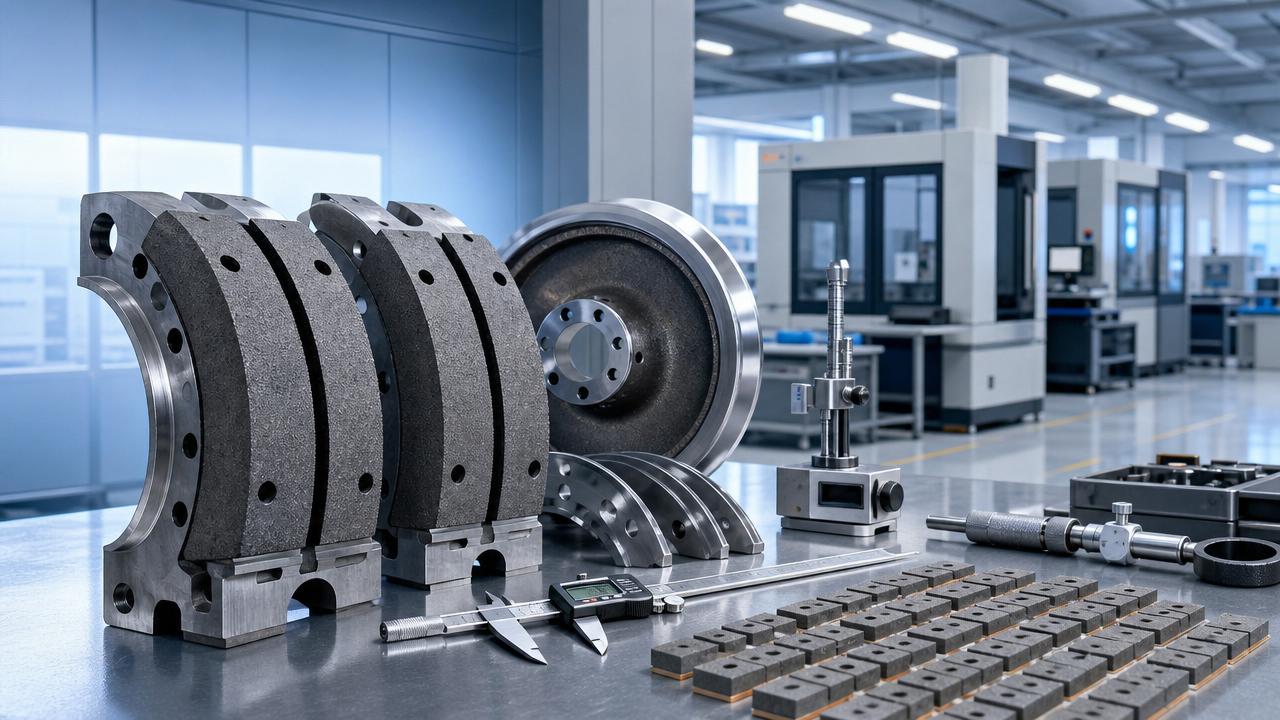
When evaluating a brake shoe manufacturer OEM, quality checks are not routine paperwork. They directly affect braking stability, rail safety, compliance performance, and long-term maintenance economics across freight networks.
In heavy-haul rail operations, a weak brake shoe can trigger wheel damage, thermal cracking, uneven wear, or unsafe stopping distances. That is why the right brake shoe manufacturer OEM must prove control at every stage.
Across global railway engineering, expectations are changing fast. Buyers and technical teams now compare not only price, but also traceability, batch consistency, standards alignment, and real operating life.
Why brake shoe manufacturer OEM quality checks are becoming more critical
Rail freight corridors are carrying heavier loads, moving faster, and running longer cycles between maintenance windows. This puts far more thermal and mechanical stress on every brake shoe manufacturer OEM product.
At the same time, regulators and operators expect stronger evidence of compliance with UIC, EN, and AAR-related requirements. Documentation quality now matters almost as much as physical product quality.
Another trend is lifecycle thinking. A brake shoe manufacturer OEM is increasingly judged by wheel protection, predictable wear, and reduced unscheduled downtime, not only by initial supply cost.
The strongest trend signals coming from railway freight and engineering
Several market signals show why brake shoe manufacturer OEM evaluation is becoming more technical and more data-driven across integrated rail engineering systems.
- Higher axle loads are increasing contact pressure and heat generation.
- Longer train sets require more stable and repeatable braking performance.
- Digital maintenance systems demand traceable batch and inspection records.
- Wheelset preservation is now a major cost-control target.
- Cross-border projects need easier proof of standards conformity.
These changes push every brake shoe manufacturer OEM toward tighter process control, better material engineering, and clearer quality evidence from raw material intake to final shipment.
What is driving these stricter expectations
The shift is not random. It is driven by operational, regulatory, and engineering realities that affect the entire rail value chain.
The quality checks that matter most in a brake shoe manufacturer OEM review
A high-quality brake shoe manufacturer OEM should be assessed through a layered inspection framework. The goal is to verify product integrity, process discipline, and field reliability together.
1. Raw material verification
Material composition must match the approved formulation. Chemical consistency affects friction coefficient, wear rate, heat resistance, and wheel compatibility under varying rail conditions.
Check incoming material certificates, supplier qualification records, and lot control methods. A capable brake shoe manufacturer OEM should also isolate nonconforming material immediately.
2. Dimensional accuracy and fit
Incorrect dimensions can create poor contact patterns, unstable braking, vibration, or premature wear. Measurement control must cover shoe geometry, mounting interfaces, and tolerance repeatability.
Gauge calibration records are essential. Any brake shoe manufacturer OEM should demonstrate routine dimensional inspection at defined sampling frequencies, not occasional final checks only.
3. Friction performance consistency
This is one of the most important evaluation points. Friction behavior must remain stable across temperature changes, load variation, and repeated braking cycles.
Ask for dynamometer data, thermal fade performance, and recovery results. A serious brake shoe manufacturer OEM should present trend data, not isolated best-case test values.
4. Mechanical integrity
Cracking, chipping, separation, or weak bond strength can lead to dangerous service failure. Mechanical tests should confirm structural integrity during transport, installation, and operation.
Important checks may include compressive strength, impact resistance, bond quality, and defect screening. These reveal whether the brake shoe manufacturer OEM can control internal weaknesses.
5. Heat resistance and wear behavior
Brake shoes face repeated thermal loading. Poor heat resistance may cause glazing, accelerated wear, reduced braking efficiency, or wheel surface damage.
A reliable brake shoe manufacturer OEM tracks heat-cycle performance and wear distribution. Field simulation data is especially valuable for heavy-haul and steep-gradient operations.
6. Traceability and batch control
If a field issue appears, fast root-cause analysis depends on traceability. Each brake shoe manufacturer OEM batch should link to materials, process parameters, inspections, and shipment records.
Marking must be legible and durable. Without traceability, even a technically acceptable product becomes a risk in modern railway quality systems.
How these checks affect different engineering and operating links
The impact of brake shoe manufacturer OEM quality is broader than component replacement. It reaches vehicle performance, infrastructure maintenance, safety verification, and whole-life asset planning.
- Rolling stock performance improves when braking remains balanced and predictable.
- Wheel maintenance costs fall when friction material is properly matched.
- Safety documentation becomes stronger with complete OEM traceability.
- Depot planning becomes easier when wear life is more predictable.
- Cross-border project acceptance improves with standards-based testing records.
For large freight corridors, these effects accumulate quickly. A dependable brake shoe manufacturer OEM can support lower downtime, smoother inspections, and better alignment between engineering and operational targets.
What deserves closer attention during supplier assessment
Not every brake shoe manufacturer OEM offering that looks compliant on paper is equally robust in practice. Several checkpoints deserve closer technical review before approval.
- Whether process controls are defined by work instructions and inspection plans.
- Whether test data covers production batches, not only prototypes.
- Whether corrective action records show disciplined problem closure.
- Whether tooling and gauges are maintained and recalibrated regularly.
- Whether packaging prevents moisture, breakage, and identification loss.
- Whether the OEM can support audits for UIC, EN, or AAR-linked needs.
A practical way to judge the next phase of brake shoe manufacturer OEM capability
Future-ready evaluation should combine product testing with process maturity. The strongest brake shoe manufacturer OEM partners usually perform well in both areas.
The next step for safer and more reliable brake shoe selection
A brake shoe manufacturer OEM should be judged by evidence, not claims. Strong quality checks reduce safety risk, support compliance, and protect wheel and rolling stock assets over time.
Start with a structured checklist covering materials, dimensions, friction stability, mechanical integrity, wear behavior, and traceability. Then compare test depth, process discipline, and field performance history.
In global railway-freight and engineering environments, this approach delivers clearer decisions and better lifecycle outcomes. It also helps identify which brake shoe manufacturer OEM can support modern, high-demand freight operations with confidence.
Industry Briefing
Get the top 5 industry headlines delivered to your inbox every morning.