
How railway braking distance metrics affect safety planning

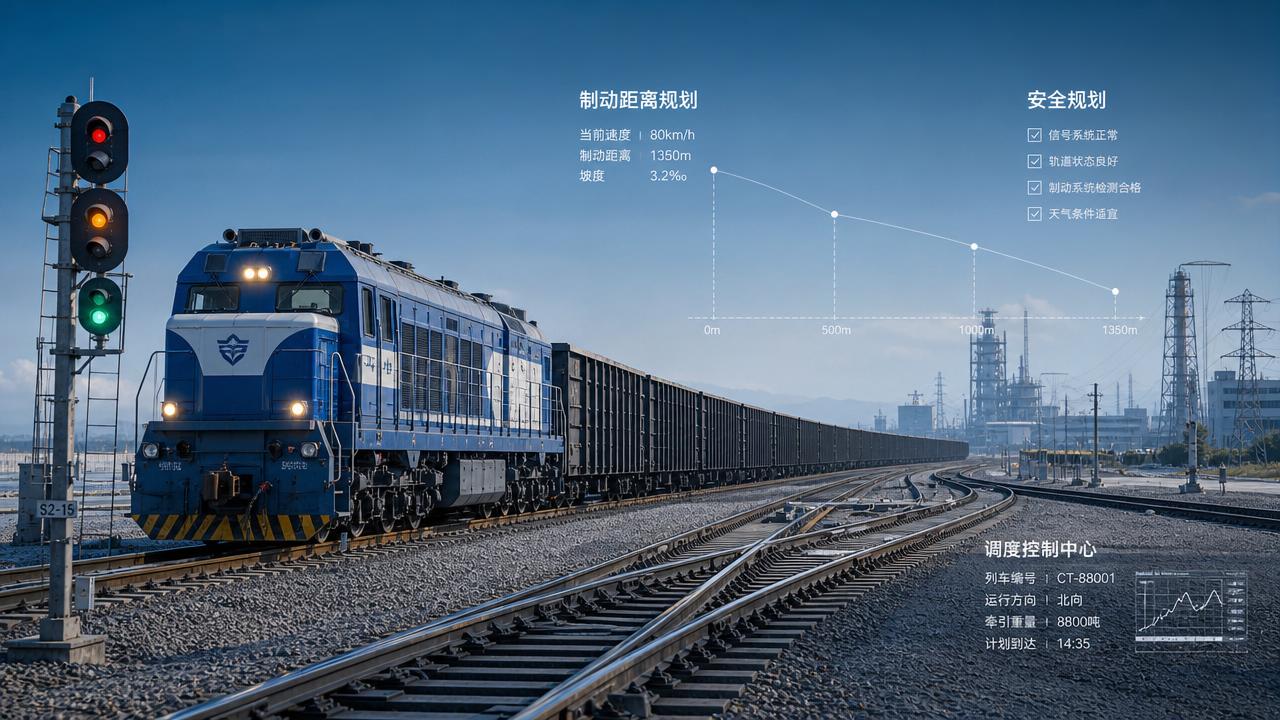
For project managers and engineering leads, railway braking distance metrics are more than technical figures—they shape corridor design, signaling logic, asset selection, and operational risk control. In modern freight networks, understanding how these metrics affect safety planning is essential for balancing capacity, compliance, and incident prevention across heavy-haul, intermodal, and cross-border railway projects.
In practice, braking distance is not a single number. It is a planning variable influenced by train mass, gradient, adhesion, brake build-up time, wagon condition, signaling architecture, and operating rules. On freight corridors where axle loads may exceed 25 tonnes and train lengths can reach 750 m to 1,500 m, even a modest change in braking performance can alter block spacing, yard design, speed profiles, and emergency response planning.
For organizations managing rail infrastructure, rolling stock programs, or cross-border freight upgrades, railway braking distance metrics support decisions that affect both capital expenditure and day-to-day operational resilience. This is especially relevant in data-led environments such as G-RFE, where locomotive capability, signaling standards, and engineering constraints must be aligned against UIC, EN, and AAR-oriented project requirements.
Why railway braking distance metrics matter in safety planning
Railway braking distance metrics define how much track a train needs to slow down from a given speed to a safe stop under expected operating conditions. For a project manager, that metric affects at least 4 planning domains: infrastructure geometry, signaling headways, rolling stock specification, and operating procedures. If any one of those domains is misaligned, safety margins shrink and throughput assumptions become unreliable.
A heavy-haul train traveling at 80 km/h behaves very differently from an intermodal consist at 120 km/h. The higher-speed train may need a longer stopping distance despite lower axle load, while the heavy-haul consist may suffer from slower brake propagation and more variable wagon performance. This means railway braking distance metrics must be segmented by use case rather than applied as a generic network average.
The core variables behind stopping distance
At minimum, planners should review 6 variables: initial speed, trailing load, brake type, gradient, wheel-rail adhesion, and brake reaction time. In wet or contaminated rail conditions, adhesion can fall sharply, extending stopping distance well beyond dry-rail assumptions. On descending grades of 1% to 2%, the impact becomes even more significant for long freight formations.
- Speed profile by corridor section, terminal approach, and crossing zone
- Gross train weight and distribution across locomotives and wagons
- Brake system category, response time, and maintenance condition
- Track gradient, curvature, and known low-adhesion zones
- Signaling overlay such as ETCS, CBTC, or conventional fixed-block logic
- Operational mode: normal service braking versus emergency braking
These factors are why railway braking distance metrics should be treated as a corridor-specific engineering input. A line designed for mixed traffic often requires different braking assumptions for bulk minerals, automotive trains, and double-stack or intermodal traffic. Using one baseline value can create false confidence in timetable compression and signal spacing calculations.
How braking metrics influence design margins
Safety planning is rarely based on best-case stopping performance. It is based on a controlled margin between expected performance and worst credible conditions. Many projects use layered margins across 3 levels: nominal braking performance, degraded but acceptable performance, and emergency or contingency conditions. The wider the uncertainty range, the more conservative the infrastructure and signaling design must become.
For example, if braking distance under nominal conditions is 900 m at a defined speed, but low adhesion extends that value to 1,250 m, the extra 350 m must be reflected somewhere: longer block sections, earlier warning points, lower approach speeds, or stricter dispatch rules. If it is ignored, planners may overestimate line capacity by several train paths per day.
The table below shows how common variables alter railway braking distance metrics and the related planning response in freight engineering environments.
The key lesson is that railway braking distance metrics cannot be isolated from system design. They must be connected to real operating scenarios, especially where long consists, mixed traffic, or climate variability can shift stopping performance outside nominal assumptions.
Where braking distance affects project delivery and operational risk
In project delivery, braking assumptions show up much earlier than many teams expect. They influence concept design, front-end engineering, signaling interfaces, and even procurement language. By the time commissioning begins, changing a braking-distance assumption may affect 5 to 7 linked packages, from balise placement and signal aspecting to locomotive acceptance criteria and route availability studies.
Corridor design and block section planning
For infrastructure teams, one of the clearest impacts of railway braking distance metrics is block spacing. If stopping distance is underestimated, fixed-block systems may permit unsafe train separation. If it is overestimated, line capacity can be reduced unnecessarily. On busy freight routes, the difference between 1,000 m and 1,300 m effective braking assumptions may materially change daily path availability and siding utilization.
This issue becomes more complex on mixed corridors where passenger and freight services share assets. A project team may need separate braking models for at least 3 categories: high-priority passenger, standard intermodal, and heavy bulk freight. Each category can trigger different overlap lengths, route locking durations, and approach control settings.
Rolling stock selection and brake-system specification
Rolling stock procurement often focuses on traction power, axle load, and lifecycle cost. Yet railway braking distance metrics deserve equal attention in bid evaluation. A 6,000 hp locomotive paired with wagons of uneven brake response may still fail corridor objectives if safe stopping distances force lower operating speeds or larger headways. The project result is not just a safety concern; it is a capacity and revenue concern.
Engineering leads should test brake-system compatibility across locomotives, wagons, and control systems before final award. Common checks include emergency braking response, brake build-up timing, wheel slide protection behavior, and dynamic braking contribution on long descents. In multi-country projects, compatibility with local standards and route rules must be reviewed within the first 2 to 4 procurement stages.
Signaling logic, ETCS integration, and safe headways
For smart signaling projects, railway braking distance metrics are embedded in movement authority calculations, warning curves, and intervention thresholds. In ETCS-oriented environments, the braking model is not a background detail. It directly shapes how the onboard and trackside systems supervise speed and distance. Any mismatch between actual train braking capability and modeled performance can produce nuisance interventions or reduced safety margin.
This is especially important on cross-border corridors using multiple signaling regimes. A train that performs acceptably in one section may require a more conservative braking profile in another because of gradient, adhesion, or rulebook differences. Project teams should therefore maintain a controlled braking-data governance process, with version review at design freeze, test commissioning, and route acceptance.
The matrix below can help project managers map where railway braking distance metrics influence major delivery packages and risk ownership.
This cross-functional view is critical because safety planning fails when braking data remains siloed. Stronger outcomes come from linking railway braking distance metrics to formal design reviews, interface registers, and route acceptance documents rather than treating them as isolated rolling stock calculations.
A practical framework for project managers and engineering leads
A usable framework should help teams move from theory to implementation. In freight and infrastructure programs, the most effective approach is to create a structured decision path covering data quality, scenario modeling, procurement controls, and operational validation. This can usually be organized into 5 steps, each with defined owners and review gates.
Step 1: Define the operating envelope
Start by defining train categories, target speeds, maximum gross mass, route gradients, and climate factors. If the corridor includes heavy-haul and intermodal traffic, do not merge them into one assumption set. Split them into at least 2 or 3 operating families and document the worst credible conditions for each. This prevents later disputes during signaling validation and timetable planning.
Step 2: Set measurable braking performance criteria
Translate railway braking distance metrics into acceptance thresholds. These may include maximum stopping distance at specified speeds, brake build-up time, emergency brake response, and degraded adhesion performance. A project specification should state not only target values but also test conditions, tolerance bands, and the action required if results fall outside the acceptable range.
Recommended control points
- Baseline model review during concept or FEED stage
- Supplier compliance review before contract award
- Integrated test validation before route entry
- Periodic performance audit every 6 to 12 months
Step 3: Align procurement with route risk
Procurement documents should require suppliers to provide braking-performance data in a format that can be used by signaling, operations, and infrastructure teams. This is where many programs lose traceability. Brake data is submitted, but not normalized across suppliers or mapped to route conditions. The result is a technically compliant fleet that is difficult to certify consistently across the network.
For G-RFE-oriented buyers comparing locomotives, wagon fleets, or signaling packages, a stronger method is to evaluate 4 dimensions together: braking capability, interoperability, maintenance burden, and route-specific compliance. A lower purchase price may be offset by tighter speed restrictions, more frequent brake maintenance, or reduced line capacity.
Step 4: Validate through simulation and field testing
Simulation should cover nominal, degraded, and emergency conditions. Field testing should verify whether modeled railway braking distance metrics hold under actual load, weather, and track conditions. If the route includes tunnels, long descents, or high-consequence terminals, test planning should include additional scenarios such as brake fade, delayed propagation, and low-adhesion rail segments.
A common mistake is to validate only one train configuration. Freight networks often change consist length, wagon mix, and locomotive count over time. Testing should therefore reflect likely operational variation, ideally across 3 or more representative train sets. This produces more reliable rules for headway, dispatch, and driver instructions.
Step 5: Keep braking data under configuration control
Braking performance changes over asset life through wear, wheel condition, software updates, and maintenance quality. Safety planning must reflect that reality. Route books, control logic, and fleet acceptance records should be updated whenever braking-relevant changes occur. In practical terms, this means keeping railway braking distance metrics inside a formal change-management workflow, not in disconnected spreadsheets.
Common planning mistakes and how to avoid them
The most frequent mistake is treating braking distance as a static compliance number rather than a live operational parameter. That leads to under-scoped risk assessment and weak interface control between civil, rolling stock, and signaling teams. Another mistake is relying on nominal dry-rail performance while actual operations face seasonal contamination, variable loading, and mixed brake condition across wagon fleets.
Mistake 1: Using average values for diverse train types
Averaging braking inputs across all freight services may simplify early planning, but it usually creates hidden risk. Heavy bulk, automotive, and intermodal services can differ materially in trailing mass, brake propagation, and permissible speed. Segment the fleet from the start and define route categories accordingly.
Mistake 2: Ignoring degraded conditions
If the safety case considers only ideal adhesion and full brake efficiency, the network may perform well on paper and poorly in service. Include low-adhesion scenarios, partial degradation, and long-train dynamics in the hazard review. Even a 10% to 15% deterioration can affect safe approach speed, terminal entry, and dispatcher decision-making.
Mistake 3: Failing to connect maintenance and safety planning
Railway braking distance metrics are not only design inputs; they are maintenance-sensitive outcomes. Brake shoe wear, wheel condition, pneumatic leakage, and software calibration all influence stopping performance. For project managers, that means maintenance planning should be visible in the original business case, especially where fleet availability targets exceed 90% and route windows are tight.
For project managers and engineering leads, the real value of railway braking distance metrics lies in their ability to connect safety, capacity, procurement, and compliance into one decision framework. When braking assumptions are route-specific, validated, and shared across civil, signaling, and rolling stock teams, projects move faster with fewer late-stage changes and stronger operational resilience.
G-RFE supports this kind of decision-making by aligning heavy-haul equipment intelligence, signaling considerations, and international engineering references into a practical view for railway authorities, manufacturers, and EPC stakeholders. If you are planning a new freight corridor, upgrading signaling logic, or evaluating rolling stock for demanding operating conditions, now is the right time to review how your railway braking distance metrics are defined and governed.
Contact us to discuss corridor-specific requirements, compare technical options, and get a tailored solution framework for safer, more efficient railway project delivery.
Industry Briefing
Get the top 5 industry headlines delivered to your inbox every morning.