
Brake shoe manufacturer OEM terms that hide lifecycle costs

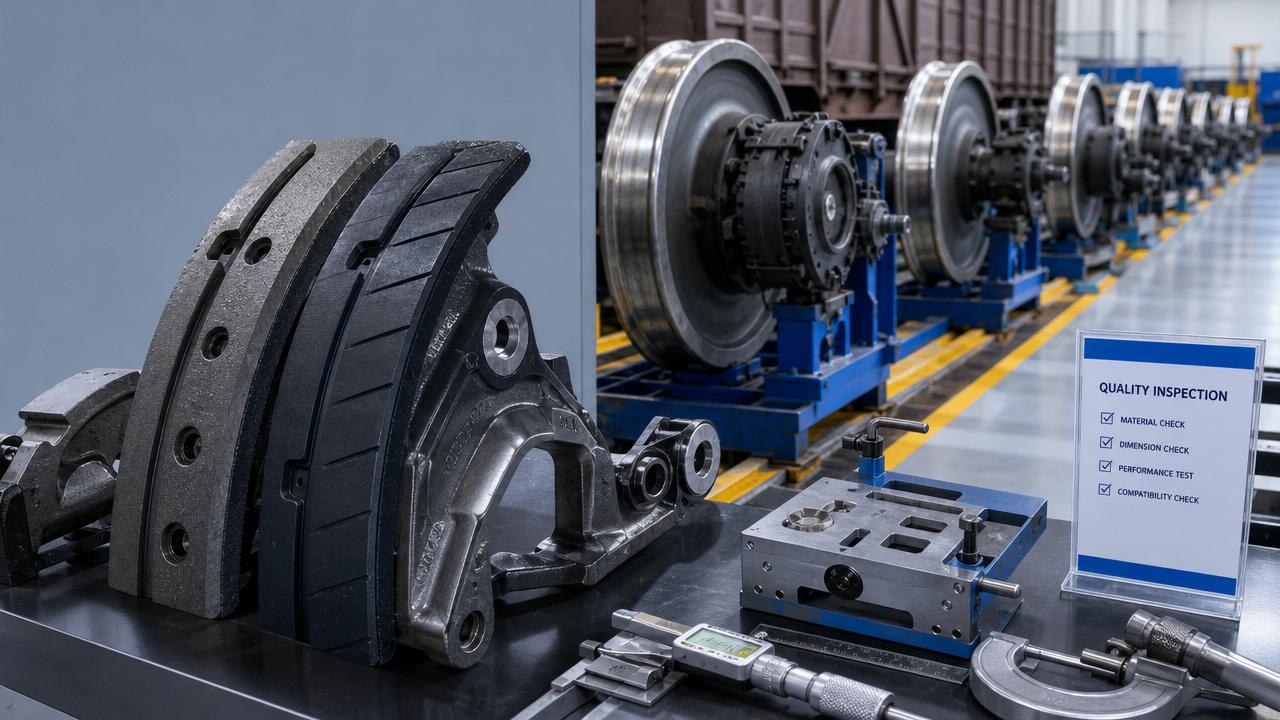
Choosing a brake shoe manufacturer OEM partner on unit price alone can obscure the real cost of ownership. For financial approvers in rail-freight procurement, hidden variables—wear life, maintenance intervals, compatibility risks, and compliance exposure—directly affect lifecycle budgets and asset availability. This article outlines how to evaluate OEM terms with a total-cost lens before they erode long-term operating returns.
Why a checklist approach works better than a price comparison
For a financial approver, the problem with many brake shoe manufacturer OEM offers is not what is visible in the quotation, but what is omitted from the commercial wording. Rail-freight braking components sit at the intersection of safety, mechanical wear, wagon availability, workshop labor, and regulatory discipline. A low line-item price can look attractive in a tender summary, yet the same contract may later produce higher consumption, more unscheduled replacements, increased wheel damage, or stockholding pressure across multiple depots.
A checklist method helps decision-makers separate surface savings from operational economics. Instead of asking only “What is the purchase price?”, procurement and finance teams can ask a more durable set of questions: How many kilometers or braking cycles will the product realistically deliver? What maintenance burden does it create? How tightly does it match the vehicle and braking system? What liabilities remain with the buyer if field performance falls below expectation? This structured review is especially important in global rail programs where standards such as UIC, EN, and AAR influence qualification, traceability, and audit exposure.
The first-pass checklist financial approvers should review before approving any OEM terms
Before reviewing technical annexes in detail, use the following first-pass checklist to screen a brake shoe manufacturer OEM proposal. If more than two items are unclear, the commercial case is not yet mature enough for approval.
- Confirm whether quoted price includes the exact friction material grade, backing geometry, and hardware specification required for the target fleet.
- Verify declared service life under actual freight duty conditions, not only under laboratory or light-load test profiles.
- Check whether warranty covers premature wear, cracking, bonding failure, noise, wheel interface damage, and batch inconsistency.
- Review replacement intervals and labor hours per wagon or locomotive set, because maintenance labor can offset a lower unit cost quickly.
- Assess compatibility with existing brake rigging, wheel material, speed profile, axle load, and environmental conditions.
- Require proof of compliance, certification route, material traceability, and documented quality controls from the OEM source.
- Identify minimum order quantities, shelf-life limitations, lead times, and penalties tied to forecast deviations.
- Map stocking and emergency supply commitments across operating regions, especially if the fleet serves long-distance freight corridors.
Core cost drivers hidden inside brake shoe manufacturer OEM terms
1. Wear life claims that are not tied to your operating profile
One of the most common hidden cost traps is an attractive wear-life claim presented without route context. Freight rail braking behavior changes with gradient, climate, axle load, stop frequency, train length, and wheel condition. A brake shoe manufacturer OEM may cite strong performance from a controlled benchmark, but if your corridor includes mineral haul duty, long descents, dust, humidity, or mixed-speed operation, actual consumption can rise sharply. Financial reviewers should ask for service-life evidence from applications with similar gross tonnage and braking intensity.
2. Maintenance intervals that shift cost from purchasing to workshops
Lower-cost brake shoes often create shorter replacement intervals. That difference does not appear in the PO price, but it appears in labor hours, wagon downtime, spare inventory movement, and workshop congestion. In a high-utilization freight environment, a small reduction in maintenance frequency can produce more value than a large unit-price discount. The right review question is not “How much cheaper is the part?” but “How much maintenance time does each thousand wagons require over a year?”
3. Compatibility risk that causes secondary damage
If friction behavior is poorly matched to the wheel or brake system, lifecycle cost may increase through wheel wear, heat checking, uneven braking, vibration, and noise-related inspections. These are not merely technical inconveniences; they have direct budget implications. A brake shoe manufacturer OEM contract should define approved applications clearly and specify what happens if field use reveals abnormal wheel interaction or unacceptable wear patterns.
4. Compliance wording that leaves risk with the buyer
Some OEM quotations state that products are “manufactured in accordance with” a standard, while avoiding a stronger statement of tested compliance, third-party validation, or lot-level traceability. For financial approvers, that wording matters. If a brake component later fails an audit, incident review, or customer inspection, the cost may include requalification, replacement campaigns, delayed deliveries, and reputational loss. Terms should define certificates, test reports, retention periods, and corrective-action responsibilities.
A practical evaluation table for total-cost review
Use this matrix to compare offers from more than one brake shoe manufacturer OEM without over-weighting headline price.
What to check by operating scenario
Heavy-haul freight corridors
For high axle-load and long-train operations, prioritize thermal behavior, wear consistency, and wheel-interface performance. Here, a brake shoe manufacturer OEM should provide robust data on sustained braking demand, not just nominal stopping conditions. Cost inflation often comes from wheel maintenance and unplanned component replacement rather than brake shoe price itself.
Cross-border fleets with mixed standards
Where fleets move across networks influenced by UIC, EN, or AAR practices, approval teams should verify documentation completeness and acceptance risk. Seemingly minor labeling or traceability gaps can trigger border-side delays, operator objections, or duplicate inspection costs. In these cases, a disciplined brake shoe manufacturer OEM with strong documentation may deliver lower lifecycle cost than a cheaper but weaker supplier.
Harsh climate and contamination exposure
Dust, moisture, heat, and cold can change wear behavior significantly. Financial approvers should ask whether the proposed product has a validated performance record under comparable environmental stress. If not, budget should include controlled pilot testing before full fleet rollout.
Common overlooked clauses that create lifecycle cost leakage
- Ambiguous warranty triggers: If failure thresholds are undefined, claim recovery becomes difficult.
- Buyer-funded qualification: Some OEM proposals shift trial, validation, or re-test cost to the customer.
- Substitution rights: Language allowing material or production changes without prior approval can destabilize field performance.
- Loose tolerance language: Broad dimensional or material tolerances may increase fitment issues and wear variation.
- Weak service response commitments: Without root-cause timelines and replacement obligations, operational disruption cost stays with the operator.
- Forecast penalties: Overly rigid demand commitments can inflate inventory carrying cost for slow-moving spares.
Execution advice: how finance, procurement, and engineering should work together
A strong approval process for a brake shoe manufacturer OEM should not rely on one department alone. Finance should define the lifecycle cost model, procurement should structure the commercial protections, and engineering or maintenance teams should validate application fit. A practical internal review pack should include the following:
- A three-year or five-year total-cost comparison covering unit price, expected consumption, labor, downtime, and wheel-related risk.
- A technical fit statement tied to specific wagon classes, brake systems, routes, and load patterns.
- A compliance file containing standards references, certificates, test summaries, and traceability commitments.
- A supply resilience review including lead times, safety stock assumptions, and contingency sourcing options.
- A pilot or phased deployment plan if the product is new to the fleet.
Questions to ask before you sign
Before final approval, ask the brake shoe manufacturer OEM to answer these questions in writing:
- What field data supports the promised wear life under freight duty similar to ours?
- What failure modes are covered by warranty, and what remedies apply?
- Can the OEM guarantee no unapproved material or design substitution during contract term?
- What standards and batch-level records will be available during audits or incident investigations?
- How quickly can replacement stock be mobilized if a field issue affects fleet availability?
FAQ for financial approvers evaluating brake shoe manufacturer OEM offers
Is the lowest bid ever the best choice?
Only if its service life, maintenance burden, compliance position, and supply reliability are equal or better. In many rail-freight cases, the lowest bid becomes the highest annual cost after deployment.
What is the single most useful metric beyond unit price?
Cost per operating kilometer or cost per braking cycle, adjusted for labor and downtime, is usually more meaningful than purchase price alone.
When should a pilot test be mandatory?
A pilot is strongly recommended when the product is new to the fleet, the route is severe, standards acceptance is complex, or the OEM data does not closely match your operating profile.
Final decision guide and next-step action
A sound brake shoe manufacturer OEM decision is not a simple sourcing event; it is a lifecycle budget decision affecting maintenance efficiency, rolling stock availability, safety assurance, and long-term freight reliability. Financial approvers should favor proposals that are clear on wear performance, replacement intervals, compatibility limits, compliance evidence, and recovery obligations if performance fails in service.
If your organization wants to move forward confidently, the most useful next step is to request a structured review package: fleet application parameters, target standards, expected annual mileage or tonnage, maintenance practice, depot stocking model, lead-time expectation, and required warranty response. With those inputs, a meaningful lifecycle comparison can be built before hidden OEM terms turn a low upfront price into a high operating cost.
Industry Briefing
Get the top 5 industry headlines delivered to your inbox every morning.