
Electrical Equipment News Impacting 2026 Signal Logic Upgrades

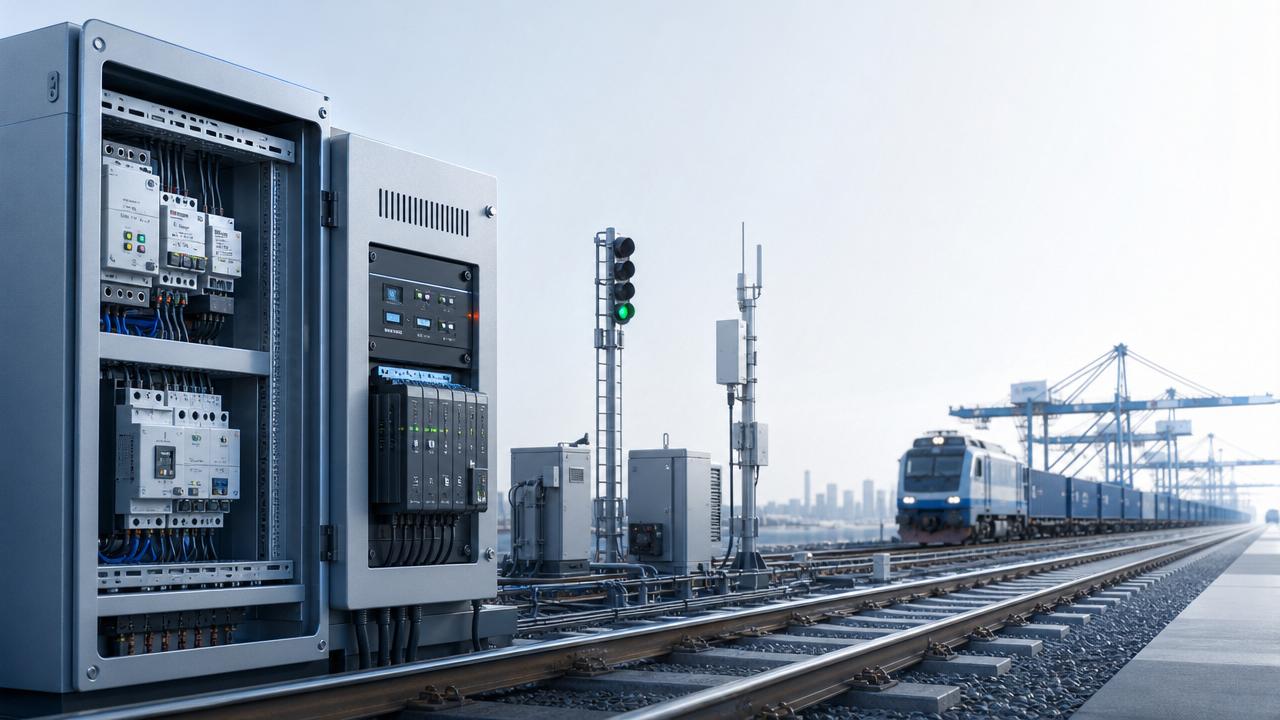
Electrical equipment news is now shaping 2026 signal logic decisions
Electrical Equipment News Impacting 2026 Signal Logic Upgrades is no longer a narrow engineering topic. It has become a practical filter for capital timing, technical risk, and system resilience.
That shift is especially visible across freight rail, industrial control environments, and cross-border logistics infrastructure. Signal logic upgrades now sit closer to power quality, network reliability, and compliance performance.
In this context, electrical equipment industry news for industrial automation matters because it reveals where hidden constraints are forming. It also shows which upgrades are becoming strategic rather than optional.
For organizations tracking rail engineering networks through a platform like G-RFE, the pattern is clear. Hardware decisions and signaling logic can no longer be evaluated as separate investment tracks.
Why the change is becoming more visible now
The immediate trigger is the 2026 upgrade cycle. Many control systems installed in earlier modernization phases are reaching a point where software refinement alone cannot solve field-level limitations.
Recent electrical equipment industry news for industrial automation highlights three recurring pressure points. Power stability is under greater scrutiny, edge communication is becoming denser, and certification pathways are becoming less forgiving.
Freight rail corridors are also carrying more operational complexity. Heavier axle loads, tighter headways, intermodal timing, and cross-system interoperability create stronger dependence on smarter logic execution.
A signaling upgrade once focused on route setting or fail-safe routines. Now it must consider power modules, cabinet thermal behavior, digital relays, cybersecurity controls, and remote diagnostics together.
This is why electrical equipment industry news for industrial automation has moved into mainstream technical review. It offers early clues about which subsystems may disrupt commissioning schedules or lifecycle assumptions.
The signals behind the headlines
- More demand for resilient low-voltage distribution in control rooms and trackside cabinets.
- Growing replacement of legacy relays with programmable, monitored switching devices.
- Higher attention to electromagnetic compatibility in mixed digital and heavy-duty rail environments.
- Faster movement toward integrated CBTC, ETCS, GSM-R, and industrial Ethernet interfaces.
The real driver is convergence, not isolated equipment replacement
It is tempting to read current developments as a standard replacement cycle. That misses the deeper issue. Signal logic is being redesigned because control architecture is converging across mechanical, electrical, and digital layers.
G-RFE’s institutional lens is useful here. Its five industrial pillars show how locomotive systems, track assets, signaling, port interfaces, and engineering machinery increasingly share common electrical dependencies.
When one pillar changes, others absorb the impact. A new power conversion approach can influence signaling stability. A revised communication protocol can alter field cabinet design. A compliance update can affect both hardware sourcing and software validation.
That is why electrical equipment industry news for industrial automation should be read as a convergence indicator. It does not just describe products. It shows where system boundaries are collapsing.
Impact is spreading beyond signaling teams
One notable change is how widely the effects now spread. Signal logic upgrades influence project finance assumptions, maintenance windows, spare-part strategies, and operational continuity across different asset classes.
For heavy-haul rail, better logic depends on consistent electrical behavior under vibration, dust, and load fluctuation. For intermodal rail-port systems, timing accuracy depends on reliable interface performance between power, communication, and control layers.
Even specialized rail engineering machinery is affected. Automated track-laying and inspection systems increasingly rely on cleaner data exchange and tighter control loops, which raises the value of current electrical equipment industry news for industrial automation.
More importantly, the impact is not evenly distributed. Systems with older cabinets, fragmented vendors, or mixed standards exposure face greater commissioning risk than more unified installations.
Where pressure is appearing first
- Border-crossing freight corridors that require interoperability under multiple rulebooks.
- Retrofit programs where legacy relays and digital control units must coexist.
- High-capacity terminals where signaling and energy management increasingly interact.
- Remote trackside locations where fault recovery time directly affects corridor throughput.
What recent electrical equipment industry news is really telling evaluators
The most useful takeaway is not that newer devices are available. It is that valuation criteria are changing. Performance claims now carry less weight without evidence of compatibility, maintainability, and standards fit.
Electrical equipment industry news for industrial automation increasingly points toward practical questions. Can the equipment support logic transparency? Does it simplify fault isolation? Can it work across UIC, EN, and AAR influenced environments without hidden redesign costs?
That last point matters for global railway engineering networks. A technically strong component can still create risk if its certification path, communication stack, or field service model does not match corridor realities.
This is where G-RFE-style benchmarking becomes valuable. Comparing assets against international signaling and electrical expectations helps separate genuine upgrade readiness from attractive but incomplete specifications.
Questions worth asking before upgrade commitments
- Which electrical components are mission-critical to signal logic availability, not just installation scope?
- Where do existing cabinets create thermal, power quality, or interface constraints?
- How much lifecycle risk sits in firmware support and vendor interoperability?
- Which standards updates could alter testing, acceptance, or cross-border deployment timing?
A practical reading of risk for 2026 programs
The main risk is not underinvestment alone. It is misaligned investment. Some projects still separate signaling software budgets from electrical infrastructure readiness, which creates avoidable integration stress later.
Another risk comes from overconfidence in modularity. Plug-and-play assumptions often break down in brownfield freight corridors where grounding quality, enclosure aging, and mixed communications standards affect logic behavior.
Recent electrical equipment industry news for industrial automation also suggests a supply-side issue. Lead times may improve in one category while certification bottlenecks grow in another, shifting project critical paths unexpectedly.
So the more durable approach is phased validation. Early electrical review, interface mapping, and standards screening reduce the risk of treating logic upgrades as purely software-led modernization.
What deserves close attention over the next planning cycle
From recent demand signals, several areas deserve closer monitoring. They are not equally urgent in every project, but they strongly influence upgrade quality and investment confidence.
- Power-distribution resilience in signaling rooms, substations, and trackside control points.
- Interoperability between modern logic systems and older field devices.
- Cyber-physical security where electrical monitoring and digital access overlap.
- Maintenance intelligence built into relays, breakers, sensors, and communication gateways.
- Alignment with UIC, EN, AAR, ETCS, CBTC, and GSM-R influenced operating frameworks.
These areas appear repeatedly in electrical equipment industry news for industrial automation because they directly shape uptime, compliance confidence, and the economics of future expansion.
The smarter next step is structured observation, not rushed commitment
The direction of travel is already visible. Signal logic upgrades for 2026 are becoming broader electrical architecture decisions, especially across rail freight systems tied to long corridor performance.
That makes electrical equipment industry news for industrial automation more than background reading. It is a practical source of early warning on integration risk, standards movement, and technology maturity.
A useful next step is to map current signal logic plans against electrical dependencies, then compare those findings with recent industry developments. Gaps often appear in interface readiness, testing assumptions, or lifecycle support.
From there, it becomes easier to prioritize phased reviews, benchmark critical assets, and watch the standards and equipment signals that are most likely to affect 2026 outcomes.
Industry Briefing
Get the top 5 industry headlines delivered to your inbox every morning.