
Global Supply Chain Updates for Rail Terminals

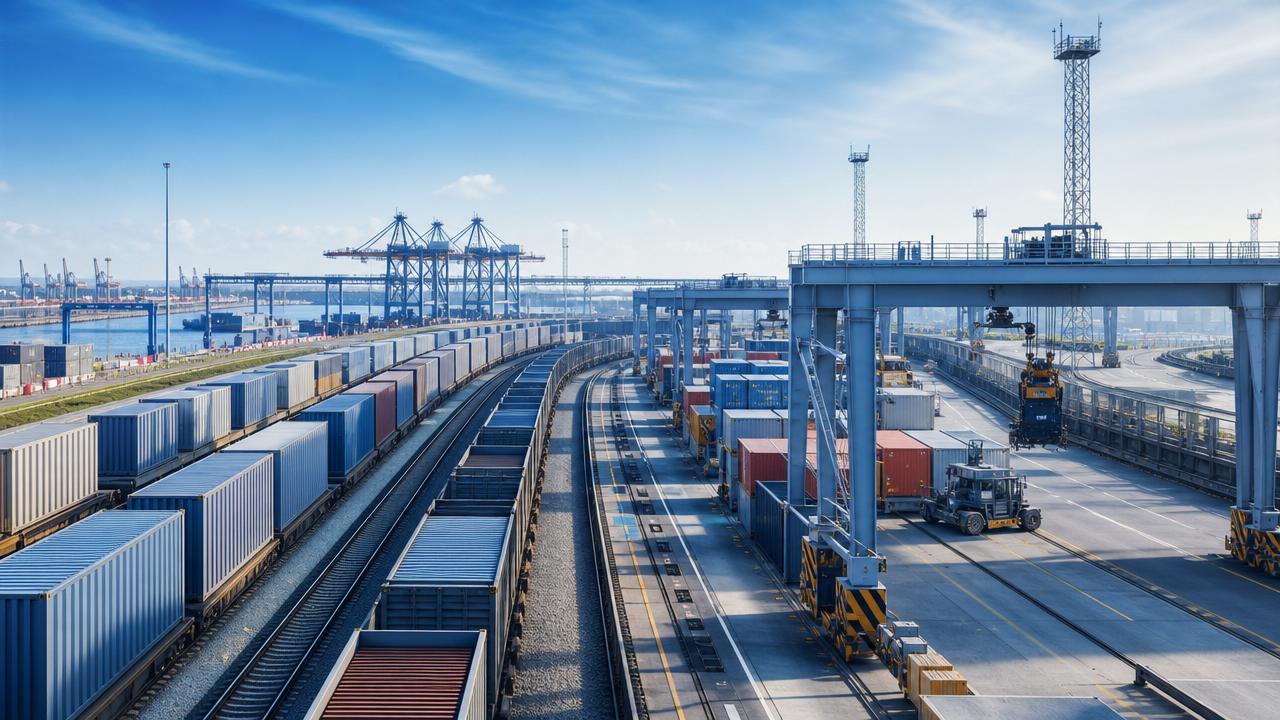
As rail terminals become critical gateways for low-carbon, high-capacity freight movement, enterprise leaders need timely global supply chain updates to navigate capacity shifts, infrastructure investments, signaling modernization, and intermodal disruptions. This article examines the operational and strategic developments shaping rail terminal performance worldwide, helping decision-makers assess risk, optimize corridor planning, and align logistics networks with evolving engineering standards and trade demands.
For railway authorities, EPC contractors, locomotive manufacturers, port operators, and industrial shippers, rail terminal strategy is no longer a local operating issue. It is a board-level planning discipline linked to resilience, carbon targets, asset utilization, and cross-border trade continuity.
Global Railway-Freight & Engineering, or G-RFE, views rail terminals as the interface between heavy-haul equipment, digital signaling, yard automation, and intermodal transport policy. Reliable global supply chain updates help decision-makers convert fragmented market signals into actionable corridor plans.
Why Rail Terminals Are Moving to the Center of Supply Chain Strategy
Rail terminals are increasingly responsible for absorbing volatility across ports, inland hubs, manufacturing clusters, and border gateways. A delay of 6–12 hours at a major terminal can disrupt wagon rotation, locomotive assignment, and downstream trucking slots.
The value of global supply chain updates is strongest when they connect trade conditions with infrastructure capability. Capacity headlines alone are insufficient without track geometry, signaling readiness, lifting equipment, and customs-processing constraints.
Capacity pressure is shifting from ports to inland nodes
As maritime gateways expand yard automation and berth productivity, inland terminals often become the next bottleneck. Typical constraints include limited siding length, 2–4 crane windows per shift, and insufficient staging space for high-volume containers.
Enterprise leaders should examine terminal throughput in cycles rather than daily totals. A hub handling 800 wagons per day may still underperform if peak-hour release patterns create congestion in 3 critical time blocks.
Decarbonization is changing modal allocation
Many industrial shippers are moving part of their long-haul freight from road to rail to reduce emissions intensity. This creates demand for terminals that can manage heavier trains, faster transloading, and predictable intermodal connections.
Global supply chain updates should therefore include energy infrastructure, electrification plans, diesel-electric locomotive availability, and access to 6000hp-class heavy-haul assets where gradient, axle load, and train length justify deployment.
Operational signals decision-makers should monitor
- Average dwell time by cargo type, especially containers, bulk commodities, and project cargo.
- Track occupancy ratios during peak 4-hour operating windows.
- Availability of CBTC, ETCS, GSM-R, or compatible digital communication systems.
- Planned maintenance windows for cranes, points, tracks, and terminal access roads.
When these indicators are incorporated into global supply chain updates, executives can distinguish temporary congestion from structural weakness. That distinction is essential for capital allocation, procurement timing, and corridor diversification.
Key Global Supply Chain Updates Affecting Rail Terminals
The most relevant global supply chain updates for rail terminal planning fall into 5 categories: corridor capacity, intermodal demand, signaling modernization, equipment availability, and regulatory alignment. Each factor affects cost, reliability, and scalability.
Executives should avoid treating these updates as isolated announcements. A new port-rail connection, for example, may require additional locomotives, revised timetable planning, upgraded safety protocols, and customs data integration.
The following table summarizes practical update categories and the decisions they influence. It is designed for strategic screening before detailed engineering audits or tender preparation.
The table shows why global supply chain updates must be translated into engineering and commercial decisions. A terminal upgrade succeeds when capacity, signaling, fleet planning, and compliance are evaluated together.
Corridor investment and terminal readiness
New rail-port corridors can create strong demand within 12–36 months, but terminals may need longer lead times for land acquisition, track works, power supply, and control-room integration.
Decision-makers should assess whether a proposed corridor supports 740-meter, 850-meter, or longer freight trains. Train length affects track layout, braking systems, shunting processes, and the economics of heavy-haul operations.
Intermodal disruption and recovery planning
Disruptions rarely remain in one mode. A port closure, border inspection backlog, or road bridge restriction can shift freight into rail terminals within 24–72 hours.
Global supply chain updates are most useful when terminal managers can link them to scenario plans. These plans should include extra shunting crews, temporary storage areas, and priority rules for time-sensitive cargo.
Engineering Priorities for Resilient Terminal Operations
Rail terminal resilience depends on more than adding tracks or cranes. It requires an integrated engineering view across civil infrastructure, rolling stock interfaces, signaling logic, data exchange, and maintenance capacity.
G-RFE’s technical intelligence approach emphasizes benchmarking assets against international frameworks such as UIC, EN, and AAR. This helps decision-makers compare options across regions without relying only on supplier claims.
Track, yard, and access design
A terminal serving high-volume freight should validate track design against expected axle loads, curve radius, turnout frequency, and maintenance access. Small geometry errors can reduce speed or raise inspection frequency.
For heavy-haul environments, practical planning often examines 25-tonne to 32.5-tonne axle-load categories, depending on national rules and commodity profile. Yard design must also account for emergency isolation zones.
Recommended 6-point infrastructure checklist
- Confirm design train length and future expansion allowance for at least 10–20 years.
- Audit turnout condition, drainage, ballast performance, and slab-track interfaces.
- Map crane travel paths against container stacks and emergency vehicle routes.
- Assess power redundancy for signaling, lighting, gate systems, and reefer points.
- Define maintenance windows that do not conflict with peak cargo release periods.
- Verify that inspection pits, workshops, and spare parts storage match fleet composition.
This checklist turns global supply chain updates into site-specific priorities. It also supports clearer tender scopes, reducing change orders during construction or commissioning.
Signaling and digital communication
Modern terminals require safe movement authority, precise asset location, and resilient communication. CBTC, ETCS, and GSM-R frameworks can improve reliability when configured for freight-yard realities.
However, digital modernization should not be treated as a single software purchase. It normally includes 3 stages: operational mapping, interface validation, and acceptance testing under live or simulated traffic.
Maintenance as a capacity protection tool
Poor maintenance planning can remove capacity faster than demand growth adds pressure. Turnouts, wheel detectors, cranes, communications cabinets, and gate systems require different inspection cycles.
Terminals should categorize assets into critical, operational, and support levels. Critical assets may need weekly inspection, while lower-risk support systems may follow monthly or quarterly review cycles.
How Enterprise Leaders Should Evaluate Rail Terminal Investments
Investment decisions should combine logistics economics with engineering evidence. Global supply chain updates provide the external context, but internal evaluation must test cost, risk, interoperability, and lifecycle performance.
A practical evaluation model uses 4 lenses: strategic fit, technical readiness, commercial resilience, and implementation risk. Each lens should be reviewed before procurement documents are finalized.
The matrix below outlines decision factors for railway authorities, industrial cargo owners, EPC teams, and terminal operators. It supports early comparison between expansion, automation, and corridor partnership options.
The matrix highlights a core principle: investment value is created by alignment. A high-capacity crane or advanced signaling layer delivers limited benefit if track layout, staffing, and customs workflows remain unchanged.
Procurement considerations for B2B buyers
Procurement teams should request technical documentation that reflects real terminal operating conditions. Generic brochures rarely answer questions about interface risk, maintenance access, or commissioning under traffic.
A strong tender package should include performance thresholds, acceptance tests, spare parts strategy, training requirements, and service response targets. For critical systems, 24–48 hour escalation paths may be appropriate.
Common procurement mistakes to avoid
- Selecting equipment before confirming track layout, power supply, and safety-zone requirements.
- Underestimating software integration between terminal operating systems and railway control systems.
- Ignoring spare parts lead times for specialized rail engineering machinery.
- Treating global supply chain updates as market commentary rather than procurement intelligence.
Avoiding these mistakes can shorten negotiation cycles by 2–6 weeks and reduce redesign exposure. It also improves comparability between suppliers, contractors, and financing partners.
Implementation Roadmap for Data-Driven Terminal Planning
A disciplined implementation roadmap helps organizations convert global supply chain updates into action. The goal is not to react to every disruption, but to establish repeatable decision rules.
For many enterprises, a 90-day planning cycle is practical. It allows enough time to collect data, test scenarios, validate engineering constraints, and present investment options to executive committees.
A 5-step planning process
- Map current terminal performance using dwell time, train release rates, and equipment availability.
- Screen global supply chain updates for corridor, regulatory, technology, and demand relevance.
- Run 3 scenarios covering normal growth, disruption surge, and low-volume stress conditions.
- Prioritize interventions by cost, time-to-impact, safety risk, and interoperability value.
- Prepare a phased investment plan with 30-day, 12-month, and 3-year actions.
This process supports balanced decision-making. Quick operational changes can unlock short-term capacity, while longer-term works improve terminal resilience across future trade cycles.
FAQ for executives reviewing terminal strategy
How often should leadership review rail terminal updates?
Monthly review is suitable for stable corridors, while weekly review may be needed during port congestion, geopolitical disruption, labor constraints, or major construction possessions.
Which standards matter most for cross-border freight corridors?
UIC, EN, and AAR references are commonly used depending on geography and asset type. The key is matching standards to rolling stock, signaling interfaces, and operational rules.
When should a terminal consider automation?
Automation becomes more compelling when volume is predictable, manual steps exceed 6–8 repeated handoffs, and data quality is strong enough to support reliable dispatching decisions.
Turning Updates into Competitive Advantage
Global supply chain updates are valuable only when they improve decisions. For rail terminals, that means linking market signals to engineering choices, operating procedures, procurement priorities, and compliance controls.
Enterprise leaders should treat terminal planning as a cross-functional discipline involving operations, engineering, finance, safety, and commercial teams. This reduces blind spots and supports more resilient freight corridors.
G-RFE supports decision-makers with technical intelligence across heavy-haul rolling stock, infrastructure maintenance, signaling, intermodal rail-port systems, and specialized engineering machinery. Its framework helps organizations benchmark options with greater clarity.
If your organization is evaluating rail terminal upgrades, corridor risk, or intermodal investment priorities, use timely global supply chain updates as the starting point for a structured assessment. Contact G-RFE to explore tailored intelligence, compare engineering options, and learn more solutions for resilient rail-freight operations.
- Rail Port Systems Procurement: Evaluating Integration, Lifecycle Cost, and Vendor ScopeTime : Sep 10, 2026
- Rail Port Logistics Systems: Key Integration Requirements for Automated Container YardsTime : Sep 02, 2026
- How Rail Port Logistics Systems Improve Container Yard Throughput and Dwell TimeTime : Sep 02, 2026
Industry Briefing
Get the top 5 industry headlines delivered to your inbox every morning.