
What matters most in a covered wagon OEM supplier review

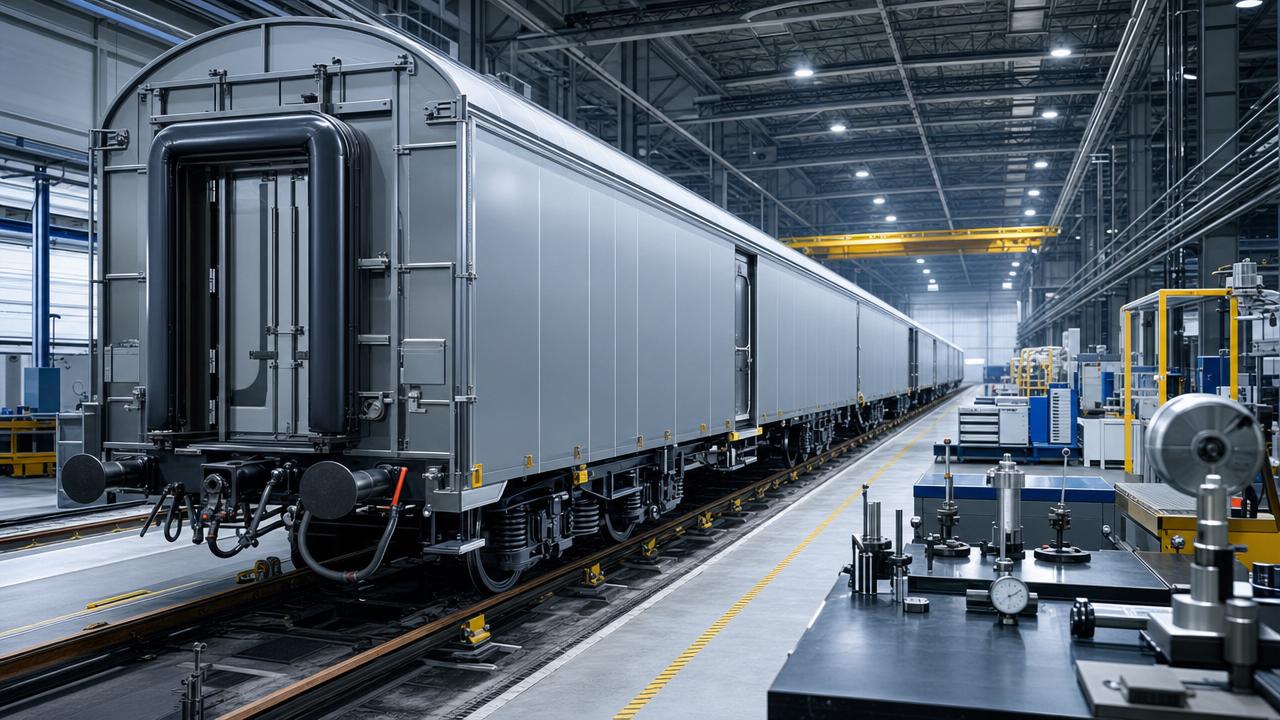
For business evaluators, a covered wagon OEM supplier review should go far beyond price lists and delivery promises.
The real decision factors include manufacturing consistency, compliance with international rail standards, engineering capability, lifecycle support, and long-term supply reliability.
Understanding what truly matters in a covered wagon OEM supplier assessment helps reduce procurement risk and secure durable, regulation-ready freight solutions.
Within global railway freight systems, this review also affects interoperability, corridor efficiency, maintenance planning, and total asset value over decades.
What should a covered wagon OEM supplier review actually measure?
A strong covered wagon OEM supplier review measures capability, not just quotations.
Covered wagons operate under repeated loading cycles, weather exposure, route constraints, and strict safety expectations.
That means supplier evaluation must test whether the builder can deliver repeatable technical quality across the full production run.
The best review framework usually covers five fundamentals.
- Design maturity and wagon engineering depth
- Factory process control and welding consistency
- Standards compliance and documented testing
- Spare parts, maintenance, and retrofit support
- Commercial resilience and delivery reliability
In railway freight engineering, product quality is inseparable from system compatibility.
A covered wagon OEM supplier may offer attractive body specifications, yet fail on bogie integration, brake architecture, gauge limits, or loading interface requirements.
A proper review therefore examines the wagon as an operational asset, not a standalone metal structure.
Why is this broader view important?
Because freight wagons serve long asset lives, often beyond twenty-five years.
A weak covered wagon OEM supplier review can lock operations into avoidable failures, delayed approvals, and rising lifecycle costs.
How can engineering and manufacturing quality be verified?
Engineering quality should be confirmed through documents, audits, and physical evidence.
Ask for design calculations, finite element analysis, material specifications, and fatigue assumptions for the covered wagon body and underframe.
A qualified covered wagon OEM supplier should clearly explain load paths, roof strength, door sealing, corrosion strategy, and discharge or access arrangements.
Manufacturing quality depends on process discipline.
Review welding procedures, welder qualifications, non-destructive testing records, jigs, fixture control, and dimensional inspection methods.
Paint systems and surface preparation also matter greatly in harsh freight environments.
Key factory checkpoints
- Traceable steel sourcing and batch records
- Controlled welding distortion management
- Door, hatch, and locking mechanism fit checks
- Brake installation accuracy and testing routine
- Water ingress and coating durability validation
If possible, compare prototype inspection records with serial production records.
This reveals whether a covered wagon OEM supplier can scale quality consistently, rather than only producing one excellent demonstration unit.
Which standards and certifications matter most?
Compliance is one of the most decisive parts of a covered wagon OEM supplier review.
The exact standards depend on target markets, axle load, interoperability rules, and railway authority requirements.
For cross-border or institutional projects, alignment with UIC, EN, and AAR references can strongly influence approval speed and technical confidence.
Standards should not be treated as brochure decorations.
They must be linked to tested components, certified processes, and inspection reports.
Important compliance areas
- Structural strength and fatigue performance
- Brake system conformity and stopping performance
- Bogie, wheelset, and axle interface standards
- Loading gauge, coupler, and buffer compatibility
- Fire, corrosion, and environmental protection requirements
A reliable covered wagon OEM supplier should also disclose how deviations are managed.
Minor technical exceptions can be acceptable, but only when documented, risk-assessed, and approved within the project framework.
How do lifecycle support and spare parts affect supplier choice?
Lifecycle support often separates a viable supplier from a risky one.
A covered wagon OEM supplier review should examine spare parts policy, obsolescence planning, technical manuals, and field support responsiveness.
Even robust wagons need periodic replacement parts, brake servicing, door hardware renewal, corrosion repair, and occasional design updates.
Without support continuity, downtime can rise sharply.
This becomes more serious in remote freight corridors where lead times are long and fleet standardization is critical.
What to confirm before approval
- Availability of illustrated maintenance manuals
- Recommended spare package for two to five years
- Repair procedures for doors, roofs, and structural members
- Training support for maintenance teams
- Response time for warranty and technical claims
The most dependable covered wagon OEM supplier usually supports data feedback from service operations.
That enables targeted improvements in sealing, wear parts, loading ergonomics, and maintainability over future batches.
What commercial and operational risks are often overlooked?
Many reviews underestimate non-technical risk.
A covered wagon OEM supplier may appear technically capable, yet still create exposure through weak cash flow, unstable subcontracting, or poor export execution.
Operational risk also includes production bottlenecks, overloaded order books, and dependence on single-source components.
These factors directly affect delivery, commissioning, and fleet readiness.
Common review mistakes
- Choosing by unit price alone
- Ignoring homologation timelines
- Accepting vague warranty language
- Skipping factory process audits
- Overlooking supplier change-control procedures
A disciplined covered wagon OEM supplier review should include financial checks, reference projects, shipment history, and contract clarity on penalties, acceptance, and after-sales obligations.
How can findings be compared in a practical decision framework?
A comparison table helps turn scattered observations into a decision-ready view.
This kind of structure improves consistency across multiple candidate suppliers.
It also makes a covered wagon OEM supplier review easier to defend during technical, financial, and regulatory discussions.
Quick FAQ summary
A high-quality covered wagon OEM supplier review is ultimately about confidence in long-term fleet performance.
The right decision comes from balancing engineering integrity, standards compliance, production discipline, and dependable lifecycle support.
In the broader rail freight sector, this approach supports safer operations, better asset utilization, and stronger corridor reliability.
For the next step, build a review checklist, request verifiable documents, and compare each covered wagon OEM supplier using the same weighted criteria.
That method delivers clearer decisions and reduces surprises after contract award.
Industry Briefing
Get the top 5 industry headlines delivered to your inbox every morning.