
Shipbuilding Industry News: Key Delivery Delays and Contract Risks

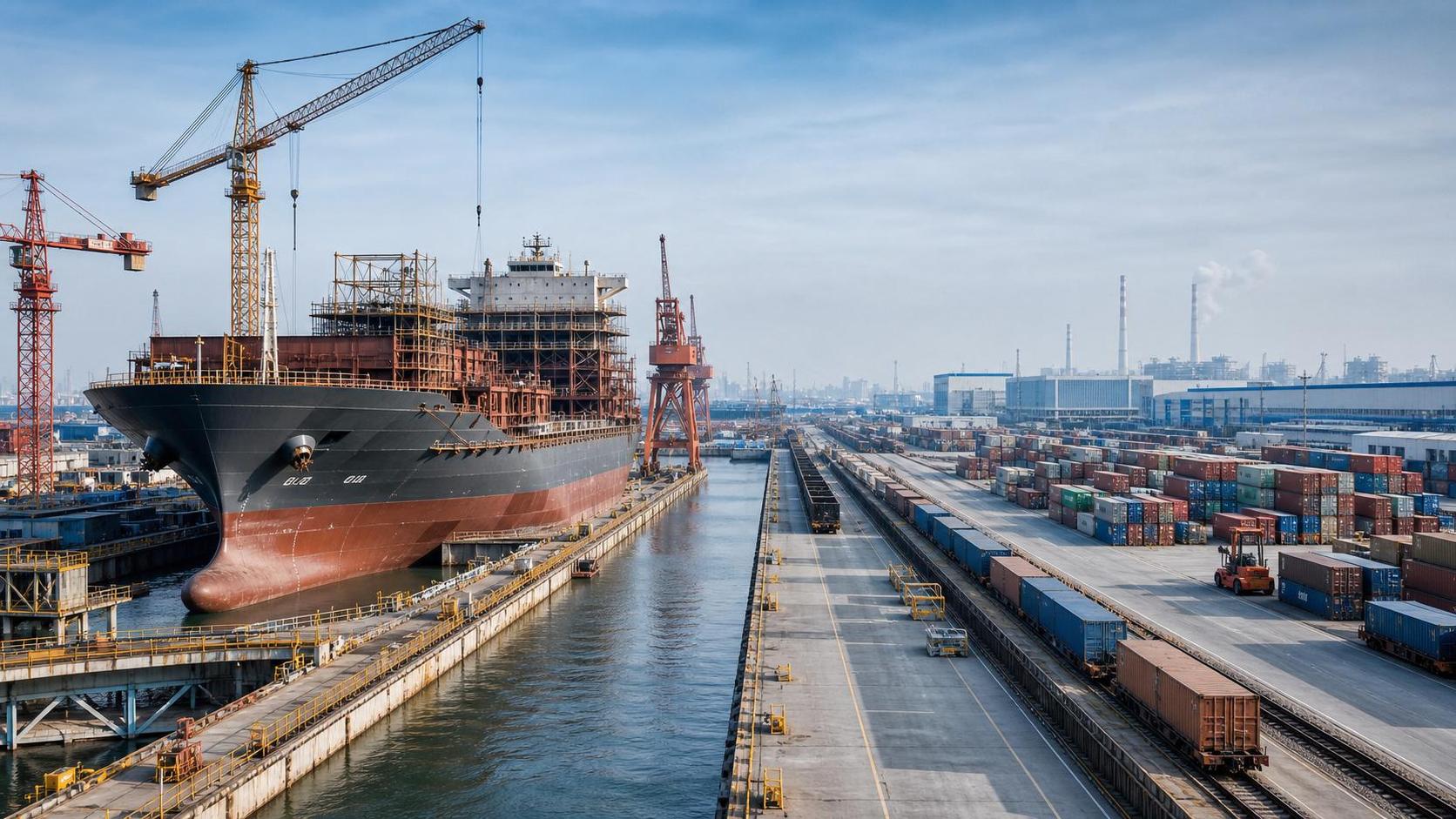
Why is shipbuilding industry news suddenly centered on delays and contract exposure?
Recent shipbuilding industry news is no longer just about order volume or yard expansion. The bigger story is delivery uncertainty and the contract pressure that follows.
For commercial evaluation, delayed handover changes far more than a sailing date. It affects financing schedules, charter assumptions, insurance timing, and downstream logistics commitments.
That matters across industries. Port links, cargo planning, inland transfer capacity, and engineering interfaces all depend on predictable vessel availability.
In practice, shipbuilding industry news now signals whether a supplier can still execute under inflation, labor shortages, equipment bottlenecks, and tighter compliance checks.
This is also where a wider transport view helps. G-RFE tracks freight systems through an engineering and policy lens, especially where maritime delays spill into rail-port coordination.
When a vessel arrives late, intermodal plans often shift. Terminal slots, rail dispatch windows, signaling capacity, and specialized yard equipment may all need revision.
So the real question behind shipbuilding industry news is simple: how much delivery risk can a project absorb before cost and reliability assumptions stop being credible?
What usually causes delivery delays, and which signals deserve closer attention?
Not every delay comes from poor execution. Some begin much earlier, during specification freeze, drawing approval, or late changes in class and environmental requirements.
More common triggers include steel price volatility, engine and propulsion lead times, subcontractor congestion, labor gaps, and rework during integration testing.
Cross-border projects add another layer. Export controls, sanctions screening, documentation mismatches, and certification timing can delay equipment release even after physical construction progresses.
A useful reading of shipbuilding industry news focuses on leading indicators, not headlines alone. Buyers often overreact to launch announcements and underweight commissioning milestones.
The more reliable warning signs usually appear in yard workload balance, vendor dependency, dry dock occupancy, and repeated design modifications.
Need a quick filter? The table below helps separate manageable schedule drift from deeper contract risk.
When does a delay become a serious contract risk rather than a routine schedule issue?
A short delay is not automatically a contract crisis. The turning point usually comes when delay begins to alter economic assumptions, not just timeline expectations.
For example, a four-week slip may be manageable if financing, deployment windows, and cargo commitments still hold. It becomes serious when those linked obligations start to fail.
That is why shipbuilding industry news should be read together with the contract structure. Headlines rarely explain whether relief events, cap limits, or termination rights are actually triggered.
Several clauses deserve early review:
- Delivery date definition and whether it means launch, sea trial completion, or accepted handover
- Liquidated damages formula and the maximum claimable amount
- Force majeure wording, especially around sanctions, compliance checks, and supplier defaults
- Change-order procedures and the evidence needed for schedule extension
- Warranty start point if delivery is partial or conditionally accepted
A useful test is to ask whether the contract still allocates risk to the party best able to control it. If not, the schedule issue may already be a commercial imbalance.
In actual projects, weak milestone definitions create many disputes. One side sees progress; the other sees a vessel that cannot yet generate revenue.
How should cost evaluation change when shipbuilding industry news points to uncertainty?
The common mistake is to focus only on the contract price. Delay risk usually hides in secondary costs that emerge after the original budget looks approved.
These costs may include bridge financing, idle crew preparation, revised insurance start dates, storage of owner-furnished equipment, and replacement charter arrangements.
There is also system-wide cost. If a vessel supports a larger logistics corridor, late delivery can affect port slot planning and inland transfer rhythm.
This is where G-RFE’s intermodal perspective becomes practical. Rail-port systems operate on synchronized windows, not isolated asset assumptions.
If maritime capacity slips, inland assets may sit underused or be reassigned at a premium. That cost often escapes traditional shipyard comparison sheets.
A stronger review model usually separates cost into three layers:
- Base build cost and approved variation exposure
- Delay-linked financial and operational cost
- Network impact on cargo flow, inland transfer, and engineering interfaces
Shipbuilding industry news becomes more useful when read through total delivered value rather than yard price alone.
Which comparisons help distinguish a reliable yard from a risky one?
Price remains important, but reliable comparison starts with execution evidence. A low bid is weak comfort if key systems rely on strained subcontractors or unstable sourcing.
The better comparison is operational. Has the yard delivered similar vessel types recently? Were sea trials completed without repeated technical exceptions?
Another good indicator is transparency. Strong yards share realistic critical path updates, interface accountability, and documentation readiness.
By contrast, weak reporting often relies on broad progress percentages. Those numbers can hide trouble in commissioning, approvals, or owner-supplied equipment integration.
A practical comparison framework may look like this:
This is also why cross-sector intelligence matters. Engineering disciplines with strict standards, such as rail signaling or heavy-haul systems, often assess suppliers through traceability and interface control.
That mindset can improve how shipbuilding industry news is translated into procurement judgment.
What are the most common mistakes when responding to shipbuilding industry news?
One mistake is treating every delay as temporary noise. Some delays are symptoms of structural weakness, especially when engineering changes and vendor substitutions happen together.
Another mistake is relying too heavily on penalty clauses. Liquidated damages may offset part of the loss, but they rarely restore missed market timing or disrupted logistics planning.
A third mistake is separating maritime review from inland execution. Where cargo corridors depend on ports, rail links, and synchronized transfer assets, delay impact is cumulative.
It is also risky to ignore standards alignment. Documentation discipline, test procedures, and regulatory traceability often reveal more than optimistic schedule statements.
That is why institutions such as G-RFE place value on benchmark-based assessment. Standards-led review reduces the chance of judging progress by narrative alone.
If shipbuilding industry news indicates rising uncertainty, the practical response is not panic. It is deeper verification of schedule logic, contract allocation, and network-level cost exposure.
So what should be reviewed next before committing to a shipbuilding decision?
Start with the schedule behind the headline. Confirm which milestones are truly complete and which still depend on approvals, integration tests, or supplier release.
Then review the contract as an operating document, not a legal archive. Delivery definitions, extension rights, and claim mechanisms need to match real project behavior.
After that, map the secondary cost path. Include financing, deployment timing, inland transfer effects, and the cost of contingency capacity if handover slips again.
It also helps to compare supplier reporting quality, not only price. Evidence-based updates are usually a better predictor than aggressive commercial promises.
Seen this way, shipbuilding industry news is not just market commentary. It is an early-warning input for procurement discipline, risk allocation, and execution realism.
The next step is straightforward: define the acceptable delay threshold, test the contract against that threshold, and compare suppliers on verifiable delivery resilience.
Where projects connect with broader freight corridors, add an intermodal review. A vessel decision is stronger when maritime timing, port handling, and inland engineering capacity are assessed together.
Industry Briefing
Get the top 5 industry headlines delivered to your inbox every morning.