
Power Market Updates: Cost Signals for 2026

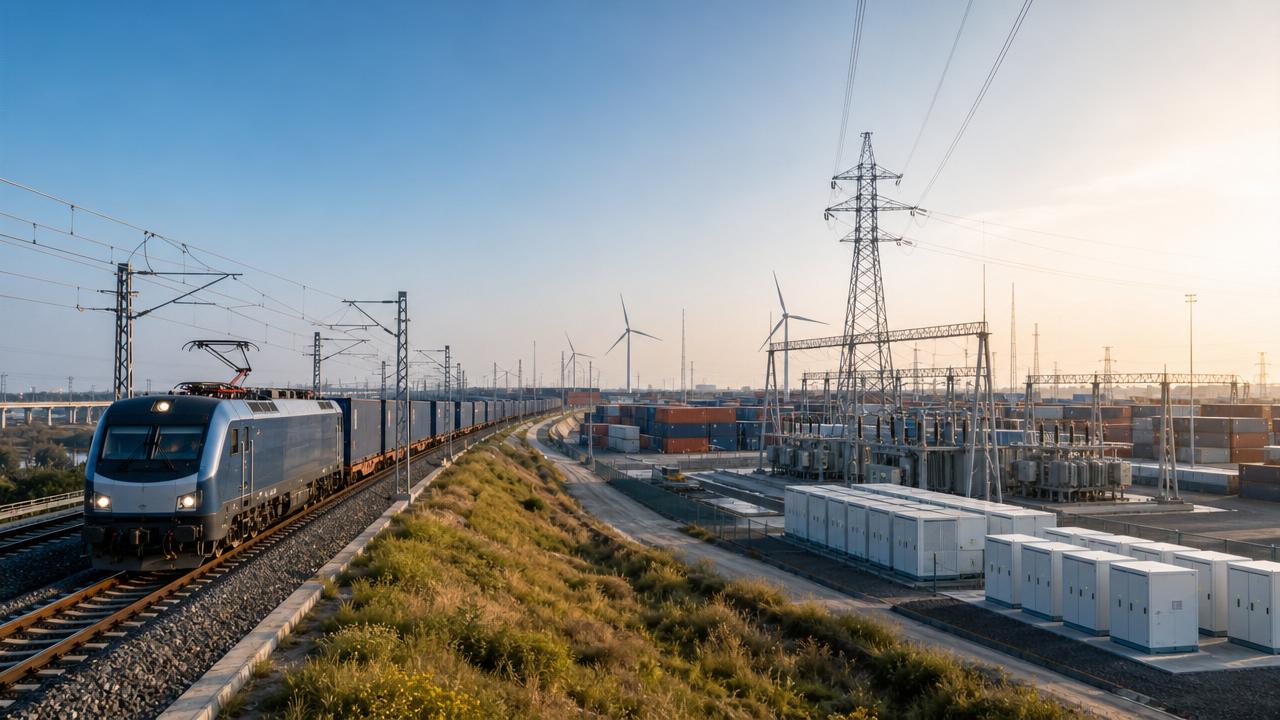
Power Market Updates: Cost Signals for 2026
As energy volatility reshapes rail freight economics, power market updates are essential cost signals for 2026 planning.
Electricity pricing, fuel transition policies, grid constraints, and low-carbon incentives now influence locomotive procurement, corridor investment, and intermodal operating margins.
For railway authorities, EPC contractors, and rolling stock producers, these signals help align capital strategy with resilient and future-ready freight networks.
Why Power Market Updates Need a Checklist Approach
Rail freight systems are no longer insulated from electricity markets, gas benchmarks, carbon rules, or grid connection queues.
Power market updates convert volatile external data into structured planning inputs for traction energy, maintenance depots, and intermodal terminals.
A checklist approach reduces fragmented interpretation across engineering, finance, operations, and public infrastructure planning.
It also supports consistent comparison between electrified corridors, diesel-electric fleets, battery locomotives, hydrogen pilots, and hybrid yard equipment.
Without disciplined monitoring, cost assumptions can become obsolete before a locomotive tender, substation design, or track upgrade reaches execution.
Core Checklist for 2026 Cost Signals
Use the following checklist to translate power market updates into practical decisions across railway-freight and engineering programs.
- Track wholesale electricity futures by region, season, and peak window to estimate traction power exposure before corridor schedules are locked.
- Compare grid tariff structures against train path density, yard dwell time, and regenerative braking potential for realistic operating cost models.
- Review gas, coal, and renewable generation mixes because marginal power prices still shape electricity costs in many freight regions.
- Map carbon pricing, emissions trading rules, and diesel taxation changes against locomotive lifecycle economics and fleet replacement timing.
- Assess grid connection capacity near terminals, maintenance bases, and charging points before specifying battery-electric or high-power equipment.
- Check public incentive windows for electrification, storage, smart substations, and low-emission intermodal infrastructure before budget approval.
- Benchmark power purchase agreements against spot exposure, escalation clauses, renewable certificates, and operational flexibility requirements.
- Validate substation redundancy, transformer lead times, and protection systems against expected freight growth and extreme weather events.
- Integrate power market updates into tender evaluation, not only annual budgeting, so technical offers reflect future energy risk.
- Reconcile financial assumptions with ETCS, CBTC, GSM-R, and digital asset systems that can optimize power usage through operations data.
Cost Signals That Matter Most in 2026
Electricity Price Shape
Average annual prices are less useful than hourly price shapes for electric rail corridors.
Power market updates should show peak spreads, negative pricing periods, congestion zones, and renewable curtailment windows.
These details affect train dispatching, charging schedules, storage sizing, and regenerative energy recovery.
Fuel Transition Policy
Diesel-electric locomotives remain critical for heavy-haul and remote corridors.
However, diesel duties, renewable fuel mandates, and emissions rules can quickly alter total cost of ownership.
Power market updates should be reviewed beside fuel policy updates, not as a separate energy report.
Grid Readiness
Grid availability can become the hidden constraint behind electrification and intermodal expansion.
A corridor with favorable electricity prices may still face long connection queues or reinforcement costs.
Use power market updates to identify where cost signals and physical capacity move in opposite directions.
Scenario Guidance for Rail Freight and Engineering
Electrified Heavy-Haul Corridors
For high-density mineral, container, or bulk corridors, traction energy is a major operating variable.
Power market updates can guide whether to prioritize catenary upgrades, static frequency converters, or wayside storage.
They also support better comparison between higher-capacity locomotives and timetable adjustments that reduce peak demand charges.
Diesel-Electric Fleet Renewal
Fleet renewal cannot rely only on fuel burn curves and maintenance intervals.
Power market updates reveal whether hybridization, shore power, or future electrification compatibility deserves stronger weighting.
This is especially relevant when 6000hp assets operate across borders with uneven carbon and fuel regulations.
Intermodal Rail-Port Systems
Ports, inland terminals, and yards increasingly depend on cranes, charging systems, reefers, and automated handling equipment.
Power market updates help forecast terminal energy costs during vessel peaks, night operations, and rail departure surges.
They also support coordinated planning between rail slots, port electrification, and local distribution grid upgrades.
Smart Signaling and Digital Operations
Digital signaling is often treated as a safety and capacity investment.
It also enables energy-aware driving, closer headways, and better recovery from grid-related constraints.
Power market updates become more valuable when connected to ETCS, CBTC, GSM-R, and train management systems.
Commonly Missed Risks
Ignoring demand charges: Energy volume is only one cost element. Short power peaks from simultaneous charging or traction demand can distort monthly bills.
Underestimating connection timelines: A favorable tariff means little if transformers, substations, or permits delay energization beyond the asset delivery schedule.
Separating carbon from power: Carbon prices, renewable certificates, and grid emissions factors directly influence low-carbon freight claims and funding eligibility.
Overlooking regional volatility: National averages hide congestion, curtailment, and local grid bottlenecks. Power market updates must be corridor-specific.
Freezing assumptions too early: Multi-year EPC projects need scheduled refresh points, especially before procurement release and financial close.
Execution Actions for 2026 Planning
- Build a quarterly dashboard that combines electricity futures, tariffs, diesel policy, carbon prices, grid capacity, and incentive deadlines.
- Assign each corridor an energy-risk profile covering price volatility, connection risk, regulatory pressure, and operational flexibility.
- Update locomotive and infrastructure business cases whenever power market updates show material changes in tariffs or capacity constraints.
- Include energy scenario testing in tenders for rolling stock, substations, maintenance depots, and intermodal equipment.
- Use digital operations data to identify train paths, yards, and terminals where energy optimization can deliver fast savings.
Execution should not wait for perfect data.
The practical goal is to create repeatable decision gates that absorb new power market updates without disrupting engineering discipline.
That approach protects capital budgets while allowing technical designs to respond to changing energy economics.
How to Turn Updates into Procurement Criteria
Energy exposure should appear inside technical and commercial scoring, not only in background assumptions.
Power market updates can support clearer evaluation of locomotive efficiency, regenerative braking, auxiliary loads, and charging compatibility.
For infrastructure packages, criteria should include grid interface maturity, metering design, protection coordination, and future storage integration.
For digital systems, criteria should include energy data visibility, dispatch integration, predictive analytics, and cybersecurity for operational energy controls.
These requirements help convert market intelligence into measurable engineering outcomes.
Summary and Next Action
Power market updates are now strategic inputs for railway-freight and engineering decisions.
They influence operating margins, corridor electrification, fleet selection, terminal design, and low-carbon investment timing.
The strongest 2026 plans will connect energy data with UIC, EN, AAR, ETCS, CBTC, and GSM-R aligned engineering frameworks.
Start by creating a corridor-level energy checklist and refreshing it quarterly with verified power market updates.
Then link each signal to one decision: tender timing, grid design, fleet specification, storage sizing, or operating schedule.
This turns market volatility into a managed planning variable rather than an uncontrolled project risk.
Industry Briefing
Get the top 5 industry headlines delivered to your inbox every morning.