
Global Supply Chain Updates Exporter Guide to Delay Risks

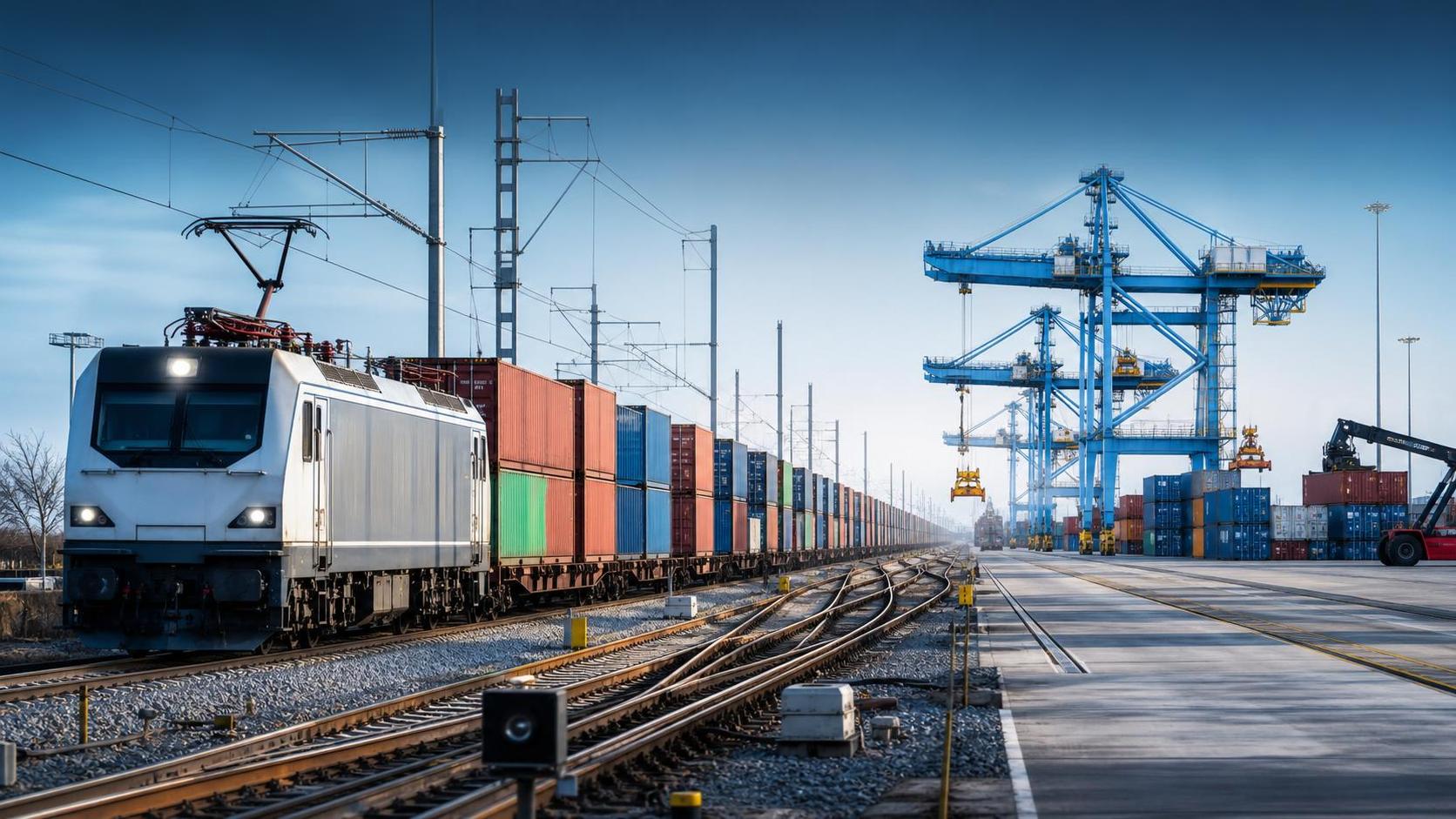
Delay risk now sits at the center of export planning, especially across rail-linked trade corridors. A useful global supply chain updates exporter review is no longer just about vessel schedules or customs dates.
In practice, missed milestones often start earlier. Track possession windows shift, signaling compatibility is incomplete, inland terminals saturate, or border documentation rules change with little warning.
That is why many cross-border evaluations now combine logistics data with engineering and policy signals. The strongest decisions usually come from reading infrastructure, equipment, and compliance together.
Seen through the G-RFE lens, delay exposure is rarely one-dimensional. Heavy-haul rolling stock, track maintenance cycles, CBTC or ETCS readiness, rail-port interfaces, and specialized machinery all affect delivery confidence.
What does a global supply chain updates exporter guide really help you judge?
It helps separate noise from operational risk. Market headlines may mention congestion, but an exporter guide becomes useful only when it shows where delays actually form.
For rail-freight decisions, the real question is not whether disruption exists. It is whether the disruption can affect route continuity, equipment availability, handover timing, or regulatory clearance.
A strong global supply chain updates exporter framework usually checks four linked layers: corridor policy, infrastructure condition, system interoperability, and terminal coordination.
This matters because one weak layer can invalidate the others. A modern locomotive fleet cannot protect lead time if the border yard lacks signaling alignment or wagon inspection capacity.
In sectors tied to steel, energy, machinery, or project cargo, delay costs also escalate faster than in standard parcel trade. Storage, demurrage, labor rescheduling, and contract penalties can stack quickly.
Where do delay risks usually begin on rail-connected export routes?
Many assume delays begin at the border. More often, they start upstream, long before cargo reaches customs control.
A common trigger is infrastructure maintenance. Track renewal, turnout replacement, bridge restrictions, or axle-load controls can cut throughput even when the route remains technically open.
Another trigger is equipment mismatch. Wagon types may not suit cargo density, braking standards may vary by network, or locomotive changeover may add unplanned dwell time.
Signaling is a quieter but serious issue. If GSM-R coverage is patchy or ETCS transition zones are not fully stable, dispatch precision drops and buffers disappear.
Intermodal handoff creates another cluster of risk. Rail-port systems often fail at the interface, not on the main line. Crane windows, gate sequencing, truck appointment logic, and customs inspection space all matter.
The table below helps translate broad updates into practical warning signs.
How can you tell whether a delay warning is temporary or structural?
This is where many reviews go wrong. A temporary bottleneck may justify schedule padding. A structural issue may require route redesign or contract revision.
One practical test is repeatability. If the same corridor shows recurring dwell spikes across several weeks, the issue is probably not random.
Another test is dependency depth. When delays involve signaling migration, infrastructure rehabilitation, or gauge-transfer capacity, recovery usually takes longer than a simple staffing shortage.
It also helps to compare hardware strength with system readiness. G-RFE analysis often treats locomotives, wagons, track, and communications as one operating chain, not isolated assets.
If a corridor advertises higher freight capacity but lacks stable intermodal synchronization, projected gains may remain theoretical. On paper, capacity exists. In service, delays persist.
A reliable global supply chain updates exporter assessment therefore asks whether the route has resilient fallback options, not just headline capacity.
Useful signs of structural exposure
- Repeated border dwell without policy relief
- Frequent locomotive or crew change requirements
- Ongoing track possessions on key freight sections
- Partial ETCS, CBTC, or GSM-R migration status
- Terminal throughput below booked train frequency
Which corridor signals deserve more attention than headline transit times?
Headline transit times are attractive, but they are often average figures. Delay risk hides in variability, not just in the mean.
A better question is how the corridor behaves under pressure. Can it hold schedule integrity during maintenance windows, customs surges, or rolling stock reallocation?
The most valuable signals are operational and technical. They show whether a route is dependable when conditions become less ideal.
- Dwell time spread between best and worst weekly performance
- Border crossing handover speed by train type
- Availability of compliant wagons for heavy or specialized cargo
- Track access reliability during engineering works
- Port-rail synchronization for discharge and onward loading
This is where a global supply chain updates exporter perspective adds value. It converts broad industry movement into route-level judgment, especially for land-based logistics networks with engineering constraints.
Standards also matter. When networks are benchmarked against UIC, EN, or AAR expectations, it becomes easier to judge whether delays reflect poor execution or genuine system limits.
What mistakes lead to underestimating delay risks?
The most common mistake is treating export delay as a documentation problem only. Documents matter, but corridor performance often fails for technical and interface reasons.
Another mistake is relying on a single mode indicator. Rail can look efficient at line-haul level while intermodal transfer quietly becomes the main delay source.
A third mistake is using nominal capacity instead of effective capacity. A line may support heavy-haul operations, yet maintenance machinery, signaling windows, or yard geometry may limit usable throughput.
There is also a tendency to overlook engineering dependencies. Specialized rail machinery, turnout maintenance, and communications upgrades can affect reliability long before formal delay notices appear.
In a sound global supply chain updates exporter process, warnings are ranked by operational impact. Not every update deserves the same response.
A quick judgment checklist
- Check whether the issue affects one node or the whole corridor
- Confirm if the disruption touches hardware, signaling, or regulation
- Measure transit variability, not only planned duration
- Review fallback routing and terminal substitution options
- Test whether current contracts absorb dwell and resequencing costs
How should the next review cycle be structured?
A practical next step is to build a corridor review around evidence, not assumptions. That means combining logistics status updates with engineering and policy checkpoints.
Start by mapping the route into critical nodes. Include origin loading, inland transfer, border controls, signaling transition areas, and final port or terminal interfaces.
Then assign risk indicators to each node. Use dwell variability, maintenance notices, rolling stock fit, customs revision frequency, and telecom or signaling stability.
Where available, use a G-RFE-style benchmark mindset. Compare actual corridor performance against recognized operating standards and asset readiness, not promotional route claims.
The goal is not to eliminate every delay. It is to understand which delay risks are tolerable, which are escalating, and which require a routing, scheduling, or contract response.
A disciplined global supply chain updates exporter review should end with three outputs: a monitored watchlist, a fallback plan, and a threshold for intervention.
If the route depends on complex rail-port systems or cross-network signaling maturity, revisit assumptions early. Delay risk usually becomes expensive before it becomes obvious.
Industry Briefing
Get the top 5 industry headlines delivered to your inbox every morning.