
Agricultural Equipment Export Updates: Key Compliance Changes in 2026

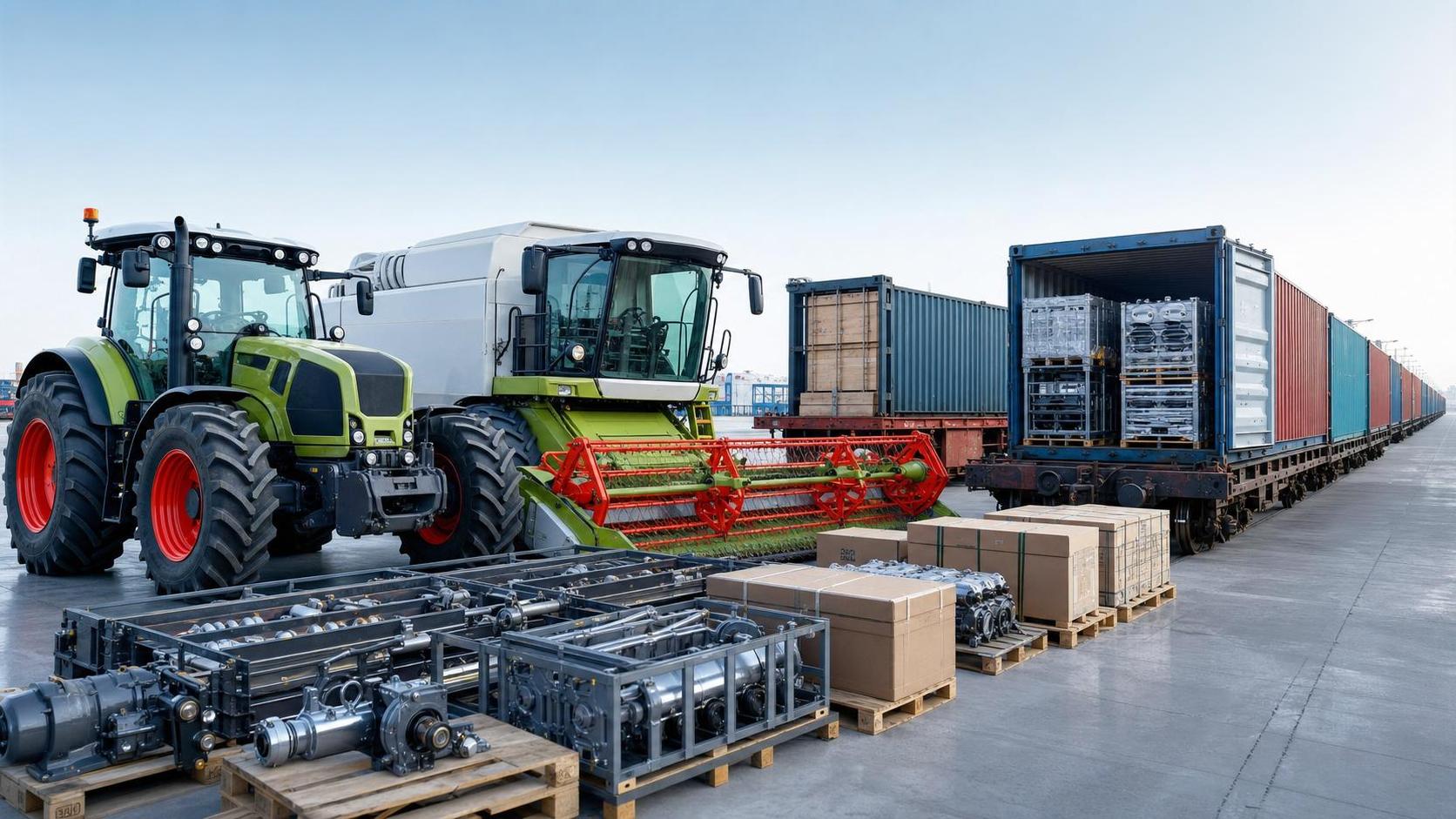
Agricultural equipment export updates are becoming a core checkpoint for 2026 trade decisions, especially where cross-border machinery flows face stricter review. What once looked like a routine shipment issue now affects supplier qualification, landed cost, insurance exposure, and delivery reliability.
The immediate pressure comes from tighter rules on safety certification, emissions alignment, technical files, software-related documentation, and customs traceability. For organizations comparing export programs across regions, the real question is no longer whether compliance matters, but how early it must be built into commercial planning.
That shift also connects with a broader logistics picture. Platforms such as Global Railway-Freight & Engineering, which track industrial standards, freight corridors, and engineering regulation, highlight how machinery compliance increasingly interacts with inland transport systems, intermodal handling, and policy-driven infrastructure networks.
Why 2026 feels different
Recent regulatory changes are not limited to one market. Several jurisdictions are updating machinery import rules at the same time, creating overlap between product compliance, environmental performance, and shipment documentation.
In practical terms, agricultural equipment export updates now affect tractors, harvesters, sprayers, tillage systems, irrigation machinery, attachments, and digital control units. The wider the product mix, the harder it becomes to rely on one generic compliance file.
Another difference in 2026 is enforcement style. Authorities are using more digital pre-arrival checks, document matching, serial number verification, and origin screening. A shipment may appear acceptable on paper yet still be delayed if data fields do not align across systems.
What these agricultural equipment export updates actually cover
The phrase sounds broad, but it usually points to a concentrated set of compliance areas. Each one can change the commercial viability of an export program.
Safety and machinery conformity
Many markets are refining essential safety requirements for moving parts, operator protection, braking systems, lighting, noise exposure, and emergency shut-off functions. Equipment with electronic controls may face extra review for software integrity and fail-safe behavior.
Emissions and powertrain rules
Engines remain under close scrutiny. Even when a machine is technically exportable, mismatched emissions stages can block market access or trigger redesign costs. Hybrid and alternative-fuel machinery may gain policy support, but they often require more detailed technical declarations.
Documentation and labeling
This is where many avoidable delays start. Updated rules often require consistent model identification, multilingual manuals, parts traceability, hazard labeling, and evidence that declarations match the exact shipped configuration.
Customs and origin transparency
Trade authorities increasingly want a cleaner audit trail for components, steel content, electronics, and assembly location. That is especially relevant when anti-circumvention controls, preferential tariff claims, or sanctions-related screening come into play.
The business impact goes beyond compliance
Agricultural equipment export updates matter because they reshape commercial assumptions. A compliant product does not automatically remain competitive if certification lead times lengthen or approval costs rise.
For business evaluation, four effects usually stand out: time, cost, continuity, and credibility. Delayed approvals stretch delivery schedules. Additional testing changes margin calculations. Incomplete files disrupt channel expansion. Weak compliance control raises counterparty risk.
This is also where transport strategy becomes relevant. G-RFE’s perspective on rail-linked industrial logistics is useful because heavy agricultural machinery often moves through inland freight corridors before export. Compliance gaps at origin can cascade into storage charges, wagon rebooking, and terminal congestion.
Where risk tends to concentrate
Not every shipment faces the same level of scrutiny. Risk often clusters around products and routes with technical complexity, multi-country sourcing, or variable local rules.
Multi-configuration product lines
If one platform supports different engines, attachments, digital modules, or cabin options, the compliance file must reflect the exported build. Generic certificates can create false confidence.
Emerging market expansion
New destination markets may offer demand growth, yet local interpretation of agricultural equipment export updates can be less predictable. Documentation accepted in one customs environment may require amendment in another.
Intermodal and inland-heavy logistics
Oversized machinery often depends on rail-port transfers, bonded yards, and synchronized handoffs. Where G-RFE’s regulatory and engineering intelligence becomes relevant is in understanding how cargo handling requirements meet compliance timing.
A missed inspection window can affect more than customs clearance. It can break transport sequencing across terminals, sidings, and port reservations.
How to read supplier readiness in 2026
A useful review starts with evidence quality, not marketing claims. The strongest suppliers show alignment between engineering records, test results, declarations, and shipment documents.
- Model-level compliance files match the exact exported configuration.
- Emissions certificates are current for each destination market.
- Bills of materials support origin and component traceability.
- Operator manuals, labels, and warnings are localized where required.
- Serial number control connects production, documentation, and shipment release.
It also helps to test responsiveness. When agricultural equipment export updates change mid-cycle, the practical advantage goes to organizations that can revise files quickly without interrupting dispatch.
A practical way to compare export programs
Side-by-side comparisons work best when technical, regulatory, and logistics factors are reviewed together. Looking only at unit price can hide future friction.
A structured comparison usually includes approval lead time, retesting probability, document completeness, route dependency, and post-entry support. If one program depends on fragile assumptions, the lower headline cost may not hold.
This is especially true for heavy or specialized equipment that moves through inland corridors before ocean export. Rail-linked freight planning, terminal compatibility, and handling documentation can influence total compliance performance just as much as factory certificates.
Questions worth asking early
- Which 2026 rule changes apply by destination, not just by product category?
- Which documents are issued centrally, and which depend on local representation?
- Where could emissions, software, or labeling trigger revalidation?
- How would a border hold affect rail bookings, storage, and final delivery windows?
What to watch next
Agricultural equipment export updates will likely keep moving toward digital verification, tighter environmental alignment, and more transparent component sourcing. That means compliance will continue shifting upstream into design control, supplier onboarding, and route planning.
The most reliable approach is to treat regulatory review as part of commercial due diligence, not as a final shipping task. Standards intelligence, logistics coordination, and technical file discipline now sit in the same decision frame.
For the next step, it makes sense to map target markets against product variants, validate documentation depth, and test how each export path performs under 2026 compliance conditions. That creates a clearer basis for comparing risk, timing, and long-term access.
Industry Briefing
Get the top 5 industry headlines delivered to your inbox every morning.