Railway Bogie Manufacturer Comparison Should Start with Fatigue Data

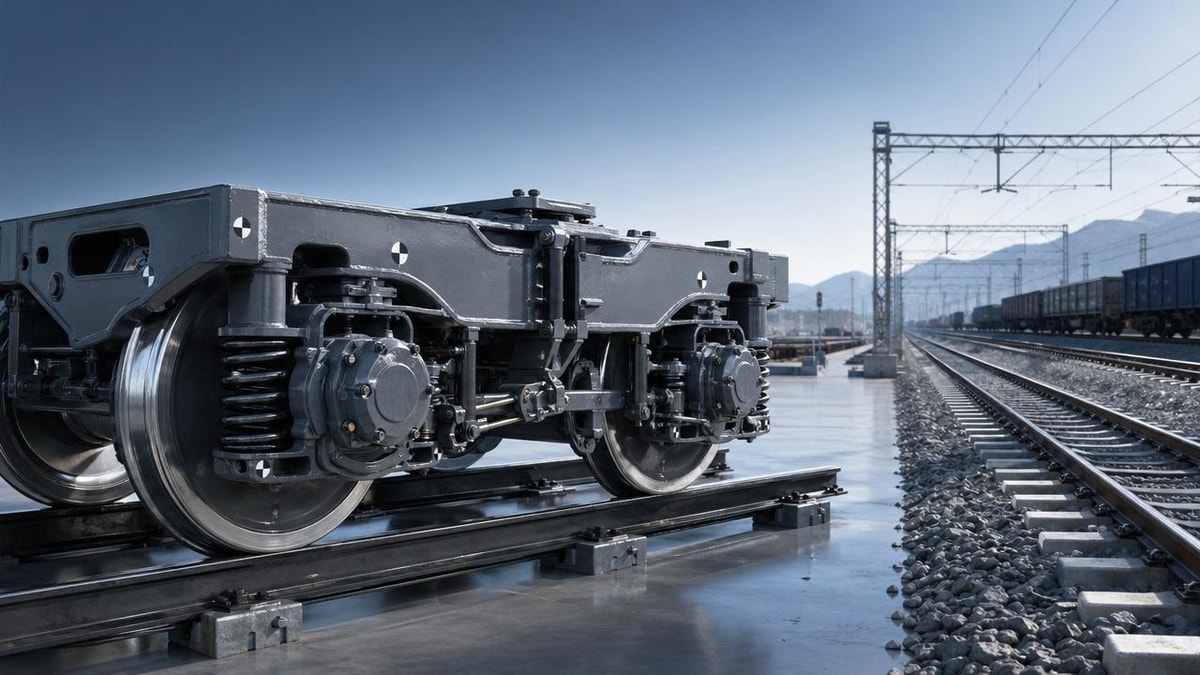
Choosing a railway bogie manufacturer should begin with fatigue data, not just price sheets or catalog claims. For information-driven buyers comparing suppliers across global freight and engineering markets, validated fatigue performance reveals how a bogie will endure heavy axle loads, long service cycles, and demanding corridor conditions. This comparison lens sets a more reliable foundation for technical evaluation, compliance review, and long-term asset risk control.
Why scenario differences matter before comparing any railway bogie manufacturer
For an information researcher, the first mistake is treating every bogie project as if the duty cycle were the same. A railway bogie manufacturer serving a 25 t axle-load mineral corridor is solving a different engineering problem from one supporting mixed freight on intermodal routes or cross-border wagons that must align with multiple standards. Fatigue data only becomes useful when it is tied to the actual operating scenario: load spectrum, curve radius frequency, braking pattern, annual mileage, and maintenance interval.
In practical procurement screening, two suppliers may both claim compliance with recognized design practices, yet one may validate durability around 1.5 to 2.5 million km equivalent service exposure, while another only presents static strength results or short-cycle lab summaries. That distinction matters because freight bogies often face 20 to 30 years of service life, repeated shock loading, and environmental variation across ports, mountain sections, deserts, or humid coastal corridors.
This is especially important in the G-RFE decision environment, where rolling stock hardware cannot be separated from corridor operations, maintenance strategy, and international compliance logic. A credible comparison should connect fatigue evidence with standards familiarity, workshop supportability, spare parts logic, and interface compatibility with wagon bodies, brake systems, and condition-monitoring architecture.
The three questions that define the comparison starting point
- What load case dominates the asset: heavy-haul bulk, mixed general freight, or cross-border interoperability?
- What service pattern is expected: high annual mileage above 120,000 km, medium-duty fleet rotation, or intermittent industrial use?
- What proof is available: finite element fatigue analysis, rig testing, weld detail validation, in-service reference conditions, or only brochure-level claims?
When these three questions are answered early, the railway bogie manufacturer comparison becomes more disciplined. Buyers can then separate attractive pricing from durable technical fit and avoid late-stage redesigns, accelerated wheelset wear, or unplanned overhaul frequency.
A quick scenario map for initial screening
The table below helps map common freight applications to the fatigue priorities that should guide early supplier evaluation. It is not a ranking tool by itself, but it shows why the same railway bogie manufacturer may be suitable in one operating context and less suitable in another.
The comparison logic is simple: fatigue data is never generic. Its value depends on whether the test conditions, model assumptions, and operating loads resemble the actual business scenario. That is why scenario mapping should come before commercial shortlisting.
Three typical application scenarios and what each one should ask a railway bogie manufacturer
Most buyers do not need more marketing claims; they need sharper filters. The following scenarios reflect common freight and engineering use cases where bogie selection risk is high. In each case, the right supplier conversation starts with fatigue behavior, then moves to maintainability, supply continuity, and corridor suitability.
These scenarios also help research teams, engineering consultants, and procurement evaluators compare offers without over-relying on unit price. A lower initial quote can become less competitive if wheel wear accelerates, weld inspection intervals shorten, or suspension parts need replacement too frequently within the first 24 to 48 months.
For broader freight networks, the railway bogie manufacturer should be judged not only on design capability but also on the discipline of evidence presentation: test scope, duty assumptions, threshold criteria, and field maintainability logic.
Scenario 1: Heavy-haul mineral and bulk corridors
In heavy-haul service, fatigue performance is usually the central technical issue. Axle loads often move in the 25 t to 32.5 t range, train lengths can exceed 1.5 km, and wagons face repeated high-impact loading during loading, unloading, shunting, and track irregularity events. Here, a railway bogie manufacturer should provide evidence for frame durability, axlebox interface robustness, and weld detail resilience under repeated stress reversals.
The buyer should not stop at asking whether the bogie has “been tested.” The meaningful question is whether the testing or simulation reflects realistic heavy-haul duty spectra, including lateral forces on curves, braking events on descending grades, and impact loads from imperfect track conditions. On remote corridors, reducing unscheduled wagon withdrawal by even 1% to 3% can materially affect fleet availability.
Maintenance planning is equally important. If the supplier’s fatigue design is robust but component replacement requires specialized tooling unavailable within a 300 to 500 km service radius, operating risk remains elevated. In this scenario, engineering strength and support practicality must be reviewed together.
Heavy-haul priority checklist
- Confirm validated axle-load range and whether overload cases were considered.
- Review fatigue-sensitive weld zones and inspection accessibility.
- Check overhaul intervals for suspension, brake rigging interfaces, and wear parts.
- Ask about spare part lead times, especially for remote mine-to-port routes.
Scenario 2: Intermodal, general freight, and mixed network operation
This scenario looks less extreme than heavy-haul, but the engineering challenge is often more variable. A wagon may carry containers one day, palletized cargo the next, and move across network segments with different track quality, curvature frequency, and speed profiles. That means the railway bogie manufacturer should show how the bogie performs under changing vertical and lateral load combinations rather than a single fixed-duty test case.
Typical fleet operators in this segment may target 80 to 120 km/h operation with high annual circulation. Stability, wheel-rail wear behavior, and maintenance predictability matter because downtime interrupts network fluidity more than in captive industrial service. Fatigue data should therefore be connected to ride performance, hunting resistance limits, and brake-cycle-related stress exposure.
A useful comparison question is whether the supplier understands life-cycle balance. Some bogie designs may meet structural targets but create higher wear cost elsewhere in the system, such as wheel profiles, brake shoes, or suspension consumables. For mixed freight, the best railway bogie manufacturer is often the one that demonstrates balanced system behavior over a broad operating envelope, not just peak capacity.
Scenario 3: Cross-border freight corridors and standard-sensitive projects
Cross-border operations add another layer to supplier comparison: documentation discipline. A railway bogie manufacturer supporting international corridors may need to align design assumptions, materials documentation, maintenance records, and fatigue evidence with client expectations shaped by UIC, EN, AAR, or national railway authority requirements. Even when exact approval pathways differ by country, the ability to communicate data in a structured and traceable way becomes commercially important.
In these projects, the practical risks are not limited to fatigue cracking. Buyers must also consider interoperability of components, availability of replacement parts across more than one jurisdiction, and whether workshop teams can inspect key fatigue-prone areas without proprietary bottlenecks. A corridor may run for 2,000 km or more, and service disruptions at border transitions can carry disproportionate cost.
This is where a data-driven railway bogie manufacturer stands out. Instead of generic compliance language, the supplier should be able to explain load assumptions, inspection logic, and maintenance thresholds in a way that EPC contractors, railway authorities, and rolling stock teams can all review with confidence.
How fatigue data changes the supplier evaluation matrix
Once scenarios are clear, the next step is to turn fatigue evidence into a comparison matrix. This helps information researchers move from broad market scanning to a defensible shortlist. Not every supplier package will use the same language, but most can still be compared across several common decision dimensions.
A strong matrix should combine structural durability, operational suitability, maintenance implications, and documentation quality. For example, a supplier with acceptable price and lead time may still rank lower if the fatigue file lacks load-spectrum detail or if inspection points are difficult to access within normal depot time windows of 6 to 12 hours.
The table below translates this into a practical review format for railway procurement, engineering consultancies, and strategic sourcing teams.
This kind of matrix improves supplier conversations. It shifts attention from promotional language to evidence quality and operational consequence. For many buyers, that alone makes it easier to identify which railway bogie manufacturer deserves deeper technical review.
What stronger fatigue evidence usually looks like
Better fatigue documentation does not need to be confidentially detailed to be useful. At a minimum, it should show what parts of the bogie structure were treated as fatigue-critical, what load combinations were considered, how cycles were estimated, and how acceptance criteria were interpreted. If the supplier can relate this to field maintenance intervals and expected wear behavior, the comparison becomes more credible.
By contrast, when a railway bogie manufacturer offers broad statements such as “optimized design” or “high reliability” without duty-specific evidence, the buyer may face uncertainty later in technical clarification. That uncertainty usually appears during approval review, interface engineering, or first-year operational feedback.
Common misjudgments when selecting a railway bogie manufacturer
Even experienced teams can misread supplier suitability if they focus on the wrong indicators. The most common error is equating a broad product catalog with proven fit for a specific freight corridor. Product breadth can be useful, but it does not replace duty-specific fatigue validation, maintenance logic, and interface clarity.
Another misjudgment is overvaluing nominal speed or axle-load labels without examining cumulative damage conditions. A bogie rated for a target load may still behave differently under high curvature frequency, repeated empty-loaded transitions, or severe brake-duty sections. In practice, two routes with the same nominal axle load can create different fatigue profiles over a 12-month period.
A third issue is treating aftersales as a separate commercial topic. In railway freight, aftersales is part of the technical risk profile. If inspection guidance, spares logic, and failure feedback loops are weak, the long-term value of the original bogie design is harder to protect.
Red flags to watch during research and prequalification
- Fatigue claims are presented without reference to service conditions, cycle counts, or structural hotspots.
- Documentation emphasizes low purchase price but gives limited detail on overhaul intervals or depot workload.
- The railway bogie manufacturer cannot explain how the design differs for heavy-haul, mixed freight, and cross-border applications.
- Support discussions remain vague on spare parts lead times, engineering response windows, or change-control procedures.
A useful internal check before asking for quotations
Before issuing an RFQ, define your own scenario with enough precision to screen suppliers fairly. Include axle load range, target speed, annual mileage, track quality profile, maintenance base capability, and standards environment. A 5-point internal scenario sheet often saves weeks of clarification later and improves comparability across offers.
This is where technical intelligence platforms and industry research support become valuable. Clearer scenario framing helps decision-makers ask sharper questions, reduce ambiguity in bid review, and identify whether a railway bogie manufacturer is presenting a corridor-ready solution or merely a generic catalog option.
How to move from research to a confident supplier shortlist
For information-led buyers, the goal is not to pick a supplier from one article; it is to build a smarter shortlist. Start by grouping candidate suppliers by operating scenario, then compare fatigue evidence, maintainability, and standards readiness in the same worksheet. If possible, separate “commercially attractive” from “technically defensible” and only then look for overlap.
At G-RFE, this structured approach reflects how modern freight asset decisions should be made: hardware, operations, compliance, and lifecycle performance must be read together. Whether the project concerns heavy-haul wagons, intermodal freight stock, or corridor expansion under EPC delivery, better decisions usually come from better technical framing rather than faster price comparison.
If you are assessing a railway bogie manufacturer for a current project, the most productive next step is to align the supplier discussion with your actual application profile. That includes parameter confirmation, fatigue-data scope, expected delivery cycle, maintenance assumptions, documentation format, and any customization needs linked to axle load, speed, or cross-border operation.
Why choose us
G-RFE supports decision-makers who need more than surface-level supplier listings. We help frame comparisons around real railway-freight and engineering conditions, including bogie selection logic, standards context, application-specific risk points, and long-cycle asset planning. This is particularly useful when your team must compare multiple regions, technical documents, or vendor claims under time pressure.
Contact us if you want support with parameter confirmation, application-based product selection, indicative delivery-cycle review, customization direction, certification and standards considerations, or quotation communication preparation. If your priority is to identify the right railway bogie manufacturer for a defined freight scenario, we can help you turn raw supplier information into a more reliable evaluation path.
Industry Briefing
Get the top 5 industry headlines delivered to your inbox every morning.