Tank Wagon OEM Supplier Red Flags in Safety Documentation

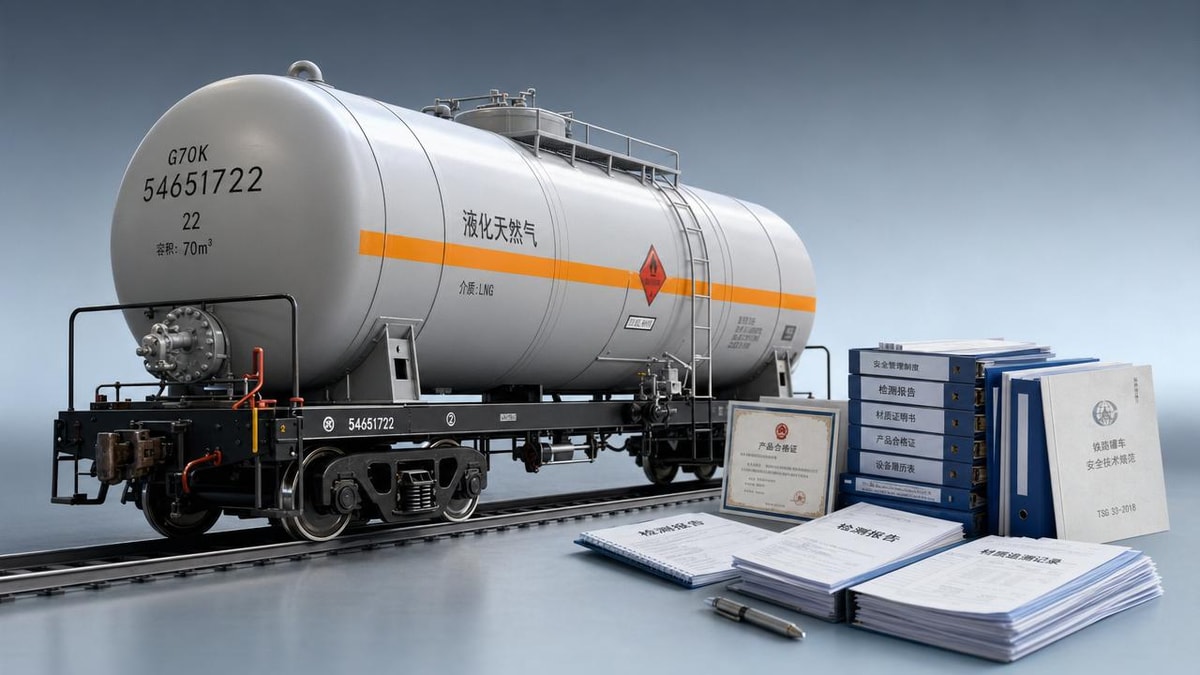
Choosing a tank wagon OEM supplier is not only a pricing decision but a safety-critical one. For quality control and safety managers, weak or inconsistent safety documentation can signal deeper risks in design compliance, material traceability, testing integrity, and regulatory readiness. This article highlights the key red flags to watch for before supplier approval turns into operational or legal exposure.
Why safety documentation is under closer scrutiny now
Across global rail freight, the approval standard for a tank wagon OEM supplier is changing. Buyers are no longer satisfied with attractive commercial terms, basic certificates, or polished presentation decks. They want document systems that can stand up to stricter audits, cross-border operations, incident investigation, and lifecycle asset management. This shift is especially visible in hazardous cargo transport, where a single documentation gap can affect not only production release but also insurance, authority acceptance, terminal access, and long-term operating permissions.
Several industry signals explain this change. Railway authorities and large fleet operators are placing more emphasis on traceability from raw material to welded structure to final pressure or integrity test. Engineering procurement teams increasingly compare suppliers against UIC, EN, AAR, RID, or locally adopted tank car and wagon requirements. At the same time, digital quality systems make inconsistencies easier to spot. A supplier that once passed with scattered paper files may now fail when asked for revision history, batch correlation, or evidence that test methods match the approved design basis.
For quality control and safety managers, this means the document package itself has become an early-warning tool. If a tank wagon OEM supplier cannot produce consistent, current, and technically aligned safety documentation during qualification, that weakness may reflect broader process instability inside design, sourcing, welding, NDT, pressure testing, coating, or release control.
The market is shifting from certificate collection to evidence-based assurance
One major trend is the move away from “certificate stacking.” In the past, some buyers accepted general quality certificates as proof of capability. Today, experienced operators ask a more demanding question: do the documents actually prove that this exact wagon design, these exact materials, and this exact manufacturing route meet the required safety standard?
This is a critical distinction. A tank wagon OEM supplier may show ISO certifications, standard test reports, and generic compliance statements, yet still fail to demonstrate that the supplied wagon configuration matches approved drawings, fatigue assumptions, shell material specifications, valve arrangements, braking safety requirements, crashworthiness expectations, or dangerous goods operating conditions. The red flag is not the presence of certificates; it is the absence of connected evidence.
Key red flags that often signal deeper supplier risk
When evaluating a tank wagon OEM supplier, documentation issues should not be treated as clerical errors alone. Repeated gaps often reveal weaknesses in engineering discipline, supply chain control, or safety culture. The following signals deserve immediate attention.
1. Inconsistent document revisions across the same wagon program
If drawings, welding procedures, inspection plans, and test reports do not reference the same revision level, the buyer cannot be sure which configuration was built or inspected. This is one of the clearest warning signs. It may indicate uncontrolled engineering changes, weak release management, or production moving ahead before technical approval is complete.
2. Material certificates that cannot be traced to installed components
A reliable tank wagon OEM supplier should connect shell plates, heads, nozzles, fittings, structural members, and critical pressure-retaining parts to traceable material records. If certificates exist but cannot be tied to wagon serial number, batch location, or fabrication map, the supplier may be masking substitution risk, record gaps, or fragmented subcontractor control.
3. Testing records that show outcomes but not methods
A “passed” stamp is not enough. Buyers should ask whether hydrostatic, pneumatic, leak, brake, NDT, coating, load, or dimensional tests were conducted according to approved methods with defined acceptance criteria. Missing method references, absent calibration status, or unsigned results reduce the credibility of the entire quality file.
4. Overreliance on generic compliance statements
Some suppliers respond to technical questions with broad declarations such as “built to international standards.” For a tank wagon OEM supplier, that is not enough. The document set should identify which standards apply, which clauses are relevant, where deviations exist, and how equivalent safety is demonstrated if local or project-specific requirements differ.
5. Weak subcontractor visibility
Many wagon builders outsource valves, bogies, brake equipment, castings, coatings, or NDT services. If the supplier cannot clearly show approval status, incoming inspection records, and traceability from subcontracted item to final wagon dossier, the buyer is exposed to hidden quality variability. In current market conditions, subcontractor control is part of supplier capability, not a separate issue.
What is driving these red flags to the top of approval decisions
Three forces are pushing documentation quality from a secondary check to a primary approval criterion. First, hazardous freight operations face rising public and regulatory sensitivity. Even where formal rules have not dramatically changed, enforcement expectations are stronger. Second, rolling stock procurement is more international. A tank wagon OEM supplier may build in one jurisdiction, certify in another, and deliver to a fleet that moves across multiple networks. That increases the burden on document clarity and regulatory alignment. Third, digital asset management is expanding. Operators want records that support maintenance planning, retrofit decisions, and failure investigation over decades, not just at factory acceptance.
This trend matters because documentation is no longer only a handover package. It is becoming operational infrastructure. If the technical file is weak at delivery, every later activity—repair, requalification, accident analysis, spare part validation, and compliance renewal—becomes slower, riskier, and more expensive.
How different stakeholders are affected by poor supplier documentation
The impact of a weak tank wagon OEM supplier is not limited to procurement. Documentation gaps affect multiple functions across the asset lifecycle.
What quality and safety teams should examine before approval
Because the market is shifting toward evidence-based qualification, teams should adjust how they screen a tank wagon OEM supplier. The goal is not to ask for more paperwork for its own sake, but to identify whether the document system reflects a controlled manufacturing reality.
- Check whether the supplier maintains a document matrix linking design, material, process qualification, inspection, testing, and final release.
- Sample traceability backwards from a finished wagon serial number to plate heat numbers, weld maps, NDT records, and pressure test results.
- Verify that applicable standards are identified at clause level rather than through vague declarations.
- Review how engineering changes are controlled after first article approval and before series production.
- Assess whether subcontracted safety-critical items appear in the same control system as in-house manufactured parts.
- Confirm that personnel qualifications, calibration validity, and inspection authorizations are current and linked to executed records.
In practical terms, an approval review should include at least one “stress test” of the supplier’s records. Ask for a complete dossier for a previously delivered wagon and see how quickly the supplier can produce coherent, cross-referenced evidence. Slow retrieval, missing links, and contradictory revisions are strong indicators of future operational friction.
Why digitalization raises the standard instead of lowering it
Some suppliers assume that moving to digital files automatically improves credibility. In reality, digitalization exposes weaknesses faster. A tank wagon OEM supplier with disciplined records can benefit from searchable traceability, cleaner revision history, and better audit response time. But a supplier with poor controls may simply digitize confusion. Duplicate files, uncontrolled edits, scanned signatures without authorization logic, and disconnected folders are common warning signs.
For buyers, the implication is clear: evaluate the integrity of the system, not only the format. A well-managed paper trail is better than a chaotic digital archive, though the long-term direction of the industry is unmistakably toward structured electronic records that support cross-functional review and lifecycle compliance.
How approval criteria are likely to evolve next
Looking ahead, supplier approval for hazardous rolling stock is likely to become more layered. Buyers will still consider cost, lead time, and capacity, but those factors will increasingly be filtered through documentation maturity. A tank wagon OEM supplier may have strong fabrication capability and still lose business if it cannot demonstrate dependable safety records, transparent change control, and fast response to technical queries.
Another likely change is earlier involvement of quality and safety teams in sourcing decisions. Instead of reviewing documents only before shipment or acceptance, organizations are moving these checks upstream into prequalification, technical bid review, and pilot build stages. This reduces the chance of discovering nonconformities after contracts are locked or production is underway.
Action-oriented judgment framework for supplier screening
Conclusion: treat documentation quality as a leading indicator, not a final formality
The strongest current signal in supplier evaluation is this: safety documentation is becoming a proxy for operational discipline. For quality and safety professionals, the question is no longer whether a tank wagon OEM supplier can provide documents, but whether those documents reveal a stable, auditable, and regulation-ready production system. In a market shaped by tighter oversight, cross-border freight complexity, and lifecycle accountability, weak documentation should be interpreted as a strategic warning, not an administrative inconvenience.
If your organization wants to judge how these trends affect its own sourcing exposure, focus on a few practical questions: Can the supplier prove traceability at wagon level? Can it show controlled engineering changes? Can it connect test results to approved methods and qualified personnel? Can it defend compliance under audit pressure? The answers will often tell you more about future risk than price alone, and they will help identify whether a tank wagon OEM supplier is truly ready for safe, durable, and internationally credible delivery.
Industry Briefing
Get the top 5 industry headlines delivered to your inbox every morning.