
Key Standards for Locomotive Auxiliary Systems

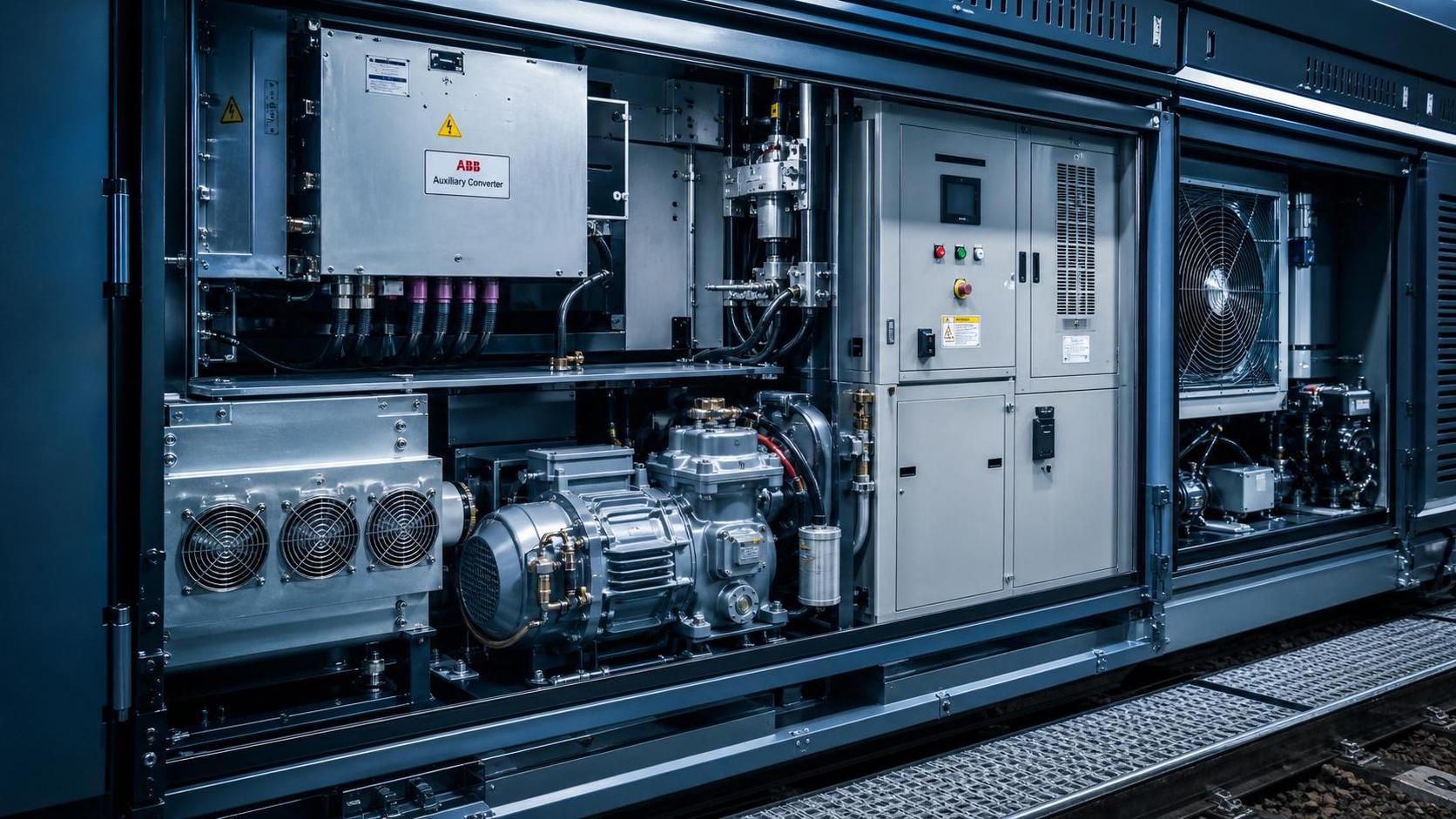
Key standards for locomotive auxiliary systems shape far more than component selection. They determine whether a freight locomotive can operate reliably across long corridors, interface with local infrastructure, and maintain predictable performance over its service life.
That matters in a market defined by heavier axle loads, stricter emissions goals, and tighter uptime targets. Auxiliary equipment may sit behind the prime mover, but it directly affects braking readiness, thermal stability, onboard power quality, diagnostics, and operational resilience.
Within the G-RFE perspective, locomotive auxiliary systems standards are best understood as a practical decision framework. They connect heavy-duty railway hardware with UIC, EN, and AAR expectations that govern interoperability, safety, maintainability, and corridor-scale deployment.
What falls under locomotive auxiliary systems
Auxiliary systems support the locomotive’s primary traction function without being secondary in importance. They include subsystems that provide energy conversion, air supply, cooling, control support, and service continuity under variable operating conditions.
Typical auxiliary scope includes battery systems, chargers, auxiliary converters, compressors, dryers, blowers, pumps, HVAC units, brake support equipment, fire detection interfaces, and electronic control modules.
In diesel-electric and electric fleets alike, these systems must work as an integrated architecture. A compliant compressor alone does not guarantee compliance if power conditioning, control logic, or thermal protection behave outside accepted limits.
Why the standards are system-level, not component-level
Locomotive auxiliary systems standards are often discussed by part number or supplier category. In practice, they are evaluated through interfaces, failure modes, duty cycles, and responses to degraded operating conditions.
For example, cooling equipment must be assessed with traction demand, ambient temperature range, and control sequencing in mind. The same applies to auxiliary power units feeding communication, signaling, and safety-related devices.
Why current rail programs pay closer attention
The pressure comes from network expansion and operating complexity. Cross-border freight, long-haul heavy loads, and digital signaling integration leave less tolerance for loosely specified support systems.
A locomotive may satisfy headline traction metrics while still underperforming in service because auxiliary subsystems trigger avoidable downtime. Common causes include voltage instability, insufficient air system recovery, poor contamination control, or weak thermal margins.
This is where locomotive auxiliary systems standards become commercially relevant. They reduce ambiguity during fleet procurement, retrofit planning, acceptance testing, and maintenance contract design.
G-RFE’s benchmarking approach is useful here because it compares assets against recognized international frameworks rather than local assumptions. That is particularly important for programs involving multinational EPC delivery, mixed-origin rolling stock, or corridor modernization.
The standards families that usually matter most
No single standard governs every auxiliary function. Evaluation normally draws from several families, with UIC, EN, and AAR acting as the main reference environments for design, testing, and acceptance.
The practical task is mapping each subsystem to the right requirement set. Electrical auxiliaries may be driven by EN-based testing, while pneumatic performance and brake interfaces need alignment with UIC or AAR operating practices.
Related technical checkpoints
- Rated voltage stability under startup, peak auxiliary demand, and fault recovery.
- Electromagnetic compatibility with signaling, communication, and control electronics.
- Temperature, dust, vibration, and moisture resistance across route conditions.
- Air system cleanliness, drying efficiency, and recovery time after repeated brake use.
- Diagnostic accessibility for maintenance teams and remote condition monitoring.
Subsystems that deserve the closest scrutiny
Not every auxiliary item carries the same operational risk. Some subsystems have a disproportionate effect on availability, safety support, and life-cycle cost.
Auxiliary power supply and conversion
Converters and battery charging units support controls, lighting, monitoring, event recording, and often safety-related electronics. Failures here can cascade quickly into multiple service impacts.
Locomotive auxiliary systems standards for power equipment should therefore focus on voltage tolerance, transient response, isolation, redundancy philosophy, and maintainability under high-vibration railway environments.
Compressed air and braking support
Air compressors, reservoirs, valves, and dryers underpin braking readiness. Performance is not judged by output alone, but by contamination control, recovery times, thermal behavior, and service continuity in cold or dusty conditions.
When reviewing locomotive auxiliary systems standards, it is worth checking whether test evidence reflects real freight duty cycles rather than ideal workshop conditions.
Cooling and thermal management
Cooling packages influence traction equipment, engine support systems, and electronic cabinets. Thermal underdesign often appears first as nuisance faults, shortened component life, or derated performance on long gradients.
Standards alignment should cover fan control logic, sensor reliability, environmental testing, and sustained operation at route-specific ambient extremes.
Where compliance adds business value
The value of locomotive auxiliary systems standards is clearest when projects move from concept to operational accountability. Compliance simplifies comparison across suppliers and limits disputes after delivery.
It also strengthens retrofit decisions. Older locomotives can often gain measurable reliability improvements through updated converters, smarter cooling control, improved air treatment, or better diagnostics, provided interface standards are respected.
For rail-port logistics, intermodal routes, and heavy-haul corridors, standardization also supports fleet commonality. Spare parts strategy, maintenance training, and software support become easier to scale when auxiliary architectures follow recognized norms.
That link between engineering detail and network economics is central to the G-RFE model. Technical intelligence is most useful when it helps convert standard clauses into measurable operational outcomes.
A practical way to assess conformity
A good review starts with the route and duty profile, not the brochure. Ambient range, gradient profile, train length, signaling environment, maintenance intervals, and power architecture all affect what “compliant” really needs to mean.
After that, document review should connect declared standards to evidence. Certificates alone are rarely enough. Test boundaries, failure criteria, and integration assumptions deserve equal attention.
- Check whether subsystem ratings match continuous freight duty, not only nominal design values.
- Review interface definitions between auxiliaries, traction systems, braking, and onboard electronics.
- Confirm environmental and EMC test conditions against the target operating corridor.
- Look for failure management logic, fallback modes, and alarm prioritization.
- Assess spare parts availability and software support across the planned asset life.
Common evaluation gaps
One frequent gap is treating auxiliary compliance as a procurement checklist exercise. Another is assuming that compliance in one region automatically transfers to another operating context without adaptation.
Locomotive auxiliary systems standards need interpretation through service conditions, not paperwork alone. That is especially true where ETCS, GSM-R, CBTC-adjacent interfaces, or mixed signaling environments increase sensitivity to electrical disturbance.
What to examine next
The next useful step is building a subsystem matrix that links each auxiliary function to the applicable UIC, EN, and AAR references, required evidence, and route-specific performance thresholds.
That matrix should then be tested against actual project priorities: interoperability, heavy-haul durability, emissions transition, retrofit feasibility, or maintenance efficiency. The result is a clearer basis for comparing bids, validating designs, or prioritizing upgrades.
In other words, locomotive auxiliary systems standards are most valuable when they become part of an operating decision framework. Once that framework is defined, technical review becomes faster, more consistent, and harder to derail by incomplete claims.
- Global Supply Chain Updates: What Industrial Equipment Buyers Should Monitor in 2026Time : Sep 29, 2026
- Rolling Stock Compliance for Locomotive Upgrades: A Fleet Acceptance WorkflowTime : Sep 28, 2026
- How Railway Power Protection Schemes Prevent Fault Propagation on Electrified LinesTime : Sep 28, 2026
Industry Briefing
Get the top 5 industry headlines delivered to your inbox every morning.