
Industrial Export News That Signals Global Trade Shifts

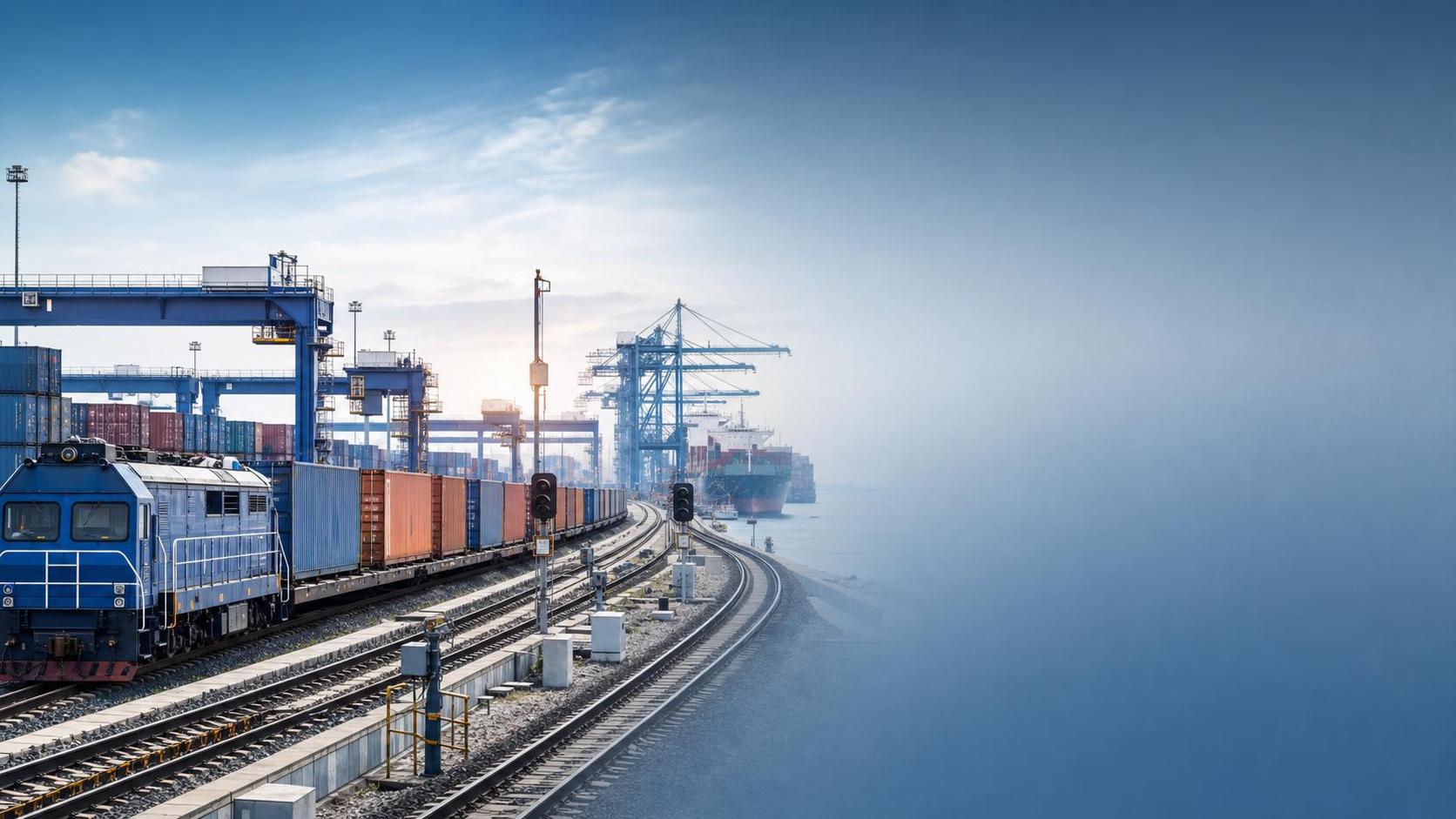
Industrial export news for global trade is revealing a new logistics map
Industrial export news for global trade now offers more than shipment updates and factory headlines.
It shows how freight corridors, engineering standards, and industrial policy are being redrawn at the same time.
That shift matters because export competitiveness is no longer decided only at the port gate.
It is increasingly shaped inland, where rail capacity, signaling reliability, and intermodal timing determine whether cargo moves predictably.
Recent industrial export news for global trade points to the same pattern across regions.
Governments are treating railway freight systems as strategic trade infrastructure, not just transport utilities.
At the same time, exporters are paying closer attention to track access, digital traffic control, wagon intelligence, and corridor resilience.
This is where the G-RFE perspective becomes useful.
Its focus on rolling stock, track maintenance, CBTC and ETCS systems, rail-port integration, and specialized rail machinery reflects the exact layers now affecting cross-border trade decisions.
The clearer signal is not volume alone, but where capacity is being rebuilt
For years, export commentary focused on monthly throughput, commodity cycles, and maritime bottlenecks.
Current industrial export news for global trade is different.
The stronger signal lies in where heavy infrastructure money is going.
Rail terminals are being expanded near manufacturing belts.
Freight lines are being upgraded for heavier axle loads and longer trains.
Signaling programs are moving from maintenance spending to strategic modernization budgets.
This suggests a market that wants fewer modal handoff failures and lower exposure to single-route disruption.
In practical terms, industrial export news for global trade is showing that inland transport quality has become a competitive variable.
Where corridors are modernized, exporters gain more predictable lead times.
Where upgrades lag, congestion simply shifts from sea lanes to inland nodes.
Why this change is becoming more visible now
Several forces are overlapping, and they reinforce each other rather than acting separately.
- Trade diversification is pushing cargo into new regional corridors, including inland links once treated as secondary.
- Decarbonization goals are raising the value of rail, especially for heavy industrial goods and long-distance land transport.
- Security and resilience concerns are rewarding multimodal systems that can reroute freight without losing visibility.
- Digital control systems are improving line utilization, making old infrastructure perform closer to modern demand.
The result is a more technical reading of industrial export news for global trade.
Researchers increasingly need to track hardware capability and policy signals together.
Rail engineering is moving from background infrastructure to market signal
One reason railway engineering now appears so often in industrial export news for global trade is simple.
It has become measurable in commercial outcomes.
A corridor with stronger locomotives, better wagons, and reliable maintenance windows can absorb export volatility better than one with aging assets.
The same applies to signaling.
CBTC, ETCS, and GSM-R linked upgrades are not abstract technology stories.
They affect headway control, dispatch confidence, border interoperability, and incident recovery.
That is why technical benchmarks such as UIC, EN, and AAR standards are showing up more often in investment discussions.
The market is no longer satisfied with raw capacity claims.
It wants evidence that infrastructure can support stable international operations.
The impact is spreading beyond transport into industrial decision-making
A useful reading of industrial export news for global trade should not stop at logistics headlines.
The effects are spreading into site selection, inventory strategy, contract structure, and compliance planning.
When rail corridors become more reliable, inland production locations gain new relevance.
When signaling and safety regimes are fragmented, cross-border projects face hidden timing risk.
When intermodal systems are digitized, data quality starts influencing physical cargo flow.
This is why industrial export news for global trade increasingly intersects with engineering intelligence.
The market needs a view that connects asset performance with policy direction.
G-RFE’s five-pillar structure is relevant here because it mirrors the actual points where trade friction or advantage emerges.
Heavy-haul locomotives affect corridor economics.
Track maintenance shapes reliability.
Smart signaling governs usable capacity.
Rail-port systems influence cargo transfer speed.
Specialized engineering machinery determines how quickly bottlenecks can actually be removed.
Where closer attention is warranted
- Watch whether corridor announcements include standards alignment, not just headline investment totals.
- Compare freight capacity claims with signaling modernization status and maintenance capability.
- Track dry port and rail-port projects as indicators of inland export expansion.
- Note whether rolling stock programs support mixed cargo flexibility or only single-commodity growth.
The next phase will favor systems that combine standards, data, and physical resilience
From recent industrial export news for global trade, one conclusion stands out.
The winning corridors will not necessarily be the newest ones.
They will be the corridors where engineering, digital coordination, and regulatory compatibility are aligned well enough to absorb disruption.
That raises the bar for analysis.
It is no longer enough to monitor export volume and policy headlines in isolation.
A more useful approach is to read industrial export news for global trade through a corridor lens.
Which routes are gaining interoperable signaling.
Which terminals are becoming true intermodal hubs.
Which rail assets are being benchmarked against international standards rather than local minimums.
Those are stronger clues than short-term shipment noise.
The most practical next step is to build a simple monitoring frame.
Review corridor upgrades, signaling deployments, maintenance capacity, and rail-port integration as one connected system.
Then compare those signals against demand shifts, policy changes, and standardization progress.
That method makes industrial export news for global trade more than a news stream.
It becomes a working tool for judging where trade networks are strengthening, where they remain exposed, and where the next structural move is likely to appear.
- What Industrial Railway Freight Equipment Reduces Loading Delays and Handling Risk?Time : Sep 25, 2026
- How Export Trade Policies Shape Producers’ Tariffs, Origin Rules, and Market AccessTime : Sep 23, 2026
- Selecting Rail Traction Motors for Locomotives: Torque, Duty Cycle, and Retrofit FitTime : Sep 23, 2026
Industry Briefing
Get the top 5 industry headlines delivered to your inbox every morning.