
Industrial Export News: 2026 Risks and Growth Signals

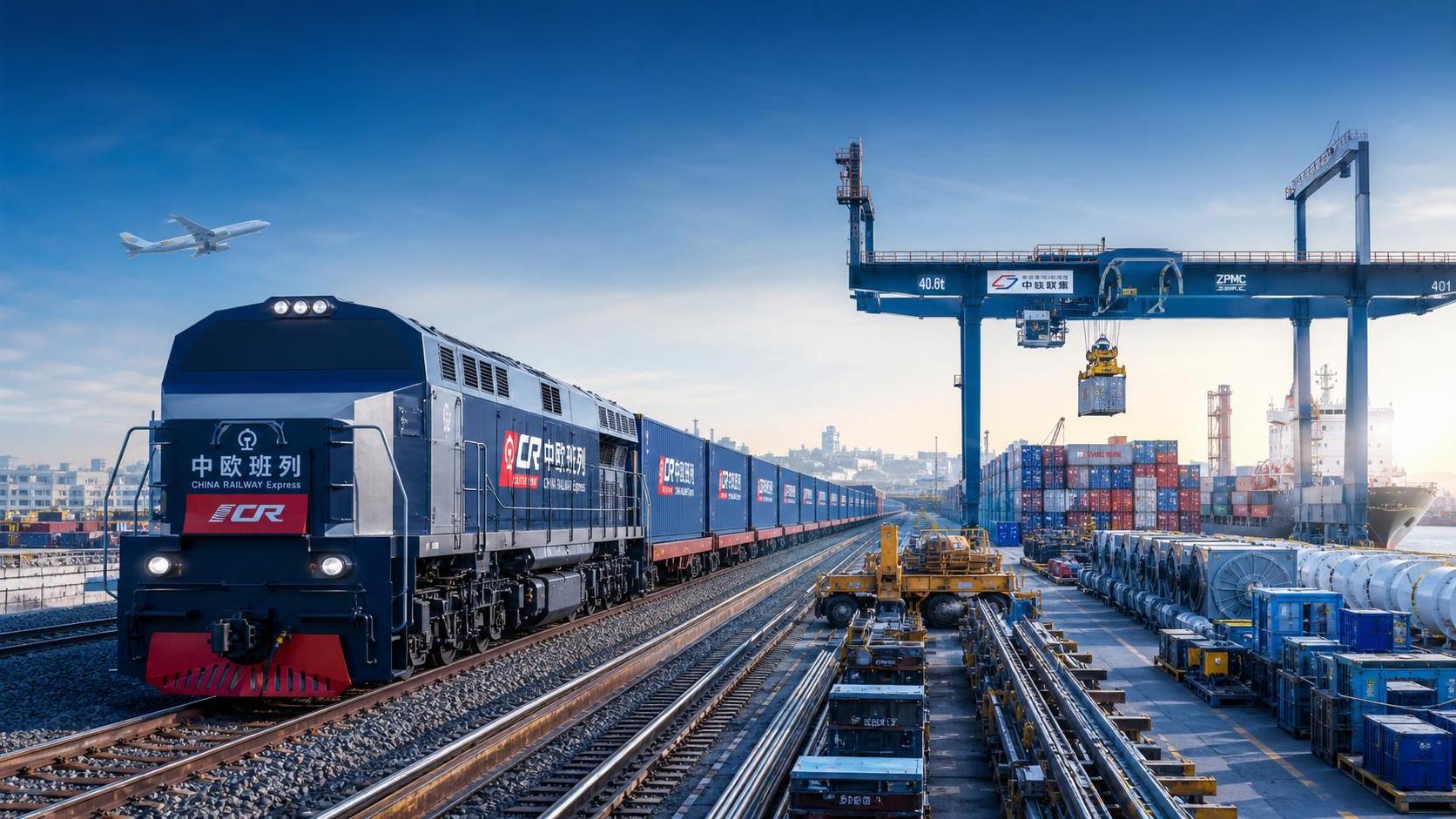
In current industrial export news, 2026 stands out as a turning point for trade corridors, freight reliability, and capital allocation across industrial markets. Export performance is no longer shaped only by price or production scale. It is increasingly tied to corridor security, rail capacity, emissions compliance, and the quality of engineering systems that keep cargo moving across borders.
That shift matters well beyond the railway sector. Steel, mining, machinery, energy equipment, automotive supply chains, and port-linked manufacturing all depend on predictable land transport. When infrastructure upgrades stall or standards tighten, export competitiveness changes quickly. When intermodal systems improve, new growth windows open just as fast.
This is why industrial export news in 2026 is closely connected to rail engineering, signaling modernization, and freight network resilience. The strongest signals are coming from projects that combine heavy-haul assets, digital control systems, maintenance discipline, and cross-border operating compatibility.
Why 2026 looks different
Global trade is entering a phase where efficiency and compliance must advance together. Governments want lower emissions. Shippers want dependable schedules. Infrastructure owners want longer asset life. Exporters need all three at the same time.
In practical terms, 2026 is becoming a benchmark year because many deferred investments are now reaching procurement or delivery stages. That includes locomotives, wagons, track renewal, automated maintenance equipment, ETCS and CBTC-related upgrades, and rail-port integration projects.
Industrial export news also reflects a broader policy reset. Financing is increasingly linked to carbon reporting, safety performance, and operational transparency. A corridor that moves bulk cargo efficiently but cannot document emissions or signaling integrity may lose priority in future trade planning.
The real meaning of growth signals
Not every large project is a reliable growth indicator. In 2026, the better signals come from system quality rather than headline size. A new line matters, but so does axle-load readiness, maintenance planning, and interoperability with ports and inland terminals.
This is where the perspective of Global Railway-Freight & Engineering, or G-RFE, becomes useful. Its focus on technical intelligence links hardware, regulation, and operating conditions. That matters because trade corridors fail or succeed at the interface between engineering performance and policy compliance.
Across industrial export news, five areas repeatedly signal durable growth:
- Heavy-haul locomotives and rolling stock built for higher utilization and lower lifecycle cost.
- Track maintenance programs that reduce disruption rather than react to failure.
- Smart signaling and communications that improve line capacity and safety assurance.
- Intermodal rail-port systems that shorten transfer time and stabilize export flows.
- Specialized rail engineering machinery that speeds construction and renewal work.
When several of these elements appear together, the signal is stronger. It usually indicates that a corridor is moving from isolated upgrades to a more integrated export platform.
The main risks behind the headlines
Industrial export news often highlights expansion, but 2026 also carries material risks. Some are visible in contract announcements. Others emerge later, during commissioning, certification, or cross-border operations.
Regulatory fragmentation
Different technical rules across countries can delay equipment approval and limit corridor efficiency. Signaling standards, braking systems, emissions thresholds, and safety documentation often create hidden costs.
Where benchmarking against UIC, EN, and AAR standards is weak, exporters face slower deployment and more redesign work. The risk is not only compliance cost. It is the loss of market timing.
Infrastructure bottlenecks
A corridor may have strong locomotive capacity but weak terminal handling. It may have modern wagons but outdated track sections. These imbalances reduce the actual value of investment.
In industrial export news, bottlenecks are increasingly found at interfaces: port gates, inland dry ports, border exchanges, and last-mile industrial connections. These are not secondary details. They define throughput.
Technology integration risk
Digital signaling, predictive maintenance, and freight visibility tools create value only when they operate across fleets and facilities. If systems are procured in isolation, performance gains remain partial.
This is especially relevant in rail engineering projects where hardware lifecycles are long, but software and communications standards evolve faster. Poor integration today can lock in inefficiency for years.
Capital and execution pressure
Large freight programs depend on financing discipline, local delivery capability, and credible maintenance planning. A signed project without service readiness is not yet a growth story.
That is why industrial export news should be read alongside contractor capability, spare parts strategy, and operational training plans. Delivery risk is now as important as design ambition.
Where the strongest opportunities are forming
Even with these risks, 2026 offers clear areas of momentum. The most promising opportunities are appearing where freight demand, infrastructure modernization, and policy incentives align.
A useful reading of industrial export news focuses on whether these opportunities are linked to measurable operational outcomes. Cargo velocity, downtime reduction, and standards alignment are better indicators than broad project language.
How to read the railway signal inside broader industry data
Railway-freight investment is not a narrow transport issue. It is often an early signal for wider industrial expansion. When a market upgrades freight corridors, it usually expects higher movement of minerals, manufactured goods, energy inputs, or construction materials.
That is why G-RFE’s five-pillar structure provides a practical lens. Heavy-haul rolling stock shows capacity intent. Track and maintenance programs show commitment to reliability. Smart signaling shows digital maturity. Rail-port systems reveal export integration. Engineering machinery signals construction pace.
Together, these factors help separate temporary announcements from structural change. In industrial export news, the most credible growth signal is a corridor that is technically coherent from locomotive to terminal gate.
Practical judgment points for 2026 planning
A useful assessment framework should stay close to operations. Broad optimism is less valuable than a disciplined review of corridor readiness and execution risk.
- Check whether infrastructure, rolling stock, and signaling are being upgraded together.
- Review standards alignment early, especially for cross-border and intermodal projects.
- Look for maintenance capability, not only asset procurement.
- Track terminal efficiency and customs interfaces, because corridor speed often breaks there.
- Measure carbon and energy implications, since low-emission compliance is becoming commercial, not only political.
- Compare project narratives with delivery evidence such as testing, certification, and service support.
These points make industrial export news more actionable. They turn market reporting into a structured view of where export resilience is strengthening and where exposure remains high.
What deserves closer attention next
The next phase of industrial export news will likely center on execution quality. Announcements alone will carry less weight. Markets will watch commissioning progress, digital integration results, and the real performance of low-carbon freight systems.
For any organization tracking 2026 risk and growth signals, the more useful next step is to map exposure by corridor, technology stack, and standards pathway. From there, compare projects by operational readiness, not by headline value.
That approach creates a clearer view of where export capacity is becoming more reliable, where engineering investment is likely to compound, and which trade routes may deliver stronger long-term returns. In a crowded industrial export news cycle, disciplined interpretation will matter more than volume of information.
Industry Briefing
Get the top 5 industry headlines delivered to your inbox every morning.