
Industrial Environmental News Shaping Rail Operations in 2026

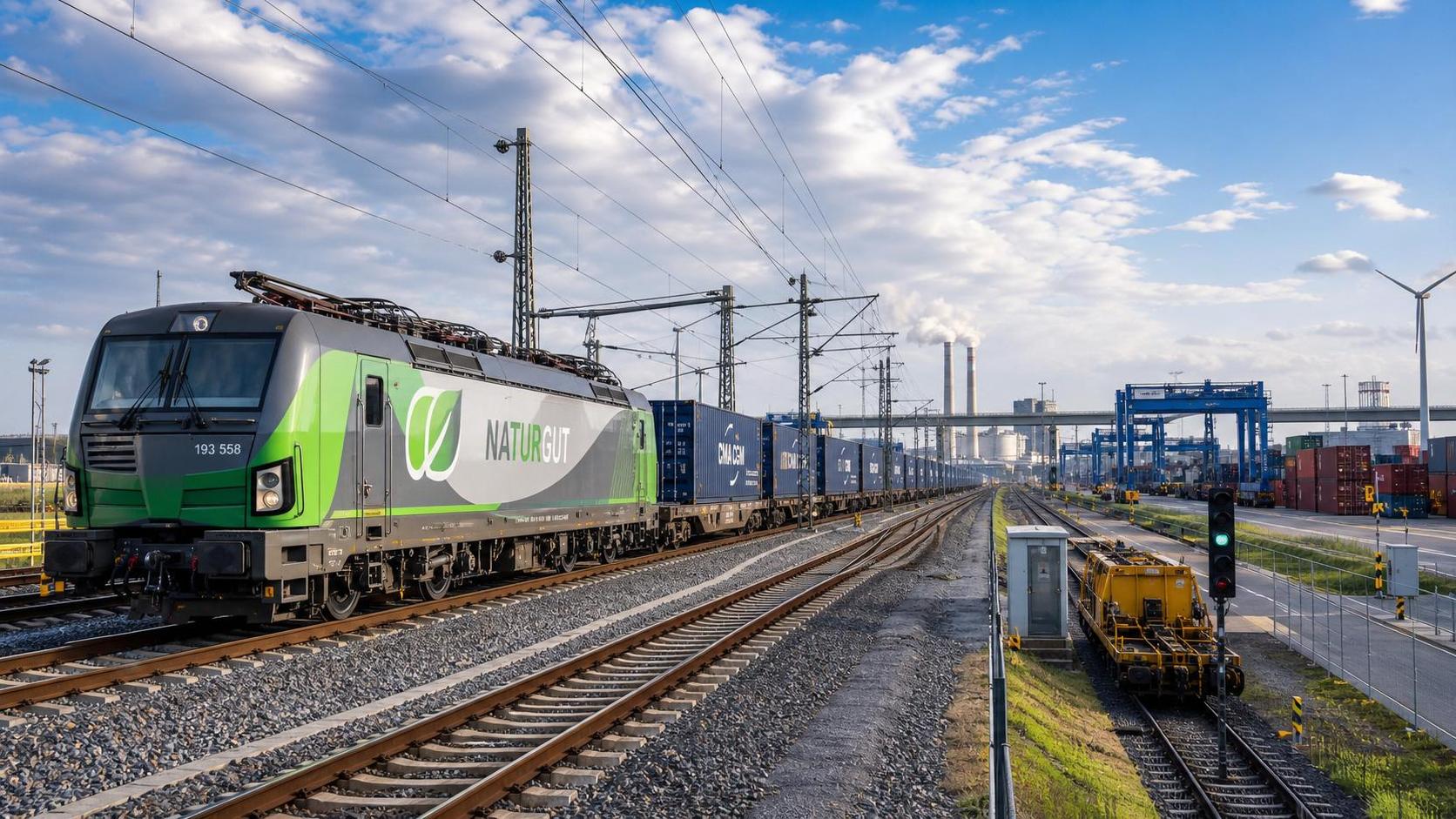
Industrial environmental news is now steering rail decisions
In 2026, industrial environmental news sits much closer to rail operations than many expected even three years ago.
It is influencing asset life calculations, network design, port-rail integration, procurement timing, and the risk profile of cross-border freight corridors.
What changed is not only regulation. The bigger shift is that environmental pressure now arrives through finance, insurance, energy pricing, and customer contracts.
That makes industrial environmental news a practical operating signal, not a peripheral policy topic.
For rail systems handling heavy-haul freight, intermodal transfer, and long-distance engineering programs, the consequences are especially visible.
Emission standards affect locomotive roadmaps. Water and soil rules reshape maintenance depots. Grid decarbonization changes electrification economics.
At the same time, network resilience is being judged through an environmental lens, especially where climate exposure intersects with strategic trade routes.
This is why industrial environmental news increasingly belongs inside engineering review meetings and corridor investment models.
The signal became clearer when compliance moved into operations
Recent industrial environmental news shows a pattern: environmental obligations are no longer dealt with after designs are finished.
They are entering earlier, often at concept design, fleet modernization planning, and interoperability assessment stages.
This has direct implications for the five operating domains often tracked across advanced rail systems.
- Heavy-haul locomotives face tighter scrutiny on fuel intensity, idle emissions, retrofit feasibility, and lifecycle carbon reporting.
- Track maintenance programs are being judged on dust control, waste handling, and materials traceability.
- CBTC, ETCS, and GSM-R upgrades now include power consumption and climate-hardening criteria.
- Intermodal rail-port systems must manage local air quality, yard electrification, and low-emission transfer workflows.
- Specialized engineering machinery is under pressure to reduce noise, spill risk, and diesel dependency.
That broader operating reach explains why industrial environmental news has become a board-level issue without losing technical detail.
A policy update in one market can now alter equipment specifications, maintenance intervals, and corridor competitiveness elsewhere.
Why this shift is accelerating in 2026
The acceleration comes from several forces arriving at the same time rather than from one headline rule.
From a market perspective, industrial environmental news now matters because it changes cost curves and approval speed at once.
Projects that once looked technically sound can lose momentum when water permits, emissions baselines, or habitat constraints were treated too lightly.
More tellingly, lenders and public authorities increasingly reward programs that show measurable environmental performance rather than broad intent.
The impact is spreading well beyond locomotives
A narrow reading of industrial environmental news would focus only on traction decarbonization. That is no longer enough.
Rolling stock remains central, but the strongest operational effects are appearing across connected systems.
Infrastructure and track work
Track renewal now involves more attention to recycled steel content, ballast sourcing, drainage treatment, and construction-phase emissions.
In hot or flood-prone corridors, environmental reporting is also feeding resilience design, not just compliance files.
Signaling and communications
Smart signaling upgrades once centered on safety and throughput. Industrial environmental news has added energy efficiency and climate durability to that list.
Power-hungry legacy architectures are harder to justify where digital modernization can cut both faults and environmental overhead.
Rail-port integration
The pressure is visible at terminals, where trucks, cranes, yard locomotives, and customs dwell times all affect local emissions profiles.
As a result, industrial environmental news increasingly shapes how rail links are sequenced with port electrification and digital gate control.
Engineering machinery
Specialized rail engineering machinery faces a quieter but important transition toward lower-emission engines, leak prevention, and remote diagnostics.
This matters because possession windows are tight, and environmental incidents now carry larger schedule consequences.
Standards and data are becoming strategic assets
One reason industrial environmental news is more actionable in 2026 is the growing use of standardized benchmarks.
International references such as UIC, EN, and AAR are no longer separate from environmental interpretation.
They increasingly provide the common language for comparing technology pathways, retrofit options, and corridor readiness.
This is where a data-led engineering view becomes valuable.
Across G-RFE’s working scope, the practical question is rarely whether environmental pressure exists.
The harder question is how to translate industrial environmental news into asset-level choices with defensible technical logic.
- Can a 6000hp diesel-electric fleet remain viable through retrofit, fuel switching, or duty-cycle redesign?
- Will an ETCS or GSM-R upgrade reduce both service risk and environmental exposure in extreme weather conditions?
- Are automated track-laying machines compliant with tightening rules on emissions, fluid containment, and site disturbance?
- Does an intermodal corridor still outperform road alternatives after full energy and environmental accounting?
Organizations that can answer these questions with comparable data move faster when policy conditions tighten.
What deserves closer attention over the next planning cycle
Not every item in industrial environmental news deserves the same response. The useful distinction is between symbolic noise and operational triggers.
Several signals are worth tracking more closely during the next planning cycle.
- Changes in non-CO2 rules, especially around particulates, noise, water contamination, and land-use approvals.
- Grid decarbonization progress by corridor, because electrification benefits vary sharply by power mix.
- Port and inland terminal environmental mandates, which can reshape dwell times and handoff design.
- Insurance treatment of climate-exposed infrastructure and depots.
- Bid requirements that ask for verified lifecycle reporting rather than simple compliance statements.
More importantly, industrial environmental news should be checked against business geography.
A dry inland heavy-haul route, a coastal intermodal system, and a mountainous cross-border line will not face the same environmental constraints.
Treating them as identical usually leads to overbuilt controls in one place and weak resilience in another.
The practical response is phased, not reactive
The strongest response to industrial environmental news is not a one-time sustainability statement.
It is a phased operating discipline that connects policy monitoring with engineering and capital planning.
A workable sequence usually looks like this.
- Map environmental exposure by asset class, corridor, and project stage.
- Identify which regulatory signals can alter throughput, uptime, or approval schedules.
- Benchmark equipment and systems against current standards and likely future thresholds.
- Prioritize retrofits and digital upgrades where operational and environmental returns overlap.
- Build periodic review points, because industrial environmental news is moving faster than traditional asset cycles.
That approach reduces the chance of expensive compliance fixes appearing late in delivery.
It also improves confidence when comparing diesel modernization, electrification, hybrid traction, or terminal redesign options.
In 2026, industrial environmental news is shaping rail operations because it now affects technical choices, funding logic, and network resilience together.
The next useful step is to review where environmental signals are already changing assumptions, then test each corridor and asset plan against those signals before they become constraints.
Industry Briefing
Get the top 5 industry headlines delivered to your inbox every morning.