
Railway traction motor wholesale prices vary for a reason

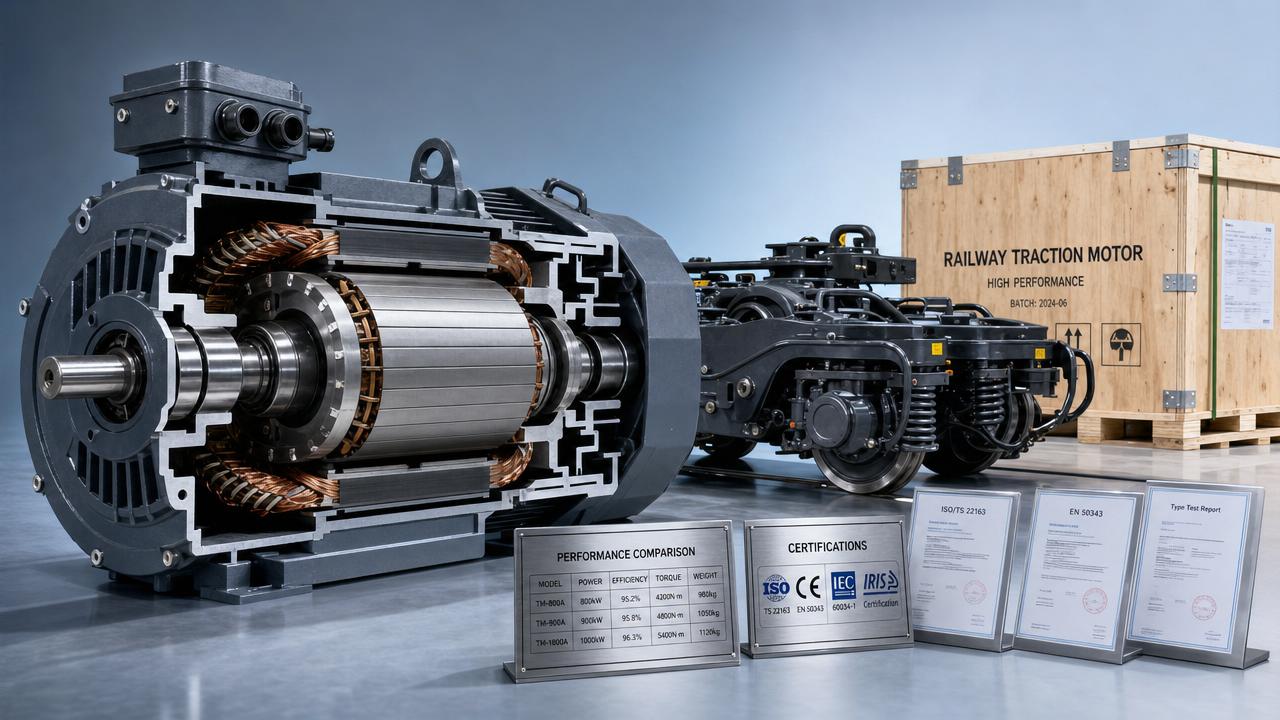
Railway traction motor wholesale prices vary widely because performance demands, certification standards, materials, and supply chain conditions rarely match from one railway program to another. In heavy-haul freight, metro retrofits, cross-border locomotives, and industrial rail systems, the same product name can hide major differences in insulation class, cooling method, torque curve, axle load compatibility, and compliance testing. For any evaluation of railway traction motor wholesale options, understanding these price drivers is the fastest way to compare true lifecycle value rather than headline cost alone.
Why a checklist matters in railway traction motor wholesale
Rail traction components sit at the intersection of mechanics, power electronics, standards, and operating risk. A low quote may reflect limited testing, lower copper content, weaker bearings, or missing documentation.
A checklist prevents price comparison errors. It also supports clearer sourcing across international projects, where UIC, EN, IEC, AAR, and operator-specific requirements shape acceptance and long-term maintenance costs.
In practical terms, railway traction motor wholesale evaluation should move from “What is the unit price?” to “What exactly is included, proven, and supportable in service?”
Core checklist for comparing railway traction motor wholesale offers
- Define duty cycle first, including starting torque, continuous rating, overload profile, route gradient, ambient temperature, and braking behavior before comparing any railway traction motor wholesale quotation.
- Verify motor type and architecture, such as DC, AC induction, or permanent magnet, because each design changes efficiency, maintenance intervals, inverter matching, and total acquisition cost.
- Check insulation system, winding quality, and thermal class, since these directly affect resistance to voltage spikes, heat aging, humidity exposure, and service reliability.
- Confirm cooling method, whether self-ventilated, forced-air, or liquid-assisted, because cooling design strongly influences continuous power output and temperature stability under freight duty.
- Inspect bearing brand, sealing arrangement, lubrication interval, and vibration tolerances, as bearing failure remains one of the most expensive hidden risks in traction applications.
- Review rotor and stator material specifications, including copper purity, lamination grade, and shaft metallurgy, because raw material choices explain many railway traction motor wholesale price gaps.
- Request test records, such as temperature rise, dielectric strength, overspeed, noise, efficiency, and load performance, instead of relying only on brochure-level rated values.
- Confirm standards compliance and certification pathway, especially for EN, IEC, UIC, AAR, fire safety, and operator acceptance requirements in cross-border railway projects.
- Compare interface details carefully, including mounting dimensions, gearbox compatibility, axle integration, encoder options, and converter communication protocols to avoid redesign costs.
- Calculate after-sales scope, covering spare parts, field support, failure analysis, remote diagnostics, and lead times for rewinding or replacement under operating conditions.
- Assess production capacity and traceability, because large fleet programs require repeatable quality, serial documentation, and delivery consistency across multiple manufacturing batches.
- Include logistics and packaging controls, especially for export shipments, moisture protection, shock handling, and storage preservation where long-distance rail equipment transport is involved.
What usually drives the price difference
The biggest driver is performance specification. A motor designed for heavy-haul starts, repeated thermal cycling, and mountain gradients will cost more than one built for lighter industrial rail movement.
Certification is another major factor. Documented compliance, witnessed factory testing, and operator approval can add cost, but they reduce commissioning risk and simplify market entry.
Material content matters as well. Copper, electrical steel, insulation varnish, and high-grade bearings remain volatile cost elements, especially during global energy and metals market swings.
Finally, supply chain structure affects railway traction motor wholesale pricing. Short lead-time production, custom interfaces, imported components, and low-volume builds almost always command higher rates.
Application-specific notes that change wholesale pricing
Heavy-haul freight locomotives
Heavy-haul railway traction motor wholesale programs prioritize torque density, thermal endurance, and rugged contamination protection. Dust, vibration, long gradients, and high axle loads demand stronger mechanical margins.
Prices rise when specifications include higher continuous tractive effort, forced ventilation, reinforced insulation, and strict compatibility with modern traction converters and braking systems.
Metro and passenger rolling stock retrofits
Retrofit projects often look simple but become expensive when legacy dimensions, noise restrictions, and fire-smoke standards narrow the acceptable design window for replacement motors.
In these cases, railway traction motor wholesale quotes may include engineering adaptation, interface validation, and limited-batch production rather than only standard catalog supply.
Industrial rail and port intermodal systems
Industrial rail applications may accept lower top speed performance, but they often require corrosion resistance, frequent start-stop durability, and easy maintenance within port or terminal operations.
This changes the price equation. A lower-rated motor can still cost more if sealing, humidity resistance, and service accessibility are prioritized over speed.
Cross-border locomotive platforms
Cross-border fleets add another pricing layer because documentation, multilingual technical files, interoperability needs, and approval evidence must align with several railway regimes.
For these projects, railway traction motor wholesale selection should consider not only hardware but also technical file completeness and long-term audit readiness.
Commonly overlooked cost items and risks
Ignoring converter compatibility is a frequent mistake. A traction motor that looks economical can become costly if harmonic behavior, insulation stress, or control tuning causes instability.
Underestimating maintenance infrastructure is another risk. If spare bearings, winding kits, or service tools are unavailable locally, downtime can erase any savings from the initial railway traction motor wholesale deal.
Documentation gaps also create hidden expense. Missing test certificates, material traceability, or dimensional records can delay acceptance, customs processing, and commissioning.
Lead time volatility should not be ignored. Motors dependent on imported laminations, specialty insulation, or niche sensors may face schedule risk during geopolitical or logistics disruption.
Finally, focusing only on nameplate power is misleading. Real value comes from reliability under actual route conditions, not from peak output listed without thermal context.
Practical execution steps for better sourcing decisions
- Build a comparison sheet that lists rated power, torque, duty cycle, cooling, standards, tests, interfaces, and warranty terms on one page.
- Ask for deviations explicitly. Require each railway traction motor wholesale supplier to mark where its offer differs from the reference specification.
- Score total cost of ownership, not unit price alone. Include maintenance intervals, expected efficiency, spare strategy, and probable overhaul frequency.
- Request production and quality evidence, including process control, serial traceability, and recent project references involving similar traction duty.
- Validate shipping and preservation methods before order release, especially when storage periods or multimodal export transport are expected.
Conclusion and next action
Railway traction motor wholesale prices vary for valid technical, regulatory, and operational reasons. The lowest number may indicate a smart purchase, but only when the full duty profile, compliance scope, and service support are proven.
A disciplined checklist turns scattered quotations into comparable engineering data. That approach supports better decisions across freight rail, rolling stock modernization, intermodal systems, and international railway infrastructure programs.
The next step is straightforward: define the real operating envelope, request test-backed offers, compare lifecycle cost, and verify documentation before treating any railway traction motor wholesale quote as commercially complete.
Industry Briefing
Get the top 5 industry headlines delivered to your inbox every morning.