
How to compare locomotive tractive effort benchmarks

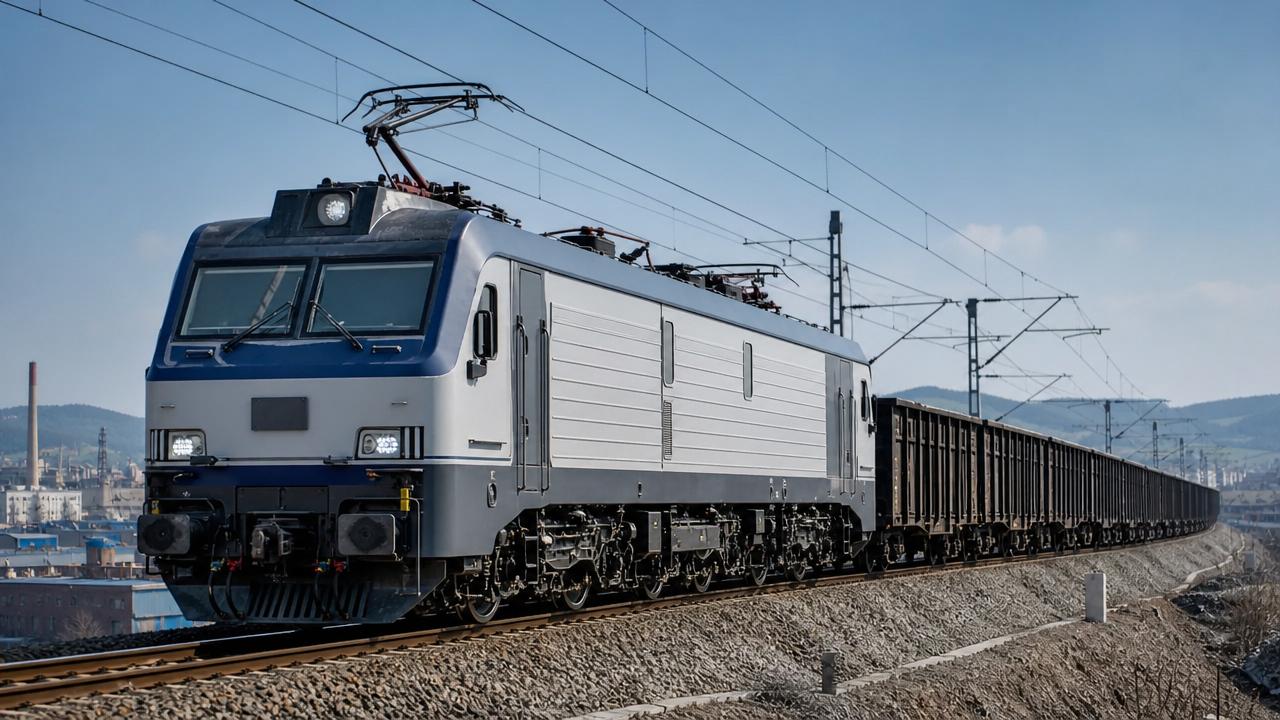
For procurement teams evaluating heavy-haul performance, understanding locomotive tractive effort benchmarks is essential to making reliable, cost-effective fleet decisions. From starting force and adhesion limits to grade performance and international standards, a clear comparison framework helps buyers assess whether a locomotive can meet corridor demands, operational targets, and long-term asset value.
What are locomotive tractive effort benchmarks?
Locomotive tractive effort benchmarks are reference points used to compare pulling capability across locomotive types, duty cycles, and operating environments.
They help translate specification sheets into operational meaning. A high headline number alone does not prove better corridor performance.
In practical terms, benchmarks usually include starting tractive effort, continuous tractive effort, adhesion ratio, power output, axle load, and speed-related performance.
For global railway-freight projects, these values should be reviewed against UIC, EN, and AAR guidance, plus local network restrictions.
Within integrated logistics planning, locomotive tractive effort benchmarks support asset selection, train makeup design, route feasibility studies, and energy-use forecasting.
Which metrics matter most?
- Starting tractive effort: maximum force available at low speed for train starting.
- Continuous tractive effort: sustainable pulling force without overheating traction equipment.
- Adhesion performance: how effectively weight converts into usable wheel-rail force.
- Power-to-speed curve: how force changes as speed increases.
- Axle load and wheel arrangement: key limits for track compatibility.
How do you compare starting and continuous tractive effort correctly?
A common mistake is comparing only starting figures. Starting force matters, but freight corridors rarely operate only at zero speed.
Continuous tractive effort often reveals the locomotive’s true working capability on long grades, sustained acceleration, and dense heavy-haul schedules.
For example, two locomotives may show similar starting values. Yet one may lose force rapidly as speed rises, reducing real tonnage performance.
A stronger benchmark method compares both values together, then checks the speed at which continuous tractive effort is maintained.
This is especially important in mixed freight systems, mining corridors, and intermodal routes with frequent gradient transitions.
Useful comparison questions
- What is the verified starting tractive effort under stated adhesion conditions?
- What continuous force is available, and at what speed?
- Was the benchmark measured in laboratory conditions or field service?
- Do cooling, altitude, temperature, or curve resistance reduce the result?
Why do adhesion, axle load, and rail conditions affect locomotive tractive effort benchmarks?
Tractive effort is not just about motor power. It depends on how much force the wheel can transfer without slipping.
That is why locomotive tractive effort benchmarks must be read together with adhesion control technology, axle load, and rail condition assumptions.
Heavy-haul locomotives often achieve strong benchmarks because they combine high weight, optimized traction control, and suitable wheel-rail interfaces.
However, wet rail, contamination, poor maintenance, and sharp curves may reduce usable force far below brochure values.
On low-maintenance regional infrastructure, a locomotive with moderate rated force but stable adhesion performance may outperform a higher-rated competitor.
Key environmental variables
- Rail moisture, leaf contamination, or dust
- Track geometry and curve resistance
- Altitude and ambient temperature
- Wheel condition and sanding effectiveness
- Track class and axle-load restrictions
How should international standards be used when comparing locomotive tractive effort benchmarks?
International standards provide a neutral structure for comparison. They reduce the risk of evaluating incompatible or selectively presented performance claims.
UIC, EN, and AAR frameworks support consistency in definitions, testing assumptions, braking integration, loading conditions, and reporting practices.
For multinational rail-port systems and EPC packages, standard alignment also improves interface planning across signaling, infrastructure, and rolling stock.
That matters when locomotives must operate across mixed networks with different maintenance regimes and operating rules.
A robust benchmarking review should ask whether figures are compliant, comparable, and independently validated.
What mistakes distort locomotive tractive effort benchmarks during evaluation?
The biggest error is assuming the highest tractive effort number means the best fleet choice. Corridor economics depend on more than peak force.
Another mistake is ignoring speed profile. A locomotive may be excellent for starting bulk trains but inefficient for longer higher-speed freight runs.
Some evaluations also overlook network integration. Signaling compatibility, maintenance support, braking balance, and energy use affect lifecycle value.
In low-carbon transition strategies, comparing diesel-electric, electric, and hybrid platforms requires a broader benchmark set than force alone.
Frequent benchmarking pitfalls
- Comparing vendor figures produced under different standards
- Ignoring grade resistance and train length
- Using dry-rail assumptions for wet or contaminated routes
- Overlooking infrastructure wear from higher axle loads
- Separating traction review from signaling and corridor operations
How can a practical framework improve heavy-haul fleet decisions?
A practical framework turns locomotive tractive effort benchmarks into a corridor-specific scorecard instead of a generic ranking exercise.
Start by defining route realities: ruling grade, climate, train mass, target speed, signaling regime, maintenance intervals, and infrastructure limits.
Then compare each locomotive against those conditions using verified performance curves, not catalog highlights alone.
A well-structured benchmark model usually includes technical, operational, regulatory, and lifecycle dimensions.
Recommended decision checklist
- Map train weight and grade requirements against continuous tractive effort.
- Check adhesion control performance under local rail conditions.
- Validate compliance with UIC, EN, AAR, and local rules.
- Review axle load effects on track maintenance cost.
- Compare energy efficiency, availability, and maintenance support.
- Confirm interoperability with signaling and safety systems.
Quick FAQ reference table
In the end, the best use of locomotive tractive effort benchmarks is not simple ranking. It is structured decision support.
Reliable comparison connects traction data with infrastructure, standards, signaling, operating targets, and long-term asset economics.
For rail authorities, EPC teams, and freight network planners, the next step is building a benchmark matrix tailored to corridor demands and compliance requirements.
That approach reduces selection risk, strengthens technical due diligence, and improves confidence in fleet investment outcomes.
Industry Briefing
Get the top 5 industry headlines delivered to your inbox every morning.