
How Hydrogen Exposure Could Change Rail Freight Economics

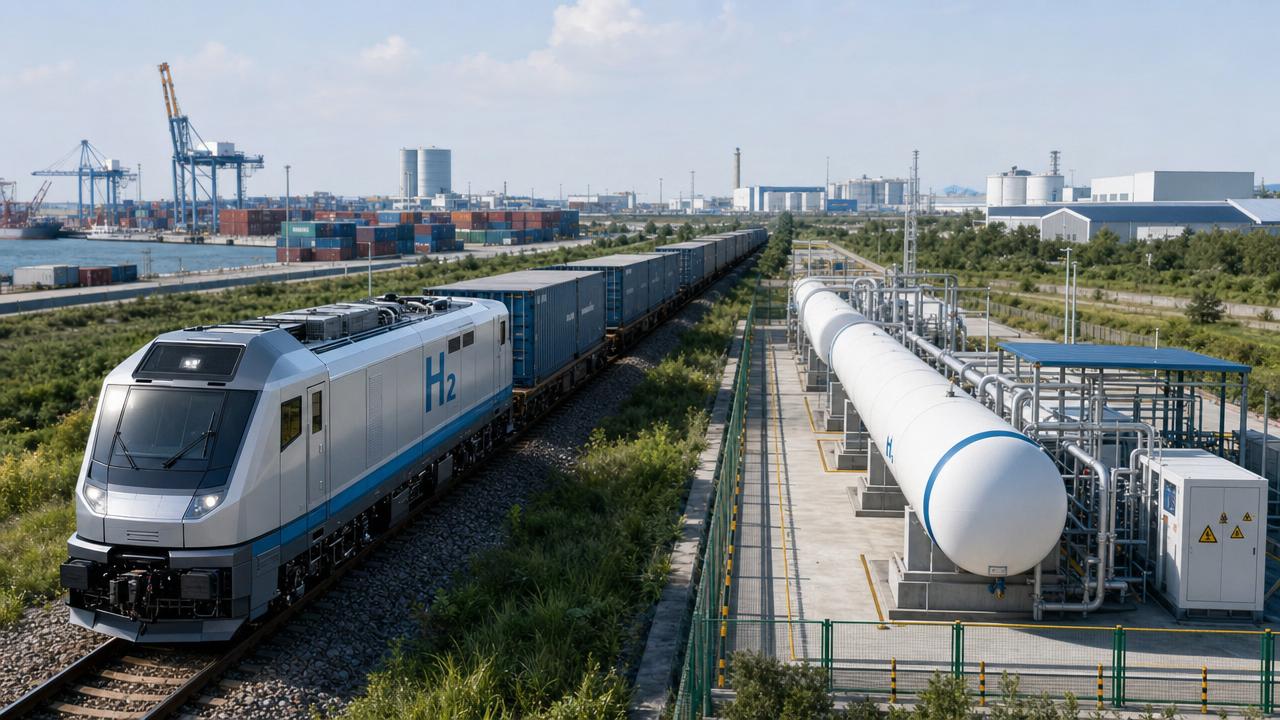
Hydrogen Is Moving from Pilot Narrative to Freight Cost Question
As rail operators and investors reassess long-term cost structures, the impact of hydrogen on rail freight is becoming a critical question for commercial evaluation.
Beyond emissions targets, hydrogen exposure could reshape fuel sourcing, fleet investment, infrastructure planning, and corridor competitiveness.
For business assessment teams, this is no longer a technical curiosity. It is a strategic pricing, asset, and network issue.
In global rail logistics, fuel choice affects locomotive design, route economics, maintenance cycles, and access to future capital.
That is why the impact of hydrogen on rail freight now deserves a disciplined economic lens rather than a purely environmental one.
Several Market Signals Show the Economics Are Starting to Shift
Rail freight sits under growing pressure to decarbonize without sacrificing heavy-haul performance, route flexibility, or cross-border reliability.
Electrification remains the strongest option on dense corridors, yet many freight routes still lack catenary coverage or face high upgrade costs.
This creates space for hydrogen traction, especially where diesel replacement is urgent but full electrification is delayed.
The impact of hydrogen on rail freight therefore emerges most clearly on secondary corridors, long-distance regional links, and port-connected inland routes.
Another signal is investor behavior. Capital increasingly favors assets aligned with carbon reporting, energy security, and low-emission freight commitments.
At the same time, industrial hydrogen projects are expanding around steel, chemicals, ports, and heavy mobility clusters.
When those clusters overlap with rail nodes, hydrogen rail economics improve because infrastructure costs can be shared across several sectors.
The Main Drivers Behind the Impact of Hydrogen on Rail Freight
The trend is being shaped by technical, commercial, regulatory, and geopolitical factors at the same time.
These drivers do not guarantee rapid adoption. They simply explain why hydrogen has entered serious rail freight boardroom discussions.
Where the Cost Structure Could Change Most
1. Fuel sourcing may become a network planning issue
Diesel procurement is relatively mature. Hydrogen procurement is more location-sensitive and depends on production, transport, purity, and storage models.
As a result, the impact of hydrogen on rail freight starts before the locomotive moves. It begins with energy geography.
Rail corridors near industrial hydrogen hubs may gain a clear cost advantage over isolated inland routes.
2. Fleet investment shifts from engine replacement to system redesign
Hydrogen traction is not a simple fuel swap. It often requires new locomotives, modified power architecture, and different maintenance competencies.
Capital expenditure may rise at first, especially for pilot fleets or low-volume procurements.
However, lifecycle economics could improve if carbon costs, diesel exposure, and compliance risks continue increasing.
3. Refueling infrastructure becomes part of corridor competitiveness
A freight route is only as efficient as its energy turnaround. Refueling time, depot layout, safety systems, and supply resilience all matter.
If hydrogen infrastructure is poorly placed, utilization falls and economics weaken. If strategically placed, route productivity can remain competitive.
This is a major part of the impact of hydrogen on rail freight, especially for intermodal corridors with tight schedule windows.
4. Maintenance economics may shift in both directions
Hydrogen systems can reduce some combustion-related wear, but they introduce new demands in storage inspection, safety monitoring, and component handling.
Early fleets may face higher service costs because spare parts, training, and diagnostics are less standardized than diesel support systems.
The Impact Will Not Be Equal Across All Rail Freight Operations
Hydrogen economics depend heavily on duty cycle, axle load, route length, climate, and terminal density.
- Heavy-haul mining lines may prefer electrification or advanced diesel until hydrogen power density improves further.
- Regional freight services on non-electrified lines may see earlier viability.
- Port-to-inland shuttle routes can benefit when hydrogen supply links to maritime or industrial clusters.
- Cross-border corridors may face additional certification and fueling interoperability challenges.
This unevenness matters for planning. The impact of hydrogen on rail freight should be tested corridor by corridor, not assumed across entire national fleets.
A strong business case usually appears where infrastructure can be shared, utilization is predictable, and emission pressure is already economically relevant.
What Deserves Close Attention During Economic Evaluation
Several indicators deserve more attention than headline fuel price comparisons.
- Delivered hydrogen cost at depot, not theoretical production cost.
- Locomotive utilization rate under real refueling schedules.
- Infrastructure amortization across rail and non-rail users.
- Range performance under seasonal temperature variation.
- Maintenance skill availability and supplier maturity.
- Carbon pricing exposure and green finance eligibility.
- Compatibility with signaling, safety, and depot standards.
For technical intelligence platforms such as G-RFE, these variables should be benchmarked against UIC, EN, and AAR-aligned operational frameworks.
That approach produces a more realistic view of the impact of hydrogen on rail freight than simple headline comparisons with diesel.
A Practical Framework for Judging Hydrogen Exposure
The Smart Next Step Is Targeted Analysis, Not Broad Assumption
The impact of hydrogen on rail freight will likely be selective before it becomes widespread.
Its strongest early role may emerge on non-electrified freight corridors with policy pressure, predictable duty cycles, and access to industrial hydrogen ecosystems.
The right response is to compare corridor economics using delivered fuel cost, asset lifecycle modeling, infrastructure sharing potential, and operational resilience metrics.
Organizations evaluating future rail investment should map hydrogen exposure against route density, terminal geography, maintenance readiness, and compliance trajectories.
A disciplined assessment today can reveal whether hydrogen is a niche technology, a transitional asset class, or a long-term lever for freight network competitiveness.
For deeper benchmarking, build a corridor-by-corridor model that connects locomotive performance, signaling constraints, fueling logistics, and total cost of ownership.
Industry Briefing
Get the top 5 industry headlines delivered to your inbox every morning.