
25kV Electric Locomotive: What Affects Lifecycle Cost

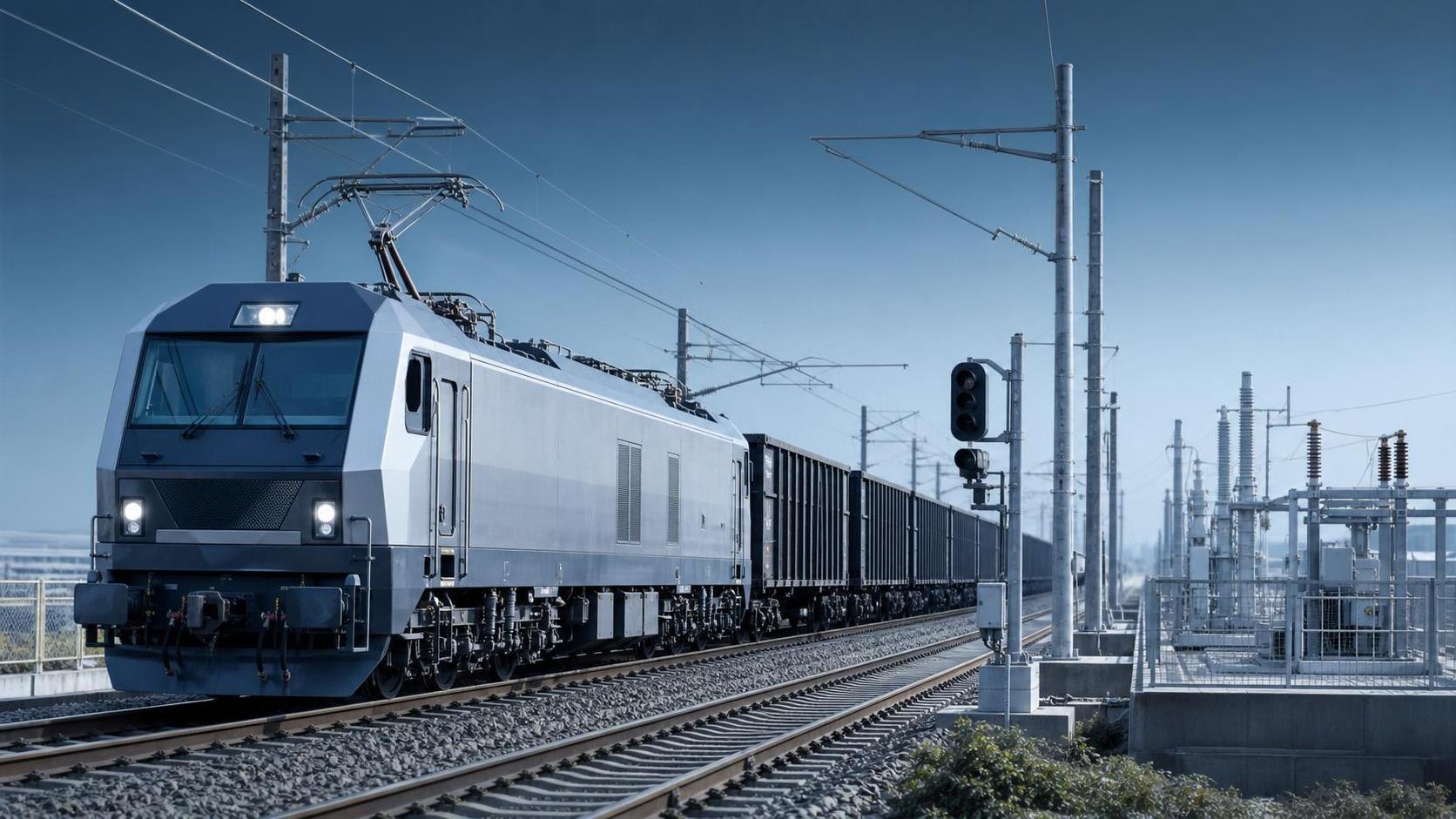
Why does lifecycle cost matter more than sticker price?
A 25kV electric locomotive is rarely a low-risk capital item. Its financial outcome depends on twenty or more years of energy use, maintenance demand, availability, and route fit.
That is why the cheapest bid can become the most expensive asset. A lower purchase price may hide weaker efficiency, shorter overhaul intervals, or costly interface upgrades.
In practice, the better question is not “What does this locomotive cost today?” It is “What will this 25kV electric locomotive cost per ton-kilometer over its working life?”
Across freight corridors, lifecycle cost is shaped by traction performance, regenerative braking recovery, spare parts strategy, depot capability, and compatibility with signaling and power systems.
This is also where G-RFE’s perspective becomes useful. Cost decisions in rail equipment are rarely isolated from standards, corridor design, and operating policy.
A locomotive that looks efficient on paper may perform differently once UIC, EN, AAR, ETCS, GSM-R, or local maintenance conditions are factored in.
What usually drives the lifecycle cost of a 25kV electric locomotive?
Most cost models start with acquisition, but that is only one layer. The heavier cost drivers often emerge after commissioning.
The main cost categories are easier to assess when separated into operating, technical, and infrastructure-related factors.
- Energy consumption under actual haul profiles, gradients, and stop-start patterns.
- Maintenance intervals for bogies, traction motors, converters, brakes, and pantographs.
- Fleet availability, including downtime for faults, scheduled servicing, and software updates.
- Infrastructure fit, especially 25kV electrification quality, substation spacing, and axle load limits.
- Signaling and communication integration, including ETCS, CBTC-adjacent interfaces, and GSM-R readiness where required.
- Residual value, refurbishment potential, and long-term parts support.
A useful warning here: lifecycle cost should not be confused with maintenance cost alone. Energy losses and low utilization can erase the value of a technically reliable fleet.
For a 25kV electric locomotive used on dense freight corridors, even a modest efficiency gap can compound into a major cost difference over time.
How much does energy efficiency really change the business case?
Usually more than early budget models assume. Electricity cost exposure is continuous, and it scales with train weight, route profile, and annual mileage.
Two locomotives with similar rated power can deliver very different lifetime economics. Converter efficiency, traction control quality, adhesion management, and regenerative braking all matter.
The better-performing 25kV electric locomotive often shows its advantage in repetitive service. Heavy-haul, long gradients, and high annual utilization make efficiency gains easier to monetize.
More common procurement mistakes happen when energy performance is assessed using ideal test figures only. Route-specific simulation is a stronger basis for approval.
This kind of table is often more useful than headline efficiency claims. It connects technical behavior to financial exposure.
Are maintenance intervals and reliability more important than headline performance?
On many fleets, yes. A 25kV electric locomotive that pulls harder but spends more time in the workshop can weaken the entire return model.
Availability drives asset productivity. If one extra failure per locomotive each quarter disrupts train paths, the indirect cost may exceed the direct repair bill.
The more reliable comparison method is to review mean distance between failures, scheduled overhaul windows, component life, and fault recovery time.
It also helps to separate mature components from newer subsystems. Power electronics, control software, and diagnostics architecture can materially change workshop demand.
Need attention here: maintenance cost is not only a parts question. It includes labor skill, tooling, inspection routines, stock of critical spares, and OEM response discipline.
- Check whether major components are modular and field-replaceable.
- Review warranty exclusions tied to operating environment.
- Confirm whether software support is local, remote, or dependent on overseas intervention.
- Ask how long parts support is contractually guaranteed.
For cross-border freight networks, these details matter even more. A good locomotive design without dependable support can still produce expensive idle time.
Where do infrastructure compatibility costs usually appear?
They often appear late, which is why they are underestimated. A 25kV electric locomotive may suit the voltage standard but still create extra project cost.
The friction points are usually interface-related. Pantograph geometry, structure gauge, axle load, platform clearance, EMC behavior, and signaling integration can all trigger redesign.
For corridors tied to ETCS, GSM-R, or mixed legacy systems, onboard integration should be budgeted early. Certification effort can be significant.
G-RFE’s cross-pillar lens is relevant here because locomotive cost cannot be separated from track, signaling, and intermodal network logic.
A locomotive with attractive traction economics may still underperform financially if it needs depot upgrades, substation reinforcement, or extended homologation.
A practical screening step is to compare the candidate unit against existing route constraints before detailed commercial evaluation begins.
How should competing offers be compared without oversimplifying?
A clean comparison model usually combines cost, risk, and operational fit. Price-only scoring misses too much.
One workable approach is to build a weighted lifecycle review covering acquisition, energy, maintenance, infrastructure adaptation, and residual value.
Then test each offer against the same duty cycle and support assumptions. Different suppliers often present numbers on different boundaries.
This avoids a common mistake: accepting a lower initial quote that shifts risk into operations, maintenance, or corridor compliance.
What procurement mistakes tend to inflate the cost later?
Several mistakes repeat across rail projects. None look dramatic at contract stage, but all can damage long-term returns.
- Treating the 25kV electric locomotive as a standalone asset, rather than part of a route system.
- Using optimistic annual utilization assumptions without checking depot and train-path constraints.
- Ignoring software lifecycle support and cybersecurity updates.
- Accepting broad reliability claims without comparable fleet evidence.
- Underestimating the commercial value of high availability during peak freight windows.
A better review process asks whether the locomotive strengthens corridor economics, not just whether it meets a technical specification.
That usually leads to sharper questions on utilization, integration, standards compliance, and support depth.
What is the sensible next step before approval?
The strongest next step is a corridor-based lifecycle model for each shortlisted 25kV electric locomotive. Keep it grounded in actual traffic, infrastructure, and maintenance assumptions.
It helps to test four things together: energy profile, availability profile, interface cost, and contract support quality.
From there, compare offers on cost per service outcome, not cost per unit alone. That makes tradeoffs visible before they become budget surprises.
For complex freight networks, reference frameworks like those tracked by G-RFE can sharpen the review by linking locomotive hardware with standards, signaling, and corridor engineering realities.
In the end, the right 25kV electric locomotive is the one that stays efficient, available, and compatible for years. That is where lifecycle cost becomes a decision tool rather than a reporting exercise.
Industry Briefing
Get the top 5 industry headlines delivered to your inbox every morning.