
When Braking Heat Dissipation Brake Pads Fail Early

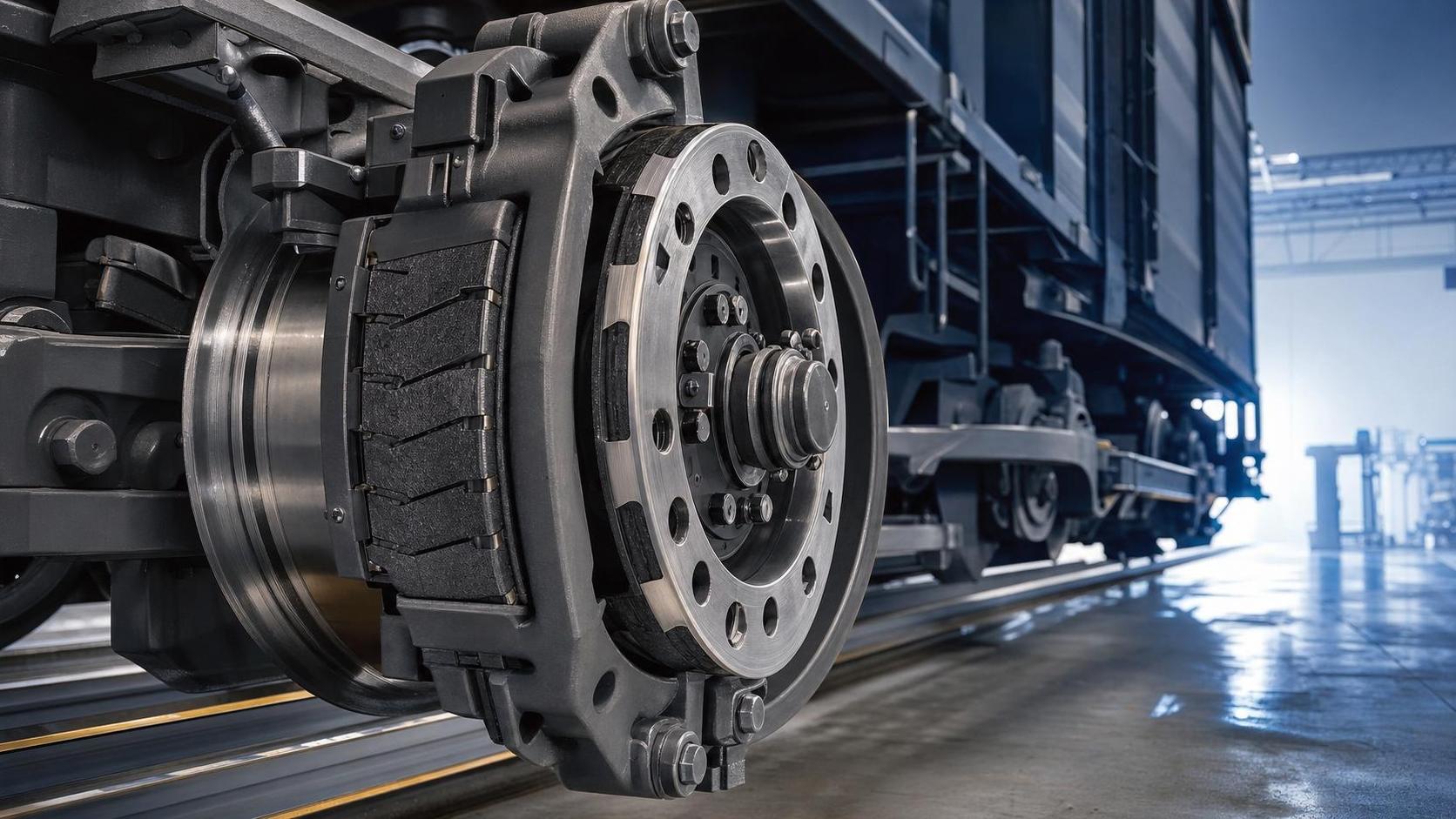
When Braking Heat Dissipation Brake Pads Fail Early
For aftermarket maintenance teams, early failure of braking heat dissipation brake pads is rarely just a wear problem.
It usually points to a deeper issue in heat control, duty cycle, installation accuracy, or pad quality.
In rail freight and other heavy-duty systems, that matters fast.
A pad that fails early can increase stopping distance, damage mating surfaces, and trigger unplanned downtime.
That also means more cost pressure across maintenance planning and asset availability.
From a practical maintenance view, the goal is not only replacing failed parts.
The goal is finding why braking heat dissipation brake pads are failing before their expected service life.
Why Early Pad Failure Happens
Most early failures start with heat.
Braking heat dissipation brake pads are designed to manage friction energy and release heat before damage builds up.
When that thermal balance breaks, wear rates can jump very quickly.
In heavy-haul rail service, the risk rises during long downhill braking, repeated stop cycles, and overloaded operation.
Poor airflow around braking components can make the problem worse.
So can contamination from oil, dust, rust flakes, or track debris.
Another common cause is mismatch.
A pad material chosen for light service may look acceptable on paper, yet fail under real freight loads.
This is where technical review matters more than simple part replacement.
The Most Common Failure Modes
Early failure does not always look the same.
Different symptoms usually point to different root causes.
- Glazing: the pad surface hardens and becomes shiny after repeated overheating.
- Cracking: thermal shock creates surface or structural cracks in the friction block.
- Chunking: sections break away because the material cannot handle heat stress.
- Taper wear: one side wears faster, often from alignment or caliper issues.
- Uneven wear: pressure is inconsistent across the contact area.
- Contamination damage: oil or grease changes friction behavior and weakens heat control.
- Backing plate separation: adhesive or bonding failure appears after excessive temperature exposure.
If braking heat dissipation brake pads show one of these signs early, the issue is rarely random.
It is usually a traceable interaction between heat, pressure, speed, and maintenance practice.
Material Quality and Heat Resistance
Material selection has a direct effect on service life.
Not all braking heat dissipation brake pads perform equally under the same operating profile.
Some compounds handle peak temperature well, but lose stability during repeated cycles.
Others keep friction stable, yet wear too quickly under high axle loads.
In practical terms, pad choice should match real operating data, not only catalog claims.
That includes route gradients, wagon weight, braking frequency, average speed, and ambient temperature range.
For rail operators working to UIC, EN, or AAR-aligned standards, verification is especially important.
A low-cost pad can become expensive very quickly if it fails under thermal load.
This is why traceable sourcing and tested friction formulations matter in long-cycle maintenance planning.
Installation Errors That Shorten Pad Life
A good pad can still fail early after a poor installation.
This is one of the most overlooked causes of braking heat dissipation brake pads failure.
Small fitment errors create uneven contact, local hot spots, and unstable friction transfer.
Common installation mistakes include the following:
- Skipping inspection of caliper slide movement or actuator return.
- Installing pads against scored or warped discs.
- Ignoring hardware wear in pins, clips, springs, or shims.
- Using incorrect torque values during assembly.
- Failing to clean corrosion from contact points.
- Returning equipment to service without proper bedding-in.
The bedding-in stage is especially important.
Without it, braking heat dissipation brake pads may never develop stable surface contact.
That often leads to noise, hot spotting, vibration, and accelerated wear during the first service interval.
How Operating Conditions Change the Outcome
The same pad can behave very differently across routes and duty profiles.
That is why failure analysis must include operating context.
In freight rail, several conditions place extra thermal demand on braking heat dissipation brake pads.
- Repeated downhill braking with limited cooling intervals.
- Heavy trailing loads near or above planned limits.
- Frequent stop-start movement in yards, terminals, and port links.
- Wet, dirty, or corrosive environments that affect friction surfaces.
- Mixed fleets using inconsistent pad specifications across similar vehicles.
From recent operating trends, longer freight corridors are increasing heat load exposure.
More intermodal pressure also means tighter turnaround windows and less room for reactive maintenance.
That makes condition-based inspection far more useful than fixed replacement alone.
A Practical Inspection Checklist
When braking heat dissipation brake pads fail early, a structured inspection saves time.
It also reduces the chance of replacing parts without fixing the source problem.
A checklist like this creates better failure records and supports stronger replacement decisions over time.
How to Reduce Repeat Failures
Reducing repeat failures starts with root cause control.
A few practical actions usually deliver the biggest improvement.
- Match braking heat dissipation brake pads to actual thermal load, not generic service labels.
- Track failure patterns by route, vehicle class, and load condition.
- Inspect mating hardware whenever pads are replaced.
- Standardize bedding-in procedures after installation.
- Review cooling constraints around brake assemblies during repeated high-energy service.
- Use traceable suppliers with verified performance data and standard compliance.
In real maintenance operations, consistency usually outperforms quick fixes.
A stable inspection method, accurate records, and the right pad specification prevent most recurring failures.
For engineering-focused platforms such as G-RFE, this is where technical benchmarking becomes useful.
Comparing friction materials, duty cycles, and compliance references gives maintenance teams stronger decision support.
The clearer signal is simple.
When braking heat dissipation brake pads fail early, the fix is rarely just another set of pads.
It is a full review of heat, fit, operating conditions, and material choice, followed by disciplined corrective action.
Industry Briefing
Get the top 5 industry headlines delivered to your inbox every morning.