
What could slow the future of autonomous freight trains

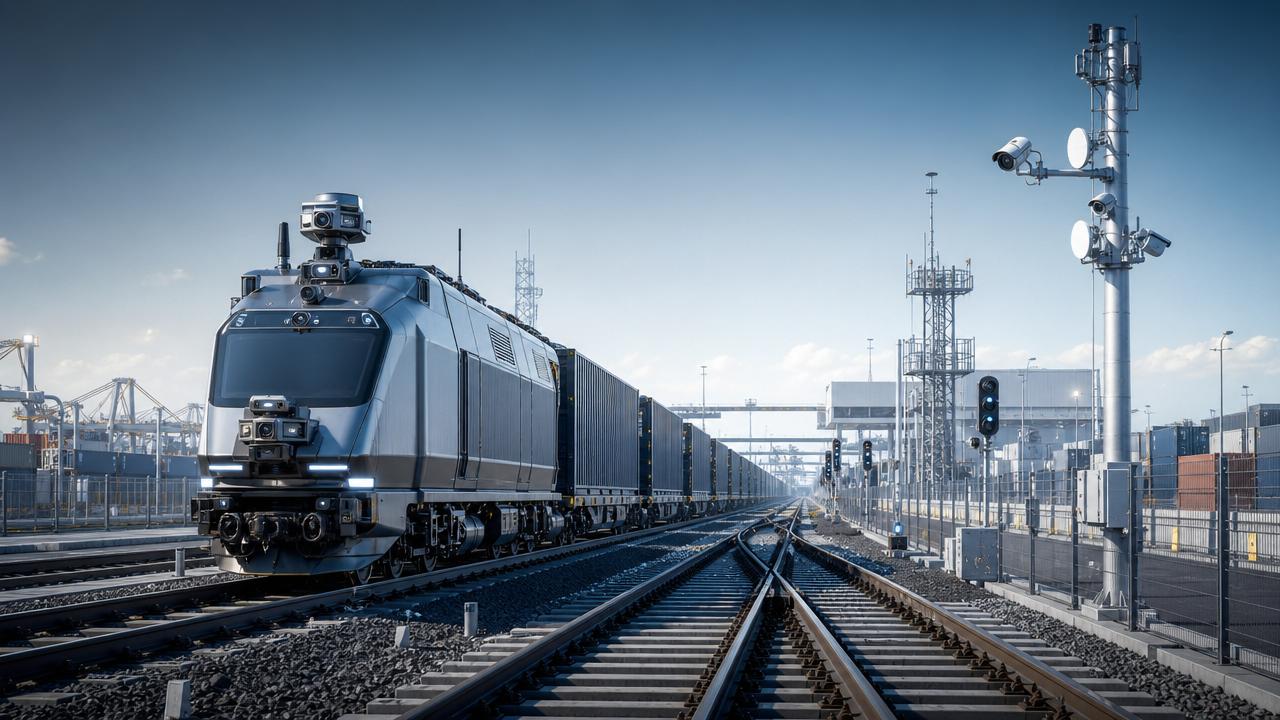
The future of autonomous freight trains promises higher capacity, lower emissions, and more resilient long-haul logistics, yet its progress may be slower than many project leaders expect. From signaling interoperability and safety certification to infrastructure upgrades, cybersecurity, and cross-border regulation, the path to deployment is technically and operationally complex. Understanding these barriers is essential for engineering and project management teams shaping next-generation rail freight corridors.
For most searchers, the real question is not whether autonomous freight trains are technically possible. It is what could slow the future of autonomous freight trains in real projects, budgets, corridors, and approval timelines.
For project managers and engineering leads, the answer is clear. Progress will likely be constrained less by locomotive intelligence alone and more by system integration, safety assurance, infrastructure readiness, regulation, labor transition, and commercial risk allocation.
Why autonomous freight train deployment may move slower than expected
Autonomous freight rail often looks simpler than road autonomy because trains run on fixed guideways. That is true at a high level, but freight operations involve far more than keeping a vehicle on track.
A freight train must interact with signaling systems, dispatch centers, yards, maintenance teams, level crossings, ports, terminals, and neighboring networks. Automation must therefore perform reliably inside a tightly coupled operational ecosystem, not only onboard the locomotive.
This is the first major reason the future of autonomous freight trains may advance in phases rather than through sudden full-scale adoption. Many corridors can support partial autonomy long before they can support unattended or cross-border autonomous freight operations.
In practice, most near-term deployments will focus on supervised automation, driver assistance, automatic train operation overlays, remote diagnostics, and limited autonomous functions in controlled environments such as mining railways, private freight loops, and dedicated industrial corridors.
Signaling interoperability is one of the biggest practical bottlenecks
One of the most important constraints is signaling diversity. Freight operators frequently run across networks using different legacy and modern systems, including national train protection architectures, ETCS variants, GSM-R environments, and mixed dispatch rules.
Autonomous freight trains depend on highly reliable train positioning, movement authority interpretation, braking curve management, and communications continuity. If corridor signaling is fragmented or inconsistent, automation performance becomes harder to validate and certify at scale.
For project leaders, this means autonomous train programs should not be evaluated as rolling stock procurements alone. They are corridor-level integration programs that require interface mapping across onboard systems, trackside assets, communications networks, and operating control centers.
The challenge becomes even greater at border crossings. A locomotive may need to transition between operating rules, radio systems, language environments, and safety cases. These handoffs can slow deployment far more than autonomous driving software maturity.
As a result, the future of autonomous freight trains is closely tied to standardization progress. Corridors with harmonized signaling and communications frameworks will likely reach commercial deployment much faster than those with mixed legacy systems.
Safety certification will take longer than many business cases assume
In freight rail, safety approval is not a marketing milestone. It is a long, evidence-heavy process. Autonomous systems must prove safe performance not only in normal operations, but also in degraded, failed, and unexpected operating conditions.
That means project teams must validate perception systems, control logic, braking behavior, fail-safe transitions, remote supervision functions, cybersecurity controls, and human override procedures. Each element must fit within recognized railway assurance frameworks and local regulatory expectations.
Unlike digital products that can iterate quickly after release, rail automation enters a conservative environment where any unsafe edge case can delay approval for months or years. Regulators will expect robust hazard analysis, simulation evidence, field testing, and auditable traceability.
Certification is especially difficult when systems combine components from multiple vendors. If the locomotive platform, perception stack, signaling interface, communications layer, and traffic management software come from different suppliers, proving end-to-end safety becomes more complex and more expensive.
For engineering managers, this means schedule risk should be modeled around assurance and verification effort, not only installation timelines. On many projects, the slowest path item may be the safety case rather than the hardware delivery date.
Infrastructure quality and digital readiness remain uneven
Autonomous rail systems perform best on corridors with predictable track conditions, modern interlockings, reliable telecom coverage, and well-maintained wayside assets. Many freight networks, however, still operate with uneven infrastructure quality and deferred maintenance backlogs.
Track geometry defects, inconsistent asset condition data, weak power resilience, poor fiber coverage, and incomplete sensorization all reduce operational confidence. Automation can compensate for some variability, but it cannot eliminate systemic infrastructure weakness.
Level crossings are another critical constraint. Freight corridors with frequent public crossings introduce unpredictable road-user behavior, which can complicate autonomous operations and raise public safety concerns. Dedicated freight lines or protected crossings reduce this challenge significantly.
Yards and terminals also matter. Mainline autonomy can lose value if trains still depend on heavily manual yard processes, paper-based handoffs, or low-visibility shunting conditions. End-to-end productivity gains require automation planning across the broader operating chain.
For decision-makers, a useful question is not simply, “Can the train run autonomously?” It is, “Is the corridor digitally and operationally mature enough to support autonomous service with acceptable reliability and recovery performance?”
Cybersecurity is no longer a side issue
As freight trains become more connected, they also become more exposed. Autonomous operation depends on trusted data flows between onboard computers, signaling systems, dispatch platforms, maintenance systems, and communications networks.
Any weakness in that chain can create operational disruption, unsafe behavior, or network-wide loss of confidence. Cyber risk therefore has direct implications for project approval, insurance, system architecture, and operator acceptance.
Railway cybersecurity is difficult because assets often have long life cycles, mixed-generation equipment, and multiple vendors. A corridor may contain modern digital layers sitting on top of legacy operational technology that was never designed for today’s threat landscape.
Project leaders should expect increasing scrutiny around secure-by-design architecture, network segmentation, software update governance, access control, incident response, and supplier assurance. Cyber resilience is now part of deployment readiness, not a post-launch enhancement.
This is another reason the future of autonomous freight trains may unfold more slowly than public narratives suggest. Trust in the digital operating environment must be earned through evidence, testing, and operating discipline.
Labor transition and operating model redesign can delay rollout
Autonomous freight train programs are often framed as technology upgrades, but they also reshape workforce structures. Drivers, dispatchers, maintenance crews, and control room staff may all see role changes, new interfaces, and new accountability boundaries.
Even when automation is introduced gradually, labor relations can affect rollout speed. Concerns about safety, job redesign, remote operations, retraining, and emergency responsibility can generate resistance if not addressed early and credibly.
For project managers, this means stakeholder planning must include operating unions, training departments, safety representatives, and field supervisors. A technically sound system can still face major delays if the operating model is not socially and organizationally viable.
Training burden is another factor. Autonomous operations require different competencies, including system monitoring, exception handling, remote intervention, software-oriented diagnostics, and cyber-aware maintenance practices. Building these capabilities takes time and budget.
The most effective programs usually position autonomy as an operating transformation rather than a headcount story. That framing helps organizations focus on resilience, safety consistency, capacity gains, and redeployment of human expertise to higher-value control tasks.
Commercial economics are attractive, but the investment case is corridor-specific
There is strong long-term logic behind autonomous freight rail. Potential benefits include improved headways, fuel or energy efficiency, reduced human error, better asset utilization, and more stable service on long-distance corridors.
However, these benefits do not appear evenly across every network. The business case depends on traffic density, corridor length, signaling maturity, crossing profile, labor structure, terminal efficiency, and the cost of required upgrades.
In some cases, the return on investment for partial automation will be much stronger than for full autonomy. For example, combining automatic train operation, predictive maintenance, and intelligent traffic management may deliver significant value before unattended operation becomes realistic.
Capital intensity can also slow projects. Infrastructure upgrades, telecom improvements, onboard retrofits, control center modernization, and certification work can create a large upfront funding requirement. Public operators and concessionaires may struggle to align these costs with benefits spread across multiple stakeholders.
This matters because the future of autonomous freight trains will not be determined by technology readiness alone. It will also depend on whether project sponsors can build bankable, phased investment models with clear performance milestones.
Cross-border regulation may be the slowest moving variable
Many of the most compelling autonomous freight opportunities lie in long-haul international corridors. Yet these are also the corridors where regulatory alignment is hardest to achieve. Different countries may apply different rules for certification, liability, operations, and data governance.
Even where rail standards are partly harmonized, authorities may still vary in how they approve remote operation, onboard autonomy, communications security, or fallback procedures. That creates uncertainty for projects intended to run seamlessly across borders.
Liability allocation is especially important. When an autonomous freight train experiences an incident, responsibility may involve the operator, infrastructure manager, technology supplier, telecom provider, maintenance contractor, or software integrator. Legal clarity is essential before scaling operations.
Data sovereignty can also complicate architecture choices. If operational data, video streams, diagnostics, and remote decision support cross borders, teams must address local rules for storage, access, and lawful transfer.
For strategic planners, this means the most advanced technology may not win first. The earliest successful deployments are more likely to appear where governance structures are stable, regulatory pathways are clear, and corridor stakeholders are aligned.
What project leaders should assess before committing to an autonomy roadmap
If your organization is evaluating autonomous freight rail, the first step is not to ask for a fully autonomous concept. Start with a corridor readiness assessment covering infrastructure, signaling, communications, safety assurance, workforce capability, and regulatory exposure.
Second, define the operational problem clearly. Are you trying to increase line capacity, reduce energy consumption, improve punctuality, lower crew dependency, or support remote heavy-haul operations? Different objectives justify different levels of automation.
Third, separate near-term value from long-term ambition. Many programs can capture returns earlier through driver advisory systems, automatic braking optimization, remote condition monitoring, and integrated traffic management rather than waiting for full autonomy.
Fourth, establish interface governance early. Autonomy programs fail when subsystem responsibilities are unclear. Project teams need disciplined ownership across onboard control, signaling interfaces, telecoms, cybersecurity, yard operations, and assurance documentation.
Finally, build deployment in phases. Controlled pilots, limited-corridor trials, supervised autonomy, and progressive safety validation often create a more credible path than all-at-once transformation plans. In railway environments, maturity is earned operationally.
A realistic outlook on the future of autonomous freight trains
The future of autonomous freight trains remains strong, especially on heavy-haul, dedicated, and digitally modernizing corridors. The demand for lower-emission bulk transport, higher network efficiency, and more resilient inland logistics will continue to support investment.
But for project management and engineering leaders, the key insight is this: the pace of adoption will be governed by integration and assurance, not by autonomy software headlines. Rail remains a system-of-systems environment, and that reality slows deployment.
The winners in this transition will not necessarily be those making the boldest claims. They will be the operators, infrastructure managers, manufacturers, and EPC partners who can align technology, standards, safety evidence, and corridor economics into executable programs.
So what could slow the future of autonomous freight trains? Above all, it is the gap between proven component capability and proven corridor-wide operability. Closing that gap requires disciplined engineering, regulatory patience, and phased commercial strategy.
For organizations planning next-generation freight corridors, that is also the opportunity. Those who prepare infrastructure, interfaces, and governance now will be in the best position to move from pilot success to scalable autonomous rail operations later.
Industry Briefing
Get the top 5 industry headlines delivered to your inbox every morning.