
Reliability Metrics That Matter When Evaluating Railway Signaling Equipment

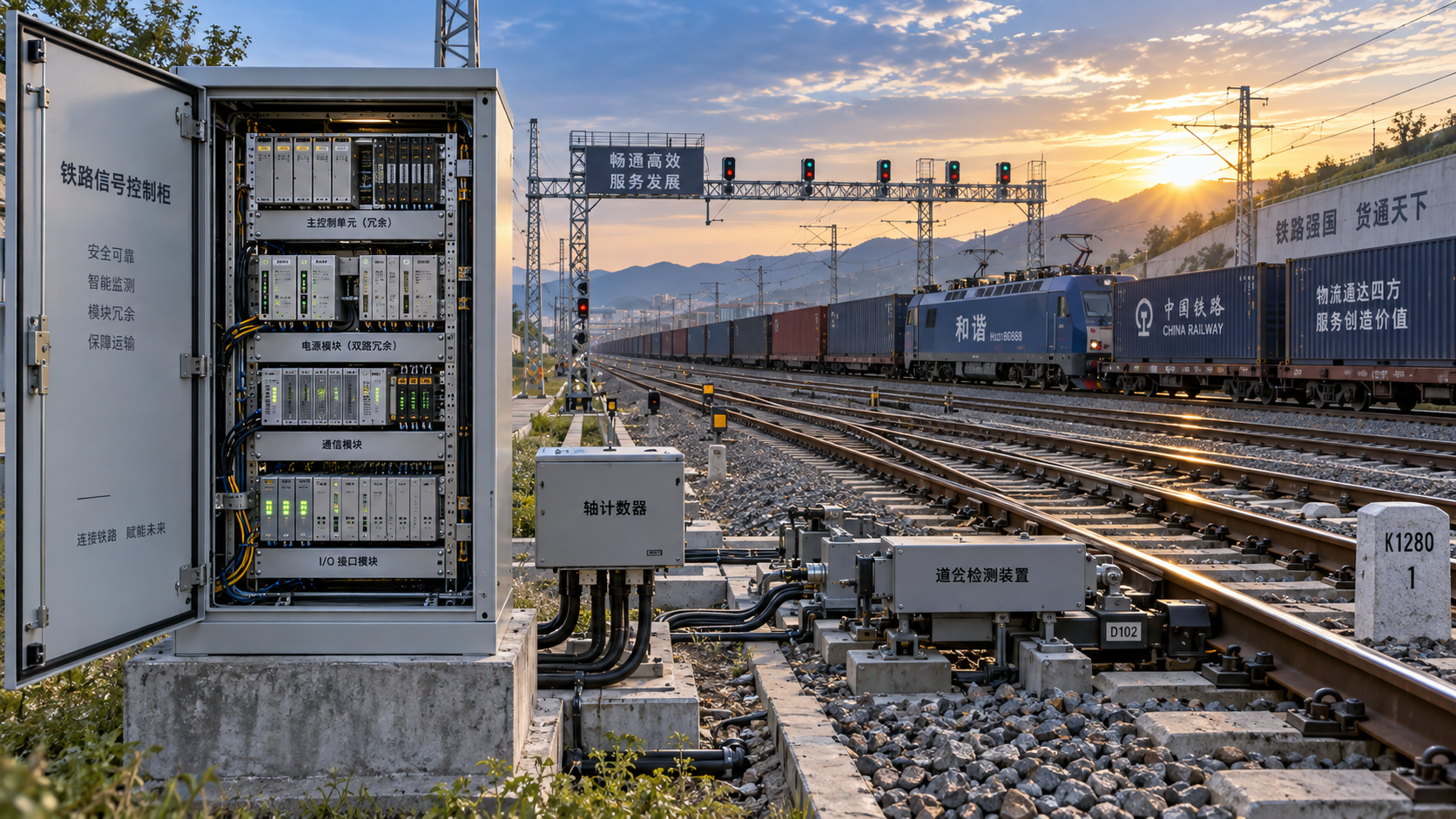
For technical evaluators, railway signaling equipment reliability is not a line item to be checked after safety compliance. It is a practical measure of whether a corridor can keep moving freight, protect passengers and work crews, recover gracefully from faults, and avoid expensive operational restrictions over decades of service.
A signaling solution may satisfy its functional specification and still create an unacceptable burden for the railway. A field element that fails intermittently in wet weather, an interlocking architecture that cannot isolate a defective module, or a diagnostic platform that produces too many ambiguous alarms can all erode real-world availability. On a heavily used mixed-traffic or heavy-haul route, those failures quickly become capacity losses, maintenance callouts, delayed train paths, and pressure on control-room staff.
The challenge is that reliability is often presented in polished, high-level figures. Evaluators need to look beneath those figures: what is being measured, under which assumptions, across which equipment boundaries, and with what evidence? The following framework helps turn reliability claims into a more defensible selection decision.
Begin with the operational consequence of failure
Before comparing supplier data sheets, define what a signaling failure means on the specific railway being evaluated. The effect of a failed axle counter, balise, track circuit, point machine interface, radio link, or interlocking processor is not identical. Nor is the consequence the same on a low-density branch line, a metro network using CBTC, or an ETCS-equipped international freight corridor.
For a freight-intensive route, a short loss of detection at a critical junction may hold a long consist outside a terminal, disrupt port slots, and consume timetable margin across an entire operating day. In a dense passenger environment, the same fault may reduce headway and trigger crowding within minutes. Reliability evaluation therefore needs an operational model, not merely a component comparison.
Useful questions at this stage include:
- Which failure modes cause a safe shutdown, speed restriction, route cancellation, or manual working?
- What is the permitted recovery time before network capacity is materially affected?
- Can the system maintain degraded but safe operation, and how much throughput is retained?
- Which assets are difficult to access because of possession limits, remote geography, tunnels, ports, or extreme weather?
- Will the proposed equipment serve a future migration path, such as ETCS, CBTC, centralized traffic control, or digital interlocking?
These answers establish the weighting of each reliability metric. A high mean time between failures is valuable, but it does not compensate for a long restoration period at a location where even a brief interruption is operationally severe.
Availability: the metric that connects engineering to timetable performance
Availability is usually the most decision-relevant top-level measure because it combines failure frequency and restoration time. In simple terms, it describes the proportion of time a system is able to deliver its required function. For signaling, however, the word “system” needs careful definition.
A supplier may quote availability for an electronic interlocking core while excluding power supplies, communication bearers, object controllers, field interfaces, data networks, and maintenance access constraints. That figure can be technically accurate yet unhelpful for an infrastructure manager responsible for the whole route. Evaluators should request availability at several levels: equipment unit, subsystem, station or control area, and end-to-end operational function.
The familiar relationship is:
Availability = MTBF / (MTBF + MTTR)
It is useful, but it should not be treated as a complete model. Mean time between failures (MTBF) can conceal a small number of high-impact events. Mean time to repair (MTTR) can assume spare modules are stocked locally and trained personnel are immediately available. For a geographically dispersed freight network, neither assumption should be accepted without evidence.
A stronger availability review separates planned maintenance from corrective maintenance, identifies dependencies on external power and telecoms, and tests the recovery sequence after a fault. Ask whether the system returns automatically to service, requires remote authorization, or needs staff at trackside. The difference may determine whether a fault costs two minutes, two hours, or an entire shift.
Failure rate matters—but only when the failure definition is clear
Failure rates are commonly expressed as failures per operating hour, per year, per asset population, or in terms of FIT values (failures in one billion operating hours). Such metrics can help compare mature equipment families, particularly processors, relays, power modules, radio equipment, and detection systems. They become misleading when suppliers use different definitions of what counts as a failure.
For selection purposes, distinguish among:
- Functional failures: the equipment can no longer perform its intended signaling function.
- Service-affecting failures: the railway remains safe, but capacity, headway, speed, or routing is restricted.
- Dangerous failures: faults that could contribute to a hazardous condition if not detected or controlled.
- Nuisance or intermittent faults: alarms, communication dropouts, false occupancies, or resets that consume maintenance effort and weaken operator confidence.
For a safety-related system, a low dangerous failure rate is essential. Yet a system with frequent safe-side failures can still impose substantial operational cost. In railway signaling equipment reliability assessments, it is important to examine both the safety integrity of the design and the rate of disruptions that force trains into degraded operation.
Request a failure mode, effects, and diagnostic analysis where appropriate, along with field-return history that is categorized by root cause. If historical data comes from a different climate, duty cycle, axle load, EMC environment, or maintenance regime, treat it as supporting evidence rather than direct proof of expected performance.
Fault detection coverage: how well does the system recognize trouble?
Modern signaling depends increasingly on software, networks, distributed controllers, sensors, and digital communications. In this environment, reliability is closely tied to diagnosability. A fault that is detected rapidly, localized accurately, and presented with useful context is often manageable. A fault that remains hidden, produces contradictory alarms, or demands a long investigation becomes a network risk.
Diagnostic coverage describes the proportion of relevant faults that the system can detect. It is particularly important in safety-related architectures, where detected faults should lead to a defined safe state. But evaluators should move beyond the headline percentage and ask practical questions:
- Which faults are detected automatically, and which require periodic testing or inspection?
- Does the diagnostic system identify the failed replaceable unit, the channel, the interface, or only the wider subsystem?
- Can it distinguish equipment faults from communication, power-quality, configuration, or external field faults?
- Are event logs time-synchronized across interlocking, wayside, radio, and control systems?
- Can maintenance teams access meaningful diagnostics remotely without compromising cybersecurity?
High diagnostic coverage is most valuable when paired with low false-alarm rates. Excessive alarms encourage desensitization; teams begin to acknowledge warnings instead of investigating them. During a factory acceptance test or pilot deployment, evaluate alarm quality as carefully as alarm quantity. A well-designed maintenance interface should lead the technician toward a probable cause, not simply announce that “a fault exists.”
Maintainability is where lifecycle cost becomes visible
Two systems with comparable reliability can have radically different lifecycle economics. The difference often lies in maintainability: the speed, skill level, tools, access conditions, documentation, and logistics needed to restore service.
Mean time to repair is one useful indicator, but it should be unpacked. A realistic repair interval includes fault recognition, remote diagnosis, dispatch decision, travel time, safe access to the asset, replacement or repair, functional test, return-to-service authorization, and post-event reporting. A supplier’s bench-repair time says little about this full chain.
For distributed equipment on long freight corridors, modularity can be decisive. Hot-swappable or quickly replaceable modules may shorten a disruption, provided that configuration control is robust and replacement does not introduce new data or compatibility errors. For centralized architectures, remote support and resilient communications may reduce the need for field intervention—but also create a dependence on network availability.
During procurement, examine the practical maintenance model:
Environmental resilience should be tested against the route, not a brochure
Signaling equipment lives at the boundary between controlled electronics and an uncontrolled railway environment. Temperature cycling, humidity, dust, vibration, lightning, electromagnetic interference, salt exposure, flooding, rodents, and unstable power quality all influence long-term performance. A system suitable for a temperate urban installation may require a different enclosure, cooling strategy, surge protection, or inspection regime on a desert, coastal, mountain, or heavy-haul line.
Compliance with applicable EN, UIC, AAR, and national requirements is necessary, but it should be the beginning of environmental evaluation rather than the conclusion. Ask for the qualification basis: which tests were performed, at what severity, on which configuration, and whether the evidence applies to the full installed assembly.
Pay particular attention to interfaces. Many chronic failures originate not in the core signaling processor but in cable entries, connectors, battery systems, cabinets, bonding arrangements, drainage, trackside housings, and power conversion equipment. A robust architecture can be undermined by an installation concept that is difficult to seal, inspect, or replace.
Proven-in-use evidence must be comparable
Railway authorities often prefer proven technology, especially where changes affect safety certification or cross-border interoperability. That preference is sensible, but “installed base” is not the same as demonstrated reliability. A large fleet may have operated under light traffic, received intensive vendor support, or been exposed to very different conditions from those of the proposed deployment.
Ask for evidence that is comparable in function and environment: similar route density, train length, axle loads, traction power environment, climatic profile, communications architecture, and operating rules. Review how long the equipment has been in service and whether the data includes early-life failures, software upgrades, and aging effects. Infant mortality data and mature fleet data reveal different risks.
For digital signaling and communications-based systems, software lifecycle evidence is equally important. Reliability can change after configuration updates, cybersecurity patches, protocol revisions, or integration with traffic management systems. The evaluation should examine change control, regression testing, rollback procedures, and the supplier’s process for communicating known defects.
Do not separate reliability from safety, cybersecurity, and interoperability
These disciplines overlap in modern railway systems. A safety architecture may fail safe, but repeated safe-state transitions can reduce availability. Cybersecurity controls may protect remote access, but poorly designed authentication or certificate management can delay maintenance recovery. Interoperability problems between onboard equipment, radio networks, interlockings, and national rule sets can create failures that no individual supplier’s component metric predicts.
Technical evaluators should therefore assess interfaces as first-class reliability risks. For ETCS and GSM-R or successor railway communication environments, review message handling, time synchronization, fallback modes, radio coverage assumptions, version compatibility, and behavior during partial loss of connectivity. For CBTC, evaluate train-to-wayside communication resilience, zone-controller redundancy, degraded operating modes, and the operational response to localization uncertainty.
End-to-end testing across these boundaries is often more revealing than a stack of isolated subsystem certificates.
A practical way to compare competing signaling solutions
Create a weighted reliability scorecard, but avoid reducing the decision to one composite number. Use the scorecard to make trade-offs visible. For each candidate, record the claimed metric, evidence source, operating assumptions, exclusions, and residual risk. A proposed system may be strong in hardware redundancy but weak in field maintainability; another may have excellent remote diagnostics but limited proven-in-use data in harsh environments.
At a minimum, compare availability targets, service-affecting failure rates, dangerous failure controls, diagnostic coverage, realistic restoration time, environmental qualification, spare support, software-change governance, and degraded-mode capacity. Then challenge the proposal through credible failure scenarios: loss of a controller channel, loss of a communication bearer, false track occupancy, cabinet power failure, corrupted configuration, flooded wayside location, or simultaneous faults during peak traffic.
The best selection is rarely the system with the most impressive isolated number. It is the solution whose reliability evidence matches the railway’s actual operating conditions, whose failures remain controlled and understandable, and whose maintenance model can restore service without unnecessary delay.
For organizations managing strategic freight corridors and mixed-traffic networks, this is the central discipline: assess railway signaling equipment reliability as a whole-life operational capability. When availability, fault detection, maintainability, environmental resilience, and integration risks are evaluated together, procurement teams are better positioned to choose signaling equipment that supports safe movement today and remains manageable as the network evolves.
Industry Briefing
Get the top 5 industry headlines delivered to your inbox every morning.