
Railway Signaling Integration Systems: Common Interface Risks to Check

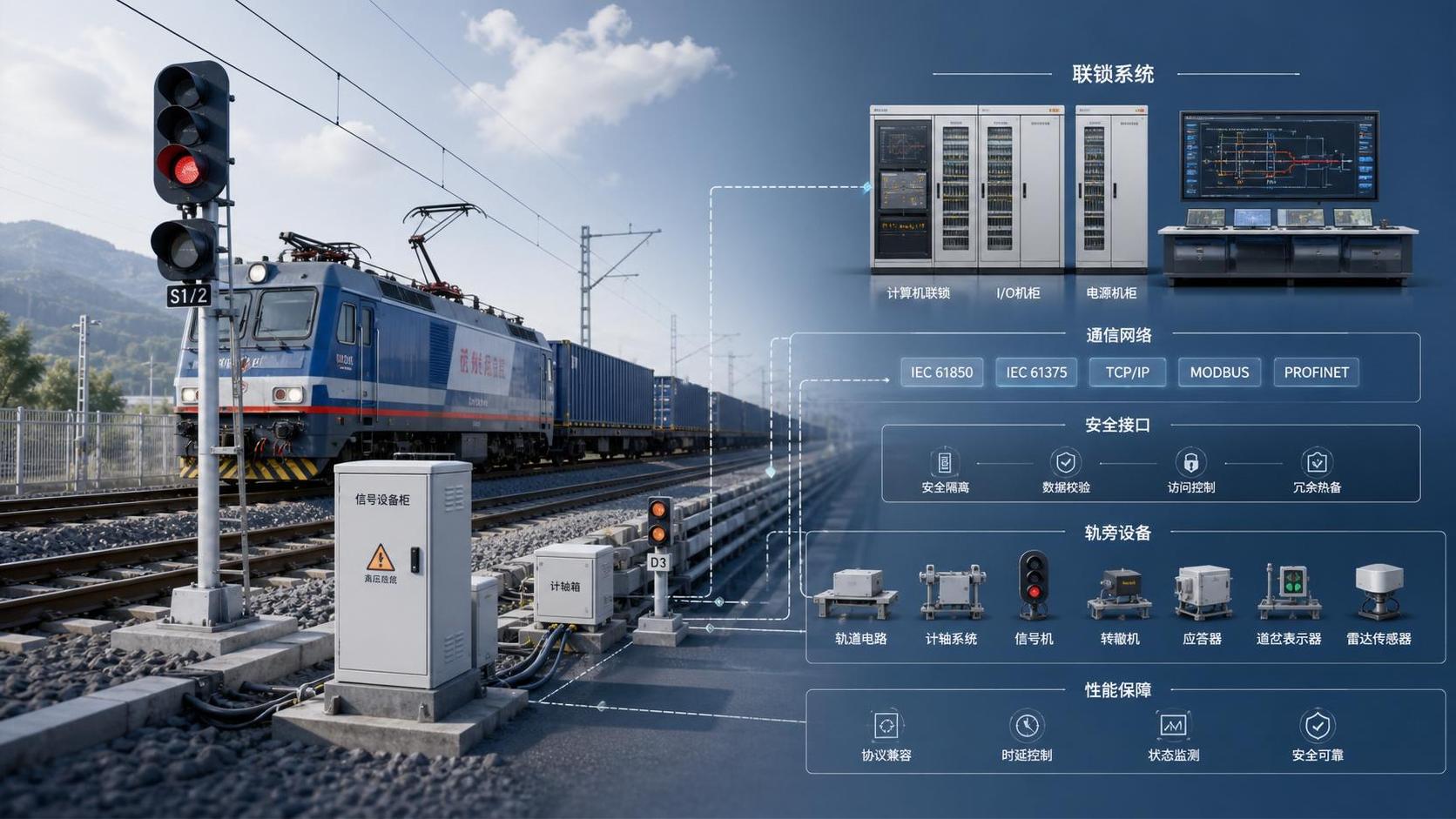
Railway Signaling Integration Systems: Common Interface Risks to Check
For technical evaluators, railway signaling integration systems are only as reliable as the interfaces connecting interlocking, onboard control, communication, and wayside assets.
Small mismatches in protocols, timing, data mapping, or safety logic can create major operational and compliance risks.
This article highlights the most common interface issues to check early, helping teams improve interoperability, reduce integration failures, and support safer, more resilient railway projects.
Why interface checks matter in railway signaling integration systems
In modern freight corridors, railway signaling integration systems connect many subsystems with different suppliers, standards, and lifecycle histories.
That sounds manageable on paper. In practice, most failures appear at the interfaces, not inside a single certified product.
A train control platform may pass factory tests, yet still fail once it exchanges live data with interlocking, RBC, axle counters, or GSM-R networks.
This is especially true in cross-border freight operations, mixed fleets, and brownfield upgrades.
The more obvious risk is service disruption. The less obvious one is hidden safety exposure that only appears under degraded or edge conditions.
So, a good review of railway signaling integration systems should focus on how systems interpret, transmit, time, and fail over shared information.
1. Protocol compatibility is the first risk gate
Protocol mismatch remains one of the most common causes of integration delay in railway signaling integration systems.
Teams often confirm protocol names early, but skip deeper checks on versions, optional fields, vendor-specific extensions, and fallback behavior.
A declared ETCS or CBTC interface does not guarantee identical implementation.
What to verify
- Supported protocol versions and backward compatibility rules.
- Mandatory versus optional message elements.
- Data encoding, byte order, checksum, and packet length handling.
- Behavior when unknown fields or malformed messages appear.
- Vendor deviations from UIC, EN, AAR, ETCS, or project-specific interface control documents.
A practical review step is to request message samples from real deployments, not only laboratory documentation.
That usually exposes assumptions hidden by clean test benches.
2. Timing and latency problems are often underestimated
Railway signaling integration systems depend on predictable timing, not just successful data exchange.
Messages arriving late can be as dangerous as messages never arriving at all.
More importantly, latency issues may stay invisible until traffic density increases.
Common timing checks
- End-to-end message delay between onboard and wayside systems.
- Clock synchronization across interlocking, radio, and diagnostic layers.
- Timeout thresholds during normal, degraded, and recovery modes.
- Queue congestion during peak train movements or maintenance windows.
- Resend logic and duplicate message handling.
In actual operations, short timing drift can trigger route release delays, braking curve errors, or false communication loss alarms.
That is why railway signaling integration systems should be tested with traffic-like loads and failure injections.
3. Data mapping errors create silent failures
Many integration issues are not caused by transport problems. They come from bad meaning, not bad transmission.
A route status, balise identifier, speed restriction, or axle section code may be passed correctly, yet mapped incorrectly.
This is one of the hardest risks to detect in railway signaling integration systems because the interface may look technically healthy.
Key mapping questions
- Are object IDs consistent across design tools, field devices, and control software?
- Do status codes have the same operational meaning on both sides?
- Are units aligned for speed, distance, direction, and gradients?
- Are geographic references and chainage models synchronized?
- Are renamed field assets tracked through configuration control?
From recent project trends, configuration drift is becoming a bigger issue than raw software defects.
That also means interface baselines must be controlled with the same discipline as safety software.
4. Safety logic alignment needs deeper scrutiny
Railway signaling integration systems often combine components that are individually safe, but not automatically safe together.
The real question is whether both sides interpret hazardous states, degraded states, and recovery paths in the same way.
Check these logic points early
- Fail-safe defaults during communication loss.
- Priority rules when onboard and wayside data conflict.
- Emergency brake triggers and release conditions.
- Manual override rules for dispatchers and maintenance teams.
- State transitions after restart, reboot, or partial subsystem recovery.
A useful discipline is to review hazardous scenarios as interface stories, not only as component hazards.
That exposes weak assumptions between signaling, rolling stock, telecom, and SCADA teams.
5. Cybersecurity and maintenance interfaces deserve equal attention
In many projects, operational interfaces get strong attention, while maintenance and remote access paths receive less scrutiny.
That is a mistake, especially as railway signaling integration systems become more connected and analytics-driven.
Diagnostics gateways, update channels, and engineering workstations can introduce both security and availability risks.
Review scope should include
- Authentication and authorization between subsystems.
- Segregation between safety-critical and non-critical networks.
- Patch deployment workflow and rollback controls.
- Logging consistency across vendors for incident analysis.
- Remote maintenance modes that may alter normal safety assumptions.
In other words, a secure interface is now part of a functional interface review, not a separate late-stage exercise.
A practical checklist for interface evaluation
When evaluating railway signaling integration systems, a structured checklist helps teams spot hidden gaps before factory or site acceptance tests.
- Confirm interface control documents match the delivered software and hardware versions.
- Trace every critical signal from source object to receiving action.
- Test normal, degraded, recovery, and mixed-fleet scenarios.
- Review timing under realistic traffic and communication loads.
- Validate configuration management across all participating suppliers.
- Align safety cases with actual interface behavior, not planned behavior.
- Include cybersecurity, maintenance, and diagnostic interfaces in the same review package.
This kind of review is particularly relevant for freight-heavy corridors, network modernization, and cross-standard integration programs.
Final takeaway
The strongest railway signaling integration systems are not defined only by advanced features or compliance claims.
They are defined by clean interfaces, controlled assumptions, and predictable behavior under pressure.
For organizations managing freight corridors, rolling stock upgrades, or signaling modernization, early interface scrutiny saves time and avoids expensive late rework.
More importantly, it supports safer operations across the full asset lifecycle.
Start with protocols, timing, mapping, safety logic, and secure maintenance access. That is where most railway signaling integration systems either hold together or start to fail.
Industry Briefing
Get the top 5 industry headlines delivered to your inbox every morning.