
Railway Compliance Standards in North America Explained

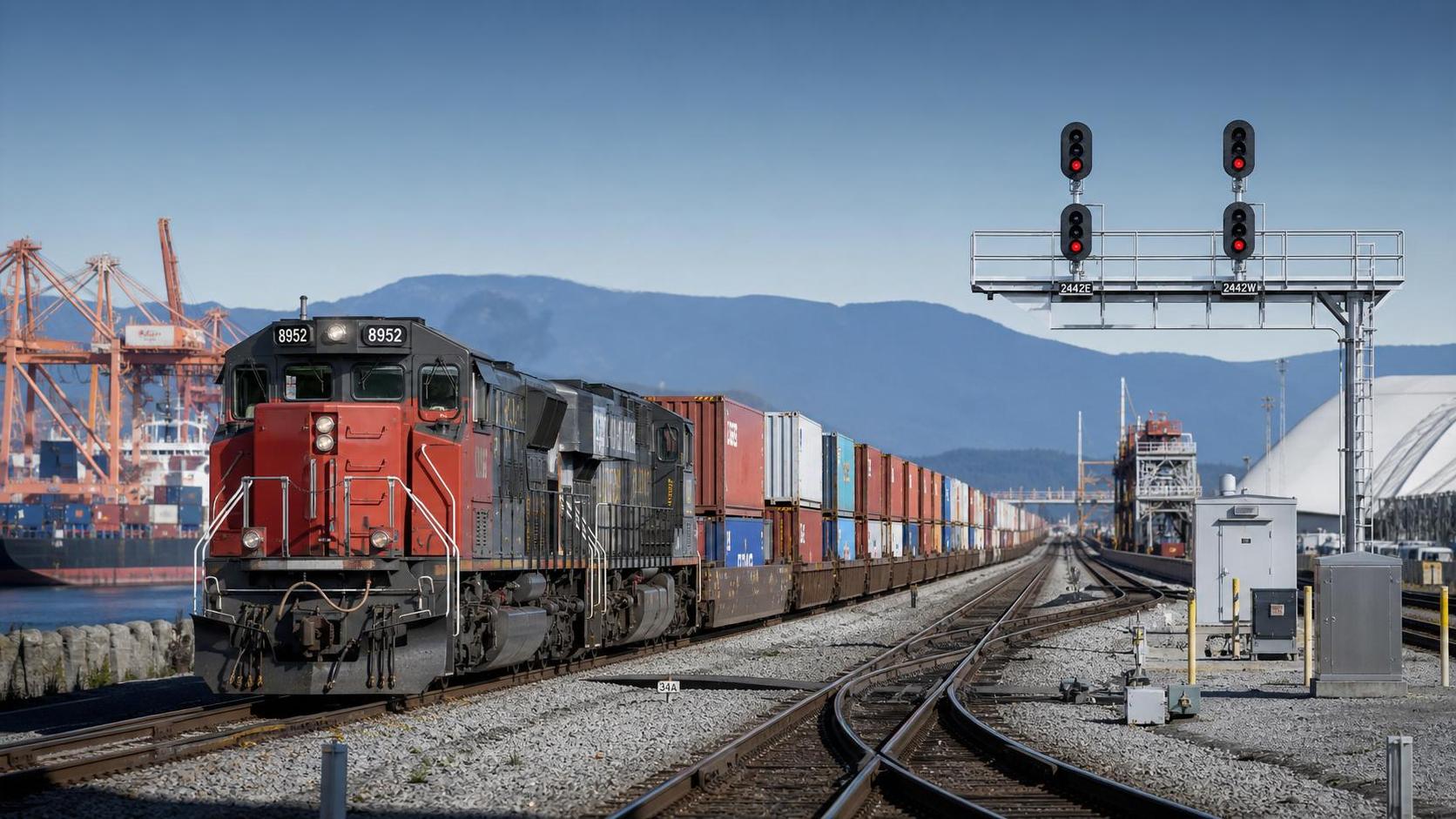
Railway compliance standards in North America define how rolling stock, infrastructure, signaling, maintenance, and operating practices are judged before they are accepted into service. For freight corridors, terminals, and cross-border projects, these rules are not a side issue. They shape design decisions, procurement timing, certification strategy, and long-term asset reliability. That is why railway compliance standards North America remain a central reference point for any technical review involving locomotives, wagons, track systems, or digital control architecture.
The region is also unusually demanding. The United States, Canada, and Mexico share freight flows, but they do not rely on one single rulebook. Federal requirements, industry standards, railroad-specific approvals, and interoperability expectations often overlap. In practice, understanding the compliance landscape means connecting hardware performance with operating rules, safety cases, documentation quality, and corridor-specific constraints.
Why the North American framework matters now
Freight rail in North America carries long trains, heavy axle loads, harsh seasonal exposure, and dense interfaces with ports, mines, industrial plants, and border crossings. Those conditions make compliance more than a box-ticking exercise. A design that works elsewhere may still fail acceptance if it does not align with local braking expectations, clearance profiles, crashworthiness rules, communication practices, or maintenance assumptions.
This has become more visible as railways modernize. Higher throughput, decarbonization targets, automation, remote monitoring, and intermodal expansion are bringing new technologies into established operating environments. Each new subsystem introduces another layer of verification. The result is a market where railway compliance standards North America influence not only safety, but also commercial viability and deployment speed.
From a broader industry perspective, the issue is not limited to rail operators. It affects Tier-1 manufacturers, EPC contractors, infrastructure planners, system integrators, leasing structures, insurers, and public authorities. A delayed approval on one interface can hold back an entire corridor investment.
The core standards ecosystem
North American rail compliance is built from several layers rather than one master standard. The most important distinction is between regulatory obligations and industry reference standards. Both matter, but they serve different functions in a technical assessment.
Regulators and public rulemaking
In the United States, the Federal Railroad Administration plays a central role in safety regulation, equipment requirements, and operating oversight. Transport Canada serves a comparable function in Canada, while Mexico applies its own national framework through transport and infrastructure authorities. These rules set mandatory baselines for areas such as safety systems, inspections, qualification, and operating conditions.
Industry standards and interchange expectations
The Association of American Railroads is especially important for freight equipment intended for interchange service. AAR standards, manuals, and approval processes influence wagon design, components, bogies, couplers, brakes, wheelsets, testing methods, and maintenance requirements. In many procurement cases, AAR alignment is the practical gateway to network acceptance.
Railroad-specific engineering requirements
Even when an asset satisfies formal standards, host railroads may still require additional evidence. That can include route compatibility, communication integration, cybersecurity controls, training packages, spare parts strategy, and local environmental performance. This is where many projects underestimate the real scope of railway compliance standards North America.
Where compliance pressure is usually highest
Not every subsystem carries the same level of compliance risk. In most projects, pressure concentrates around interfaces where safety, interoperability, and lifecycle cost meet.
Rolling stock and braking systems
Locomotives and freight wagons must satisfy structural, dynamic, braking, wheel-rail, and inspection-related requirements. For heavy-haul use, component fatigue, axle loads, truck performance, and thermal behavior often deserve closer scrutiny than headline speed figures.
A recurring issue is assuming that a platform certified under UIC or EN practice can move directly into North American service. It may offer strong engineering, but coupler systems, clearance envelopes, crash energy assumptions, and maintenance frameworks can differ substantially.
Signaling, communications, and control
Modern signaling and communication layers create some of the most complex compliance questions. Positive Train Control in the United States, radio integration, wayside interfaces, onboard software behavior, and fail-safe architecture all require disciplined evidence. Technical maturity alone is not enough. Interface governance and change management are usually decisive.
This is one reason organizations such as G-RFE focus on linking hardware with signaling and safety protocols. A locomotive, wagon, or maintenance machine cannot be assessed in isolation if digital supervision, diagnostics, and corridor communication standards are part of the operating model.
Infrastructure and maintenance systems
Track components, geometry tolerances, turnout systems, bridge interfaces, and maintenance machinery also sit inside the compliance picture. On paper, these can look familiar across regions. In service, local load patterns, weather cycles, and maintenance windows can change the acceptance threshold.
For intermodal and port-connected networks, the standard discussion expands again. Terminal operations, yard automation, crane interfaces, and traffic sequencing can all affect how railway compliance standards North America are interpreted within a wider logistics chain.
How to read standards in a business setting
A useful compliance review does not stop at asking whether a standard exists. The more practical question is how that standard is applied in the intended operating context. This sounds simple, yet many reviews become too document-driven and miss operational fit.
- Check whether the asset is intended for captive service, interchange service, or cross-border use.
- Separate mandatory regulation from recommended design practice and customer-specific requirements.
- Confirm the evidence path, including tests, waivers, simulations, field trials, and approval records.
- Review lifecycle assumptions, not only initial acceptance, especially for maintenance intervals and spare support.
- Look for interface risk between hardware, software, operations, and human procedures.
This approach helps avoid a common mistake: treating compliance as a final-stage signoff item. In reality, the strongest programs embed railway compliance standards North America at concept stage, supplier qualification stage, and configuration control stage. That reduces redesign cost and protects schedule certainty.
Cross-border readiness and international benchmarking
North American rail projects increasingly sit beside global supply chains. Components may be designed in Europe, assembled in Asia, and commissioned for service in the United States, Canada, or Mexico. Because of that, benchmarking against UIC, EN, and AAR has real value, but only when the comparison is disciplined.
The right comparison does not ask which standards family is better. It asks where the technical intent is equivalent, where it diverges, and what additional evidence is needed to close the gap. For heavy-haul locomotives, intelligent freight wagons, track-laying systems, or digital signaling platforms, this gap analysis is often more useful than a simple compliant or non-compliant label.
That perspective aligns closely with G-RFE’s role as a technical intelligence platform. By mapping asset performance against international and North American reference points, decision-makers get a clearer view of transferability, adaptation cost, and policy exposure before procurement commitments harden.
Practical signals that deserve closer review
Some indicators suggest that a compliance package may look complete while still carrying hidden risk.
- Documentation references standards versions that no longer match current railroad practice.
- Test evidence comes from a different duty cycle than the intended North American application.
- Subsystem suppliers use different assumptions for software updates, cybersecurity, or diagnostics ownership.
- Interchange ambitions are stated early, but AAR pathways are not defined in detail.
- Maintenance and training obligations are pushed to late project phases.
When these signs appear, the solution is rarely more paperwork alone. Usually, the better response is a tighter compliance matrix, interface clarification, and earlier engagement with approval bodies and host operators.
A sensible next step for technical evaluation
Railway compliance standards North America are best understood as an operating framework, not a static checklist. They connect legal obligations, engineering evidence, service conditions, and network acceptance. For freight, infrastructure, signaling, and intermodal projects, that connection directly affects risk, cost, and implementation timing.
A useful next step is to map the target asset or system against three layers at once: regulatory baseline, AAR or equivalent industry requirements, and host-railroad operating expectations. That creates a sharper view of what is already proven, what needs adaptation, and where certification effort will actually concentrate. With that structure in place, railway compliance standards North America become far easier to evaluate as a strategic engineering issue rather than a late procurement obstacle.
Industry Briefing
Get the top 5 industry headlines delivered to your inbox every morning.