
Railway regulatory guidance: common compliance mistakes

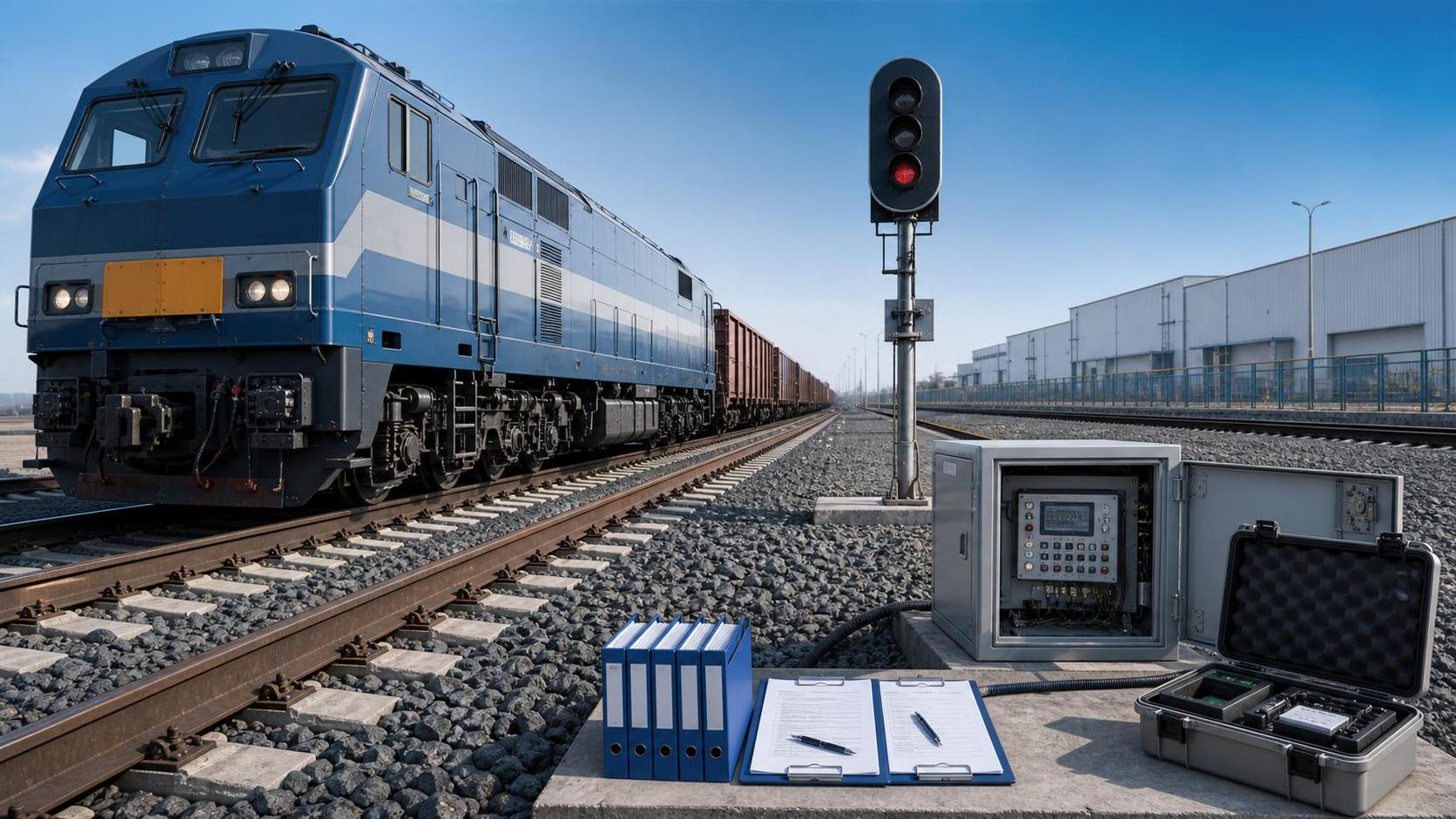
Where railway regulatory guidance fails most often
Effective railway regulatory guidance matters most when operations cross from routine activity into higher-risk freight and engineering work. In those settings, common compliance mistakes rarely come from one major failure. They usually begin with small gaps in records, unclear handoffs, or inspection habits that drift away from the written rule.
That is why railway regulatory guidance has to be read against the actual operating context. A corridor moving heavy-haul traffic has different pressure points from a signaling upgrade, a track-maintenance window, or an intermodal rail-port transfer. The standard may be the same, but the judgment is not.
G-RFE’s technical view is useful here because it links rolling stock, infrastructure, signaling, and machinery rather than treating compliance as a paperwork exercise. In practice, the strongest controls are the ones that match the asset mix, operating speed, load profile, and maintenance cadence of the network.
When documentation looks complete but still fails review
Documentation gaps are one of the most common compliance mistakes in railway regulatory guidance. The problem is not always missing files. More often, the issue is inconsistent revision control, unlinked inspection evidence, or records that do not prove the condition actually observed in the field.
This becomes more visible in freight and engineering operations where multiple parties touch the same asset. Rolling stock may be inspected at one depot, released at another, and modified again after a corridor diversion. If the traceability chain breaks, the file may look orderly while the compliance position remains weak.
The better test is simple: can the record show who inspected, what was checked, which standard applied, and what changed afterward? If any one of those items is vague, the documentation may not support railway regulatory guidance during an audit or incident review.
Typical documents that need tighter control
- Maintenance logs for locomotives and freight wagons
- Signal test sheets and commissioning evidence
- Track inspection records and defect closures
- Permit-to-work and shift handover notes
Inspection routines need to fit the operating load
A second frequent mistake is treating inspection frequency as a fixed number rather than a risk decision. In railway regulatory guidance, the right cadence depends on axle load, speed, environmental exposure, and the age of the asset. A routine that works on a lightly used branch line may be too slow for a heavy-haul corridor.
The same logic applies to engineering machinery and track maintenance equipment. Machines used in short, intense work windows often accumulate wear in a different pattern from assets operating steadily every day. If inspection intervals do not reflect that pattern, the organization can miss early signs of fatigue, misalignment, or calibration drift.
What matters most is consistency between risk and routine. Railway regulatory guidance should be translated into inspection triggers that respond to usage, not just calendar dates. That is especially relevant where automated track-laying systems, heavy-duty wagons, or locomotive fleets operate across mixed conditions.
Why signaling and infrastructure create different compliance pressure
Railway regulatory guidance becomes more demanding when the work affects signaling or infrastructure, because the risk is rarely local. A small parameter error in CBTC, ETCS, or GSM-R can affect train movement far beyond the immediate worksite. That is why compliance checks here need more than a final acceptance signature.
For signaling projects, the core question is compatibility. For infrastructure works, the core question is stability under load. Both can fail if teams focus on completion speed and ignore interface behavior, commissioning order, or the impact of temporary works on adjacent systems.
A common misjudgment is to treat an approved component as proof of an approved system. In railway regulatory guidance, system behavior matters more than isolated certificates. That is where international benchmarks such as UIC, EN, and AAR help, because they encourage review of the full operating chain rather than one isolated item.
How the main compliance mistakes differ by scene
The practical value of railway regulatory guidance is clearer when the scene changes. The same organization may need strict document traceability in one area, but stronger interface testing in another. The differences are easier to manage when the decision points are made explicit.
- Freight operations usually need stronger asset traceability and load-related maintenance proof.
- Engineering works usually need tighter permit control, temporary protection, and close-out evidence.
- Signaling changes usually need staged validation, compatibility checks, and rollback readiness.
- Intermodal links usually need clearer handoff records between rail and port-side processes.
This is also where many teams overgeneralize. They assume that a control proven on one corridor or one asset class will behave the same elsewhere. In reality, climate, traffic density, maintenance access, and contractor interfaces can change the compliance burden quite a lot.
A practical way to strengthen controls
The most reliable approach is to build railway regulatory guidance around the operating scene, not around a generic checklist. Start by mapping each asset or work package to its real exposure: load, frequency, system coupling, and recovery time if something goes wrong.
Then align the control layer with that exposure. Heavy-haul fleets may need tighter defect trending. Signaling programs may need stronger interface documentation. Track and machinery teams may need a more disciplined close-out process after temporary works. The goal is not more paperwork; it is better evidence.
A useful rule is to test every control against three questions: does it reflect the real operating condition, does it produce evidence that can be verified, and does it still work when the schedule changes? If any answer is weak, the control is not ready.
What to confirm before the next audit or handover
Before the next review, it helps to trace the most failure-prone points across rolling stock, signaling, infrastructure, and engineering machinery. That review should focus on where records stop matching field reality, where inspection rhythms drift, and where standards are applied too narrowly.
The next step is usually not a full redesign. It is a targeted alignment exercise: confirm the scene, confirm the standard, confirm the evidence, and confirm the handoff. In railway regulatory guidance, that sequence is often enough to reduce the mistakes that create the largest exposure.
When the operating picture is clear, compliance becomes easier to manage and far less reactive. That is the real value of scene-based railway regulatory guidance: it helps turn scattered checks into a system that fits how the network actually runs.
Industry Briefing
Get the top 5 industry headlines delivered to your inbox every morning.