
Which thermal management metrics predict locomotive downtime?

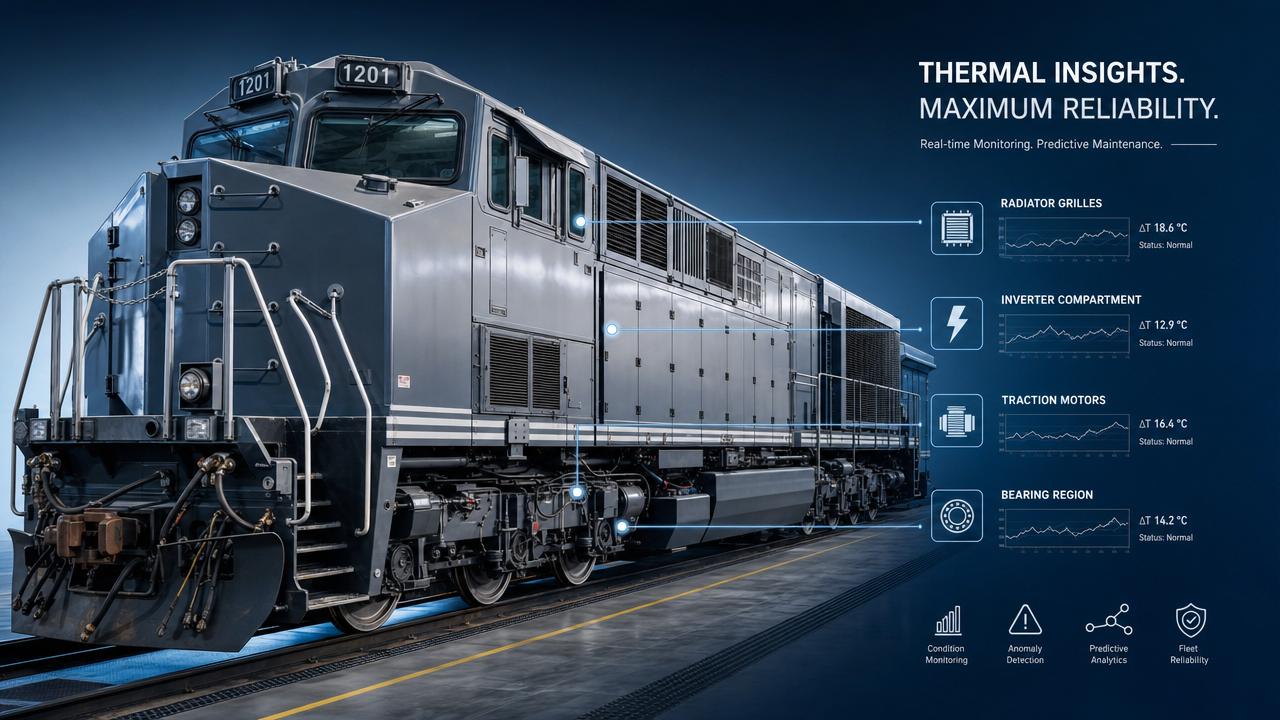
Unexpected locomotive downtime often starts with small thermal deviations that maintenance teams can detect early. Understanding which locomotive thermal management metrics matter most—from coolant temperature stability and traction motor heat load to inverter and bearing temperature trends—helps after-sales personnel move from reactive repairs to predictive intervention. This article outlines the thermal indicators most closely linked to failure risk, asset availability, and maintenance planning in modern freight locomotive fleets.
Why locomotive thermal monitoring is becoming a frontline maintenance issue
A clear change is underway across freight rail operations: thermal behavior is no longer treated as a secondary engineering detail, but as an early-warning layer for reliability. Higher axle loads, longer duty cycles, stricter emissions packages, denser electronics, and more demanding route profiles are pushing locomotives closer to thermal limits. At the same time, rail operators want fewer unscheduled stops, longer component life, and stronger evidence for condition-based maintenance. That combination is making locomotive thermal management metrics more operationally important than ever.
For after-sales maintenance teams, this shift changes the daily question from “What failed?” to “Which thermal signal started drifting before the failure?” In modern diesel-electric and hybridized freight fleets, temperature data can reveal cooling inefficiency, electrical overload, lubrication decline, airflow obstruction, sensor drift, or poor maintenance quality long before a locomotive drops out of service.
The strongest trend signal: downtime is increasingly preceded by pattern changes, not single alarms
One of the most important changes in the field is that downtime prediction now depends less on isolated high-temperature events and more on trend interpretation. A brief temperature spike may be harmless under a heavy climb or hot ambient conditions. What matters more is whether the system returns to normal, how often it spikes, how quickly temperatures rise under known loads, and whether multiple subsystems heat up together.
This is why the best locomotive thermal management metrics are not simply “highest temperature reached.” Maintenance teams increasingly track stability, rate of change, thermal spread between similar components, and temperature behavior under repeated operating scenarios. In practice, trend quality often predicts downtime better than threshold exceedance alone.
Key shift in thermal interpretation
Which locomotive thermal management metrics most often predict downtime
For after-sales personnel, not every temperature reading has equal predictive value. The most useful locomotive thermal management metrics are those tied to thermal stability, heat rejection efficiency, component imbalance, and abnormal load response. The following indicators deserve priority attention.
1. Coolant temperature stability under comparable load
Average coolant temperature matters, but stability matters more. If a locomotive shows larger swings than peer units on the same route, that may point to radiator fouling, fan control issues, thermostat problems, pump degradation, or trapped air. A rising baseline after maintenance can also indicate incomplete restoration of cooling efficiency. Persistent instability often appears before engine derating, shutdowns, or repeated nuisance alarms.
2. Traction motor temperature spread between axles
A single hot motor is important, but thermal spread across motors is often the stronger signal. Uneven heating may indicate bearing drag, ventilation blockage, winding stress, wheel-slip-related load imbalance, contamination, or developing insulation weakness. For fleets operating long heavy-haul corridors, this metric is especially valuable because imbalance can remain hidden until a high-demand segment exposes it.
3. Inverter and power electronics temperature rise rate
Power electronics are increasingly central to locomotive reliability. The warning sign is often not peak temperature alone, but how fast inverter modules heat during acceleration and how slowly they cool afterward. A worsening rise rate may indicate degraded thermal interface material, fan underperformance, clogged filters, sensor issues, or heavier electrical stress than expected. Because inverter faults can trigger immediate operational restrictions, this is one of the most business-critical locomotive thermal management metrics.
4. Bearing temperature trend and recovery time
Bearing temperatures are among the clearest indicators of friction change. What maintenance teams should watch is trend direction over multiple runs, difference from sister components, and post-load cooldown behavior. A bearing that stays warm longer than normal may be moving toward lubrication failure, misalignment, contamination, or mechanical wear. In many cases, this gives a usable intervention window before seizure or secondary damage occurs.
5. Intake air, ambient compensation, and heat exchanger efficiency
Raw temperatures without ambient context can mislead. A locomotive running in desert heat or a congested yard will naturally operate hotter. The better metric is temperature performance relative to intake air and ambient conditions. If coolant, electronics, or oil temperatures become less efficient relative to the environment, maintenance teams should suspect airflow restrictions, contaminated cores, fan degradation, or enclosure ventilation weakness.
6. Lube oil temperature and pressure correlation
Oil temperature alone is useful, but its correlation with oil pressure is more revealing. A hotter-than-normal oil pattern combined with pressure drift may point to viscosity breakdown, cooling inefficiency, internal wear, or contamination. This combined reading is particularly useful in separating thermal symptoms caused by load from symptoms caused by lubrication health.
What is driving the industry to rely more on thermal metrics
Several forces are pushing thermal analytics toward the center of fleet support strategy. First, locomotives now integrate more electronics and control logic than earlier generations, making heat a multi-system issue. Second, operators are under pressure to improve availability without over-maintaining expensive assets. Third, cross-border freight corridors and tighter slot discipline leave less room for preventable stoppages. Finally, digital monitoring tools are improving, so maintenance organizations can now compare thermal behavior across fleets, depots, climates, and duty profiles.
Who feels the impact most across the service chain
The growing importance of locomotive thermal management metrics affects more than technicians in the depot. It changes how after-sales service, parts planning, field diagnostics, and reliability engineering work together.
Impact by role
What signals deserve the closest attention over the next maintenance cycle
As fleets modernize, maintenance teams should focus less on collecting more data and more on identifying useful signals. The strongest warning signs usually include repeated temperature asymmetry, gradual baseline elevation after overhaul, slower cooldown after standard duty, and heat increases that appear only under certain route segments or traction demands. These patterns often indicate a developing issue that standard workshop inspection can miss if the team relies only on static measurements.
Another important signal is mismatch between thermal and operational data. If fuel rate, tractive effort, and ambient conditions remain comparable but thermal behavior worsens, the locomotive is likely losing cooling or load-handling efficiency. This kind of comparison makes locomotive thermal management metrics much more valuable than stand-alone temperature logs.
How after-sales teams can respond without overcomplicating the workflow
The practical response is not to create a complex analytics program overnight. Start by defining a short list of high-value thermal indicators for each major subsystem: engine cooling, traction motors, inverters, bearings, lubrication, and ventilation. Then compare each locomotive against its own history and against similar units in similar service. This makes abnormal drift easier to see and reduces false alarms caused by climate or route variation.
It is also useful to connect thermal review points to regular service events. For example, inspect heat exchanger cleanliness when coolant stability worsens, verify fan control response when electronics cooldown slows, and review lubrication condition when bearing temperature recovery changes. In this way, locomotive thermal management metrics become a decision tool rather than just a reporting layer.
A realistic judgment framework for predicting downtime risk
For maintenance planning, the most effective framework is simple: evaluate severity, persistence, and system interaction. Severity asks how far the metric has moved from normal. Persistence asks whether the change repeats across runs. System interaction asks whether related components also show stress. A mild coolant issue plus rising inverter heat and slower fan response is more serious than one temporary high reading by itself.
If organizations want better downtime prediction, they should not ask only which component runs hottest. They should ask which heat-related pattern is changing, which operating condition exposes it, and which intervention can be scheduled before the locomotive loses availability. That is where the strategic value of locomotive thermal management metrics now sits.
Final takeaway for maintenance decision-makers
The direction of the industry is clear: thermal metrics are moving from background diagnostics to a central role in uptime protection. For after-sales personnel, the most useful indicators are coolant stability, traction motor imbalance, inverter heat rise rate, bearing trend behavior, ambient-compensated cooling performance, and oil temperature-pressure correlation. These metrics matter because they reveal change early enough to act.
If your organization wants to judge how these trends affect its own fleet, start by confirming five questions: Which thermal signals recur before service interruptions? Which subsystems show the largest temperature spread? Which routes or duty cycles trigger abnormal heating? Which alarms are being treated as isolated events when they are really trend symptoms? And which maintenance tasks can be tied directly to those findings? Answering those questions will make your use of locomotive thermal management metrics more predictive, more actionable, and far more valuable for reducing locomotive downtime.
Industry Briefing
Get the top 5 industry headlines delivered to your inbox every morning.