
How Can Rail Freight Operators Reduce Wagon Downtime?

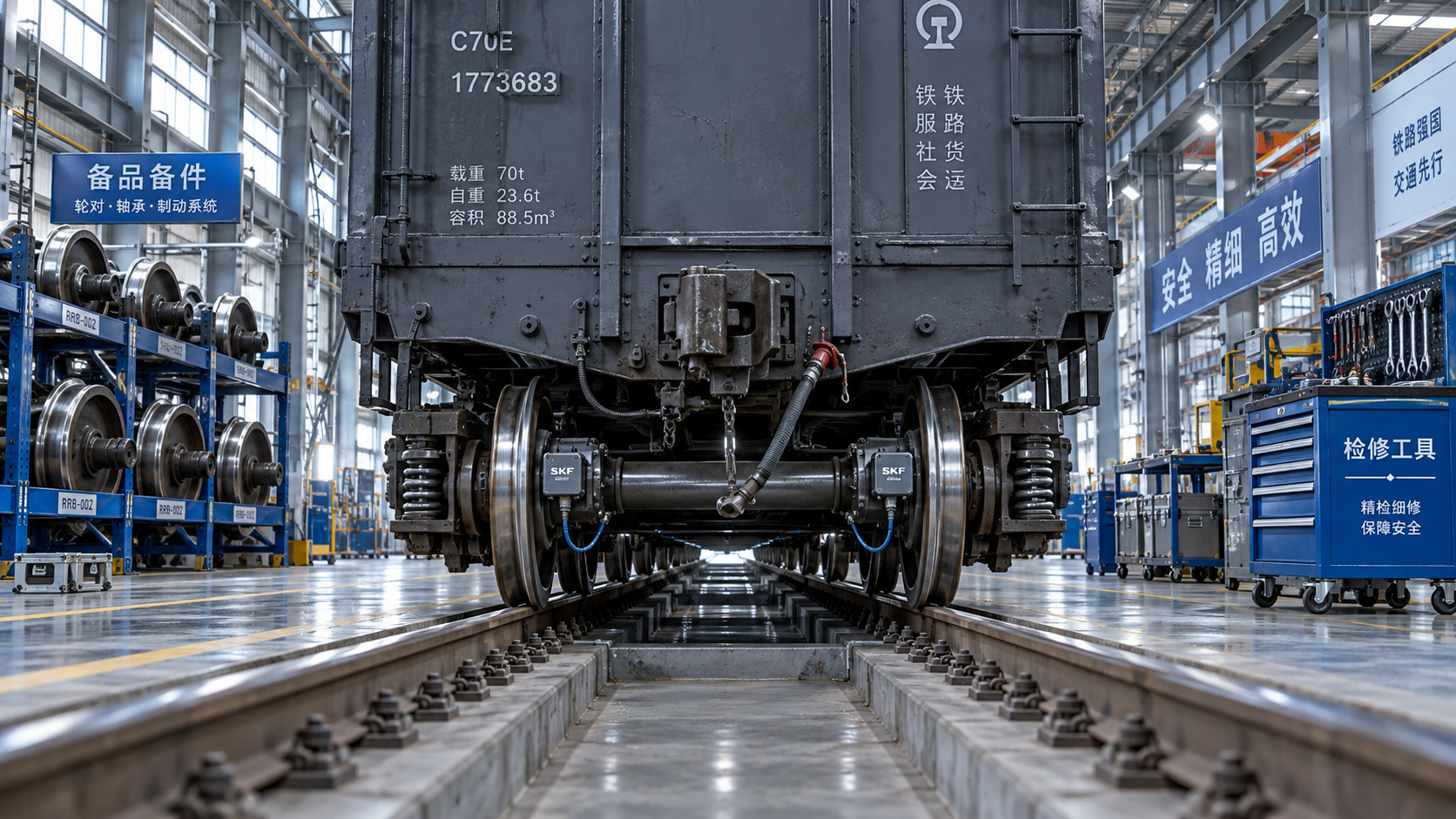
Rail freight operators can reduce wagon downtime by identifying defects before they interrupt service, preparing repairs before wagons reach the workshop, and removing delays between inspection, maintenance, and release. The right starting point depends on where unavailable hours accumulate. A fleet with repeated bearing failures needs a different intervention from one whose wagons spend days waiting for parts or an approved repair slot.
For fleet managers, the first useful distinction is between time spent repairing a wagon and time spent waiting for repair. Condition monitoring can help reduce unexpected failures, but its value is limited if alerts do not lead to timely decisions. Equally, a well-equipped workshop cannot deliver high availability when defect information arrives late, replacement components are missing, or completed wagons wait for documentation and collection. Improvement requires managing the whole path from defect detection to return to service.
Find out where unavailable hours actually accumulate
Before changing maintenance intervals or purchasing monitoring equipment, establish a consistent definition of downtime. A wagon withdrawn because of a mechanical defect is unavailable for a different reason from a serviceable wagon waiting at a terminal. Both constrain freight capacity, but they require different responses. Combining them in one measure can lead maintenance teams to solve a problem that belongs to terminal operations or fleet allocation.
For maintenance-related withdrawals, record the sequence of events: defect identified, operating restriction or withdrawal imposed, repair decision made, wagon delivered to a suitable facility, work started, work completed, release authorized, and wagon made available for traffic. These timestamps reveal whether the bottleneck is technical work, transport to the workshop, a queue, spare-parts supply, or administrative handover.
The defect record also needs enough detail to support action. “Brake fault” is too broad for useful analysis. A recurring leakage problem, damaged rigging, and a failed functional test can require different parts, skills, and investigations. Record the affected component, confirmed failure mode, wagon configuration, repair performed, and any relevant operating conditions. Keep initial observations separate from the eventual diagnosis so uncertain reports do not become misleading failure statistics.
Rank problems by their contribution to lost wagon-hours as well as their frequency. A common defect resolved quickly may matter less than a less frequent failure that requires a long journey to a specialist workshop. Safety significance remains a separate priority: a low-frequency safety-critical defect cannot be deprioritized because its downtime contribution is small.
Segment the analysis by wagon type and duty. Heavy-haul wagons exposed to demanding load cycles may require different attention from intermodal wagons whose availability is affected by terminal handling, loading interfaces, and distributed repair locations. Comparing unlike fleets can conceal the causes of poor performance and encourage unsuitable maintenance changes.
Make defect detection lead to a clear maintenance decision
Earlier detection is useful when it creates time to act. Wayside systems, onboard sensors, inspection results, and workshop measurements can each provide evidence of deteriorating condition. Depending on the equipment and application, that evidence may concern bearing temperature, wheel condition, brake performance, or other observable defects. No single monitoring method provides complete coverage of wagon condition.
Choose monitoring around a specific failure mode and a practical response. If wheel defects account for substantial unplanned withdrawals, examine whether available measurements can identify actionable deterioration and whether wheel maintenance capacity exists along the operating route. Installing sensors without arranging inspection, repair access, and responsibility for alerts leaves the availability problem unresolved.
Detection coverage also matters. A wagon may pass an instrumented location infrequently, while an onboard device may depend on reliable power, communications, and correct installation. Gaps in data must remain visible to the maintenance team. A missing alert does not establish that a component is healthy.
Every alert needs a defined owner and response under applicable operating and maintenance rules. The response might require immediate withdrawal, prompt examination, or assessment for a planned maintenance opportunity. Those decisions must follow approved safety procedures and competent engineering judgment. Dispatch pressure should never turn an unresolved safety concern into permission to continue operating.
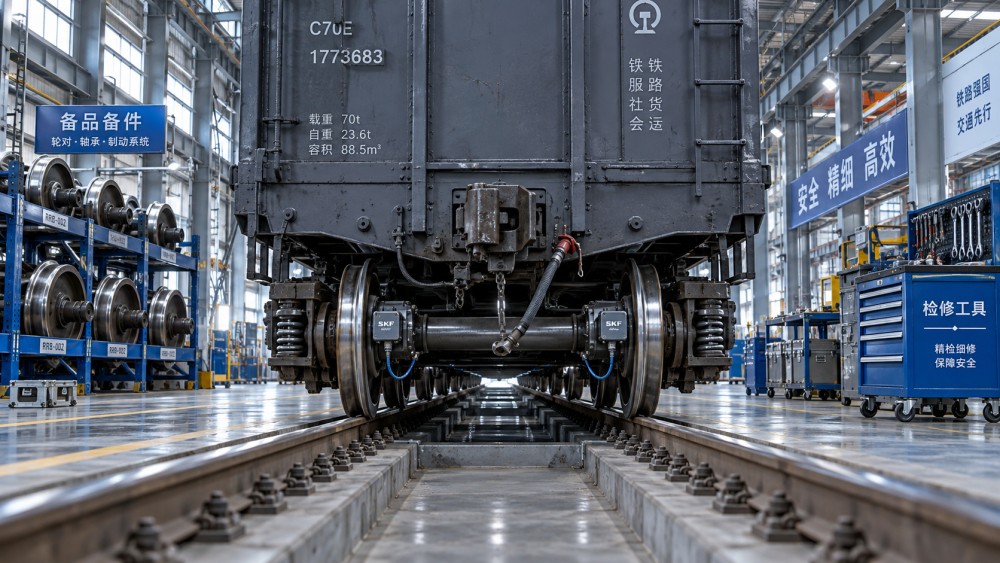
A useful workflow connects the alert to the wagon identifier, relevant operating history, inspection findings, and work order. Where available and relevant, trends can help distinguish deterioration from an isolated abnormal reading. Verified workshop findings should then feed back into the monitoring process, allowing the operator to assess missed defects, unnecessary interventions, and the usefulness of alert thresholds.
False alarms have an availability cost, but reducing alarm sensitivity without engineering validation can increase exposure to failures. Assess monitoring through confirmed outcomes: whether it detects the intended condition, how much usable warning it provides, and how reliably it supports a maintenance decision. An attractive dashboard alone does not demonstrate that the system prevents downtime.
Condition monitoring should also complement scheduled inspections and preventive maintenance where required. Calendar, mileage, usage, and condition information can inform planning, but extending an interval requires an appropriate technical basis and any necessary approval. Applicable requirements vary by jurisdiction, operating network, vehicle authorization, and contractual arrangements. UIC, EN, and AAR references should be applied where relevant to the fleet; they do not form one universal maintenance regime.
Prepare the repair before the wagon arrives
Once a defect is understood, the largest opportunity may be to reduce waiting around the repair. Before routing a wagon to a facility, confirm that the site has the required capability, staff, tooling, components, and acceptance procedures. Sending it to the nearest workshop can increase downtime if that workshop must later transfer it elsewhere.
A prepared work package should contain the defect evidence, wagon configuration, likely repair scope, required checks, and release criteria. Photos, diagnostic records, and previous repair history can help a workshop prepare, although they cannot always replace physical examination. Where the diagnosis remains uncertain, allow for that uncertainty in the booking and parts plan instead of presenting an estimate as a confirmed repair.
Coordinate maintenance with the wagon’s traffic plan. A planned visit may combine compatible tasks and avoid a second withdrawal, particularly when cleaning, unloading, or specialist positioning is needed. However, bundling too much work into one visit can lengthen the outage and consume scarce workshop capacity. The decision should account for task due dates, component condition, expected turnaround, and the fleet’s capacity requirements.
For suitable defects, authorized mobile maintenance can reduce the need to move a wagon to a fixed workshop. Its usefulness depends on safe access, local facilities, technician competence, tools, and the ability to perform the required examination or test. Repairs involving specialist lifting, machining, or controlled testing may still require a properly equipped facility. Make that assessment before dispatching a mobile team.
Critical spares deserve similar preparation. Stocking every component is expensive and may create obsolete inventory, while stocking only fast-moving items can leave a fleet exposed to an infrequent failure with a long replenishment time. Prioritize parts using failure demand, supply lead time, interchangeability, consequence of shortage, and the time needed to obtain an approved alternative.
- Locate stock near likely demand: A component held centrally may still cause a lengthy delay if transport to the repair site is difficult.
- Validate compatibility: Similar appearance or a matching generic description does not establish suitability for a wagon configuration.
- Manage repairable components: Exchange units can shorten turnaround when inspection, repair, traceability, and replenishment are controlled.
- Prepare frequent repair packages: Complete sets of approved parts and consumables can prevent work stopping for a small missing item.
Availability depends on the readiness of stocked parts, not simply their recorded quantity. A component awaiting inspection, lacking required traceability, or held under a quality restriction cannot be treated as immediately usable. Inventory records should distinguish serviceable stock from material awaiting repair or acceptance.
The final handover deserves attention too. A mechanically repaired wagon may remain unavailable because its examination results, maintenance records, operating restrictions, or release authorization are incomplete. Build those requirements into the work order and track them alongside physical progress. The organization responsible for returning the wagon to traffic should know when release is expected and what evidence must accompany it.
Reduce repeat defects and judge improvements by usable capacity
Fast repairs help only if wagons remain serviceable afterward. Repeated withdrawals for the same symptom can indicate an incomplete diagnosis, installation issue, unsuitable component, or an operating condition that the repair did not address. Link subsequent defects to earlier work so the team can see whether a repair solved the underlying problem.
For persistent failures, examine the relationship between equipment condition and operating duty. Depending on the defect, loading practices, handling damage, contamination, route conditions, or component compatibility may warrant investigation. These are possible causes to test against evidence. Replacing the same part repeatedly without examining why it fails can preserve a cycle of apparently efficient repairs and poor fleet availability.
Measure improvement using a small set of clearly defined indicators. Maintenance-related availability shows how much of the fleet is serviceable; withdrawal frequency shows how often service is interrupted; repair turnaround shows how long restoration takes. Separate active repair time from waiting time, and track repeat defects after release. Each measure answers a different question, so a single average is insufficient.
Review unusually long outages separately. Average turnaround can improve while a group of wagons remains stranded awaiting specialist parts or decisions. Likewise, higher fleet availability may have limited commercial value if the available wagons have the wrong loading characteristics or are in locations where they cannot support scheduled traffic. Connect maintenance results to the capacity the operation can actually use.
Investment decisions should follow the same logic. Assess a monitoring system, additional workshop capacity, or a spare-parts holding against the specific delay it is expected to remove. Include installation, integration, training, ongoing support, and the resources needed to respond to findings. Avoid assuming that every recovered wagon-hour produces additional revenue; the benefit depends on demand, fleet constraints, and whether the recovered wagon can be deployed.
A practical improvement program can begin with one wagon group and one significant source of downtime. Establish its baseline, assign responsibility for each handover, introduce the targeted change, and compare results under reasonably comparable operating conditions. Retain safety, release quality, and repeat-failure measures alongside turnaround so a faster process does not conceal unfinished work.
The next action should follow the evidence. If wagons wait longest for parts, improve component readiness and supply arrangements. If failures arrive with little warning, investigate detection and inspection coverage. If repaired wagons fail again, focus on diagnosis and repair quality. That connection between the observed delay and the chosen intervention gives operators a defensible way to recover capacity while preserving the controls that make a wagon fit for service.
- Using Rolling Stock Data to Schedule Maintenance and Reduce DowntimeTime : Nov 01, 2026
- How Can Rail Freight Operators Reduce Wagon Downtime?Time : Oct 22, 2026
- When Does Rolling Stock Refurbishment Beat Replacement on Lifecycle Cost?Time : Oct 04, 2026
Industry Briefing
Get the top 5 industry headlines delivered to your inbox every morning.