
What Drives Total Cost in Intermodal Freight Systems Procurement?

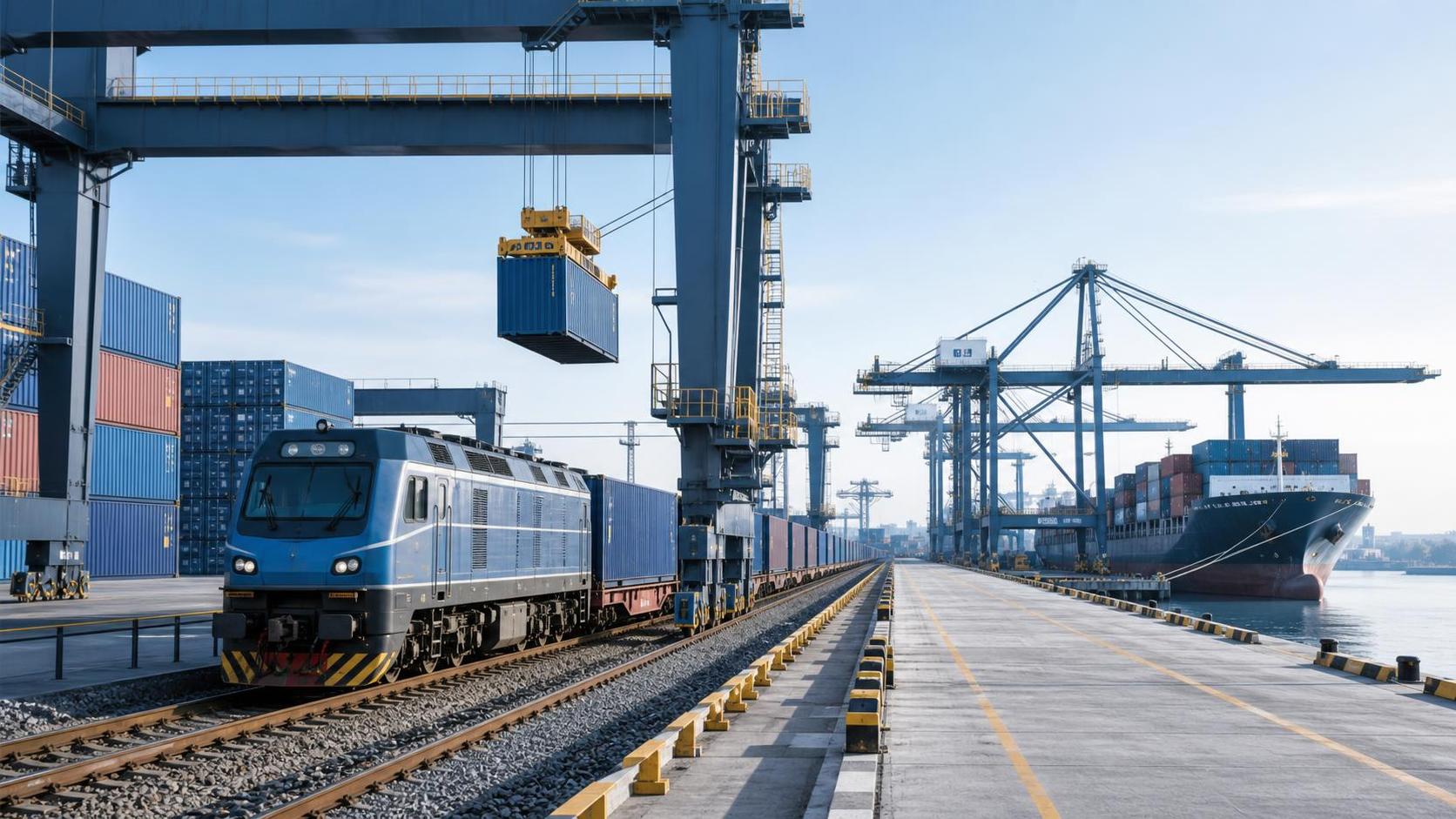
What Drives Total Cost in Intermodal Freight Systems Procurement?
In intermodal freight systems procurement, total cost is driven by far more than unit price. For procurement professionals, the real cost picture includes equipment compatibility, rail-port interface efficiency, signaling integration, lifecycle maintenance, compliance, and corridor reliability. Understanding these cost drivers is essential to selecting assets and partners that support long-term operational performance, lower risk, and stronger return on investment.
If you are buying into an intermodal corridor, a rail-port interface, or a terminal handling package, the expensive mistakes usually do not show up on the first quotation. They appear six months later, when wagons queue because cranes cannot hit target cycle times, when signaling interfaces need redesign, or when spare parts are trapped behind a single supplier. That is why intermodal freight systems procurement has to be treated as a whole-of-system cost exercise, not a line-item comparison.
The checklist below is written from a buyer’s point of view: what to verify before award, what tends to get underestimated, and where costs quietly accumulate.
Start with the corridor, not the equipment list
A common procurement error is specifying terminal equipment before locking down the operating model. Intermodal systems behave differently depending on train length, axle load, wagon type, dwell-time target, customs regime, port gate pattern, and whether the corridor handles domestic, cross-border, or inland port traffic.
Check the following before comparing suppliers:
- Expected train consist and variation by season, not just nominal design length.
- Container mix: 20ft, 40ft, 45ft, reefers, hazardous cargo, swap bodies, or trailers.
- Interface with port, dry port, warehouse, and road dispatch windows.
- Cross-border technical constraints such as loading gauge, braking rules, signaling regime, and customs inspection stops.
- Peak-hour throughput target versus average daily throughput.
If these inputs are loose, every later cost estimate is soft. Suppliers will price to assumptions that may not match your corridor reality.
Compatibility costs are usually understated
Procurement teams often focus on the purchase price of cranes, reach stackers, wagons, loading systems, or terminal software. The harder question is whether those assets work cleanly with what already exists.
This is where total cost starts to move:
- Wagon-to-terminal fit. Loading geometry, twistlock access, deck height, and crane spreader reach must match the wagon fleet you will actually use, not an ideal future fleet.
- Track layout constraints. A handling machine with strong brochure productivity can still underperform if siding length, curve radius, or parallel track spacing is wrong.
- Power and communications. Grid upgrades, backup power, fiber routes, radio coverage, and control room integration are often excluded from base offers.
- Standards alignment. In mixed fleets and international corridors, buyers should verify alignment with applicable UIC, EN, or AAR references where relevant. Exact applicability depends on market and asset type, so this needs technical review rather than checklist copying.
One practical test: ask each bidder to map every critical interface and state what is included, excluded, or assumed. If that matrix stays vague, the final project cost will not.
Throughput claims need operational proof
Intermodal projects are frequently sold on handling speed. The trouble is that quoted moves per hour are often measured under controlled conditions. Procurement should ask what happens during shift change, mixed container sizes, customs interruptions, stack reshuffles, bad weather, or when one lane is blocked.
Do not accept headline throughput alone. Ask for:
- Rated throughput assumptions.
- Performance at peak mix, not only uniform loads.
- Recovery time after a disruption.
- Required staffing model to achieve quoted output.
- Any dependency on specific TOS, OCR, gate automation, or yard sequencing logic.
If a system needs more labor, more supervision, or more re-handling than expected, the cost gap widens every operating day. Cheap capex can become expensive opex very quickly.
Signaling and control integration can consume the savings
In rail-linked terminals, control architecture matters as much as mechanical equipment. Where the facility connects to mainline or yard operations, interface work with signaling, communications, interlocking, and safety systems can become a major cost driver.
This is especially true where projects touch ETCS, CBTC, GSM-R, local interlocking, or proprietary yard management layers. Not every intermodal site will use all of these, but the procurement team should confirm which systems govern train movement, gate release, work zones, and remote diagnostics. Integration scope is rarely cheap, and redesign late in the project is worse.
A useful buyer question is simple: who owns end-to-end interface responsibility? If the answer is fragmented across multiple contractors, budget for coordination risk, testing delay, and claims exposure.
Maintenance cost is not just parts and labor
Lifecycle cost discussions often stay too shallow. Buyers ask for spare parts pricing and preventive maintenance schedules, which is necessary, but not enough. The more important question is what keeps the asset available in your actual operating environment.
In hot, dusty, saline, or high-humidity environments, maintenance assumptions need another pass. Environmental derating, corrosion protection, sealing, and cooling design affect long-run cost more than many bid comparisons admit.
Software, data, and licensing deserve their own line of scrutiny
A lot of intermodal freight systems procurement now includes terminal operating software, fleet monitoring, gate systems, OCR, condition monitoring, analytics, and cybersecurity controls. The hardware price may be transparent; the software cost often is not.
Check whether you are buying perpetual licenses, subscriptions, user-based pricing, module-based pricing, or transaction-based charging. Ask who owns the operational data, what integrations are open by API, and what happens if you switch maintainer or expand the terminal. Vendor lock-in usually arrives through software terms before it appears anywhere else.
Cybersecurity should also be handled carefully. Requirements depend on jurisdiction and operator rules, so any claim around full compliance should be treated as project-specific and, where needed, marked 【待核实】 until the owner’s security team confirms it.
Compliance costs are real, even when they sit outside the main bid
For cross-border and institutional buyers, compliance is not a paperwork footnote. It can affect design, testing, acceptance, training, and insurance. Depending on asset category and market, you may need to account for rail safety approvals, electrical conformity, lifting equipment certification, hazardous-area rules, environmental permits, or interoperability requirements.
Do not assume a supplier’s reference project in one country translates cleanly to another. Standards bodies such as UIC, EN, and AAR are useful anchors, but local authority approval still governs what can be commissioned. If a bidder says “compliant,” ask compliant to what, in which jurisdiction, and supported by which test documents.
Energy use and civil works can distort the business case
Two cost buckets get underestimated again and again: power consumption and site preparation. Electrified handling systems, lighting, reefer points, workshops, data rooms, and backup systems can push utility upgrades well beyond early estimates. On the civil side, drainage, ground bearing capacity, track slab or ballast works, pavement design, and settlement control can materially change the project budget.
Ask bidders to separate equipment cost from enabling works. If those are blended, comparison becomes difficult and change orders become easier.
Do not ignore supplier structure and long-term supportability
A technically acceptable bid can still create cost exposure if the delivery model is brittle. Procurement should look at who manufactures the critical subsystems, who integrates them, who carries warranty liability, and who will still answer when the system needs modification five years from now.
A few practical checks help here:
- Is the bidder the OEM, an integrator, or a consortium?
- Which subsystems are outsourced?
- Are spare parts and software support tied to a single entity?
- What is the local service footprint in your market or neighboring region?
For institutional buyers, this matters as much as price. Long-term support gaps tend to surface after warranty, when procurement leverage is weakest.
Use a cost model that reflects operational risk
The best procurement teams do not compare bids using capex alone. They build a cost model that includes downtime sensitivity, labor requirement, maintenance strategy, utility demand, software fees, interface risk, and expansion cost. That is where stronger decisions come from.
At minimum, your evaluation sheet should force side-by-side comparison of:
- Base supply scope
- Excluded works and assumptions
- Integration and commissioning effort
- Availability guarantees and remedies
- Five- to ten-year support cost, using your own operating profile
- Expansion readiness for additional tracks, volume, or automation
If that model is missing, procurement tends to reward the most optimistic offer, not the lowest total cost.
The short version is this: in intermodal freight systems procurement, the price tag on the asset is rarely the number that decides project economics. Corridor fit, interfaces, maintainability, data ownership, approval path, and recovery from disruption usually matter more. Buyers who push hard on those points early tend to avoid the expensive surprises that never show up in the first bid tabulation.
- Rail Port Systems Procurement: Evaluating Integration, Lifecycle Cost, and Vendor ScopeTime : Sep 10, 2026
- Rail Port Logistics Systems: Key Integration Requirements for Automated Container YardsTime : Sep 02, 2026
- How Rail Port Logistics Systems Improve Container Yard Throughput and Dwell TimeTime : Sep 02, 2026
Industry Briefing
Get the top 5 industry headlines delivered to your inbox every morning.